
The complete guide
Choosing a Biometric Safe for Everyday Valuables
A dedicated place for the things you keep searching for
Passports in one drawer, spare cash in another and jewellery on a shelf can make everyday storage harder than it needs to be. A small home safe gives those items a shared place. It also adds a controlled access point rather than leaving them in an open drawer.
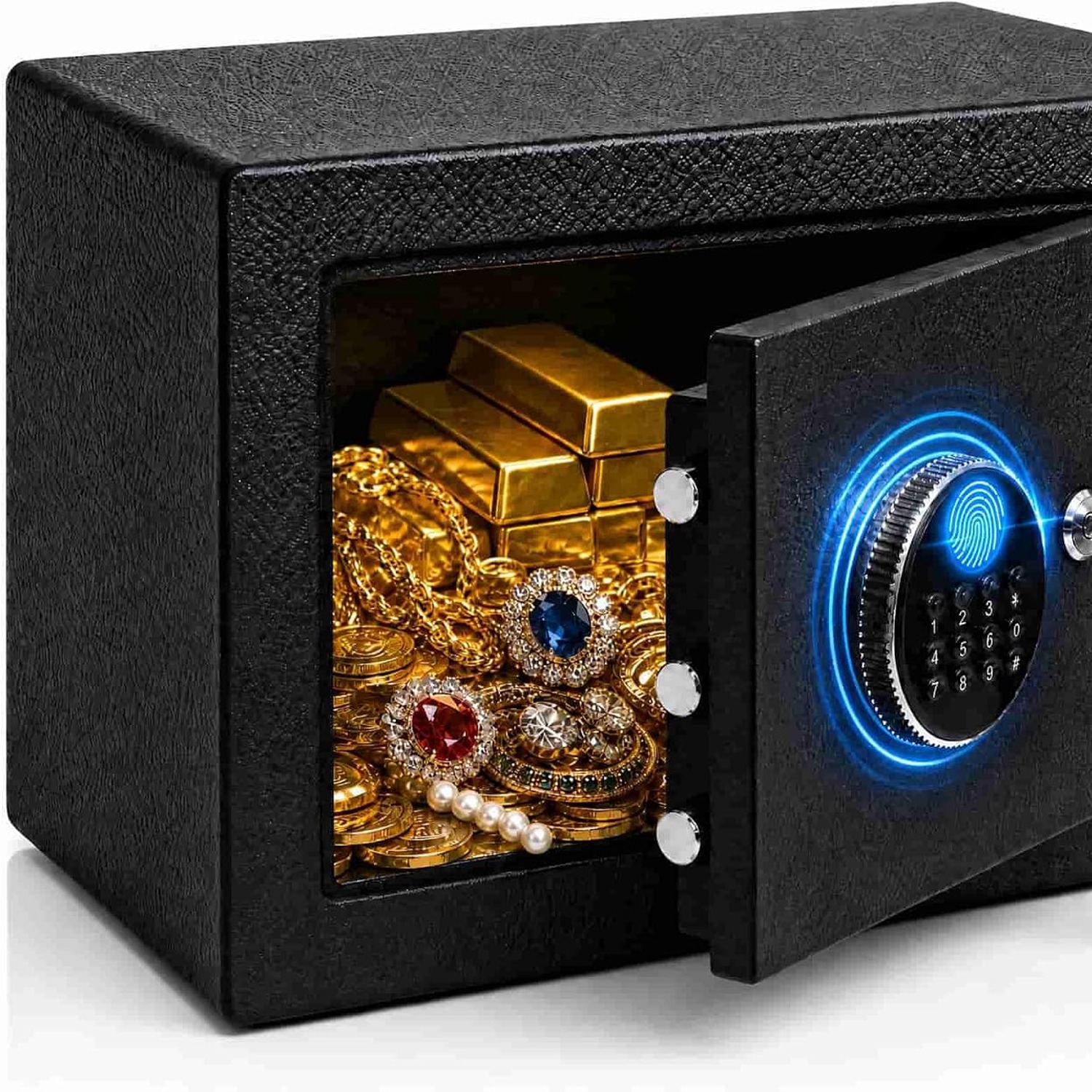
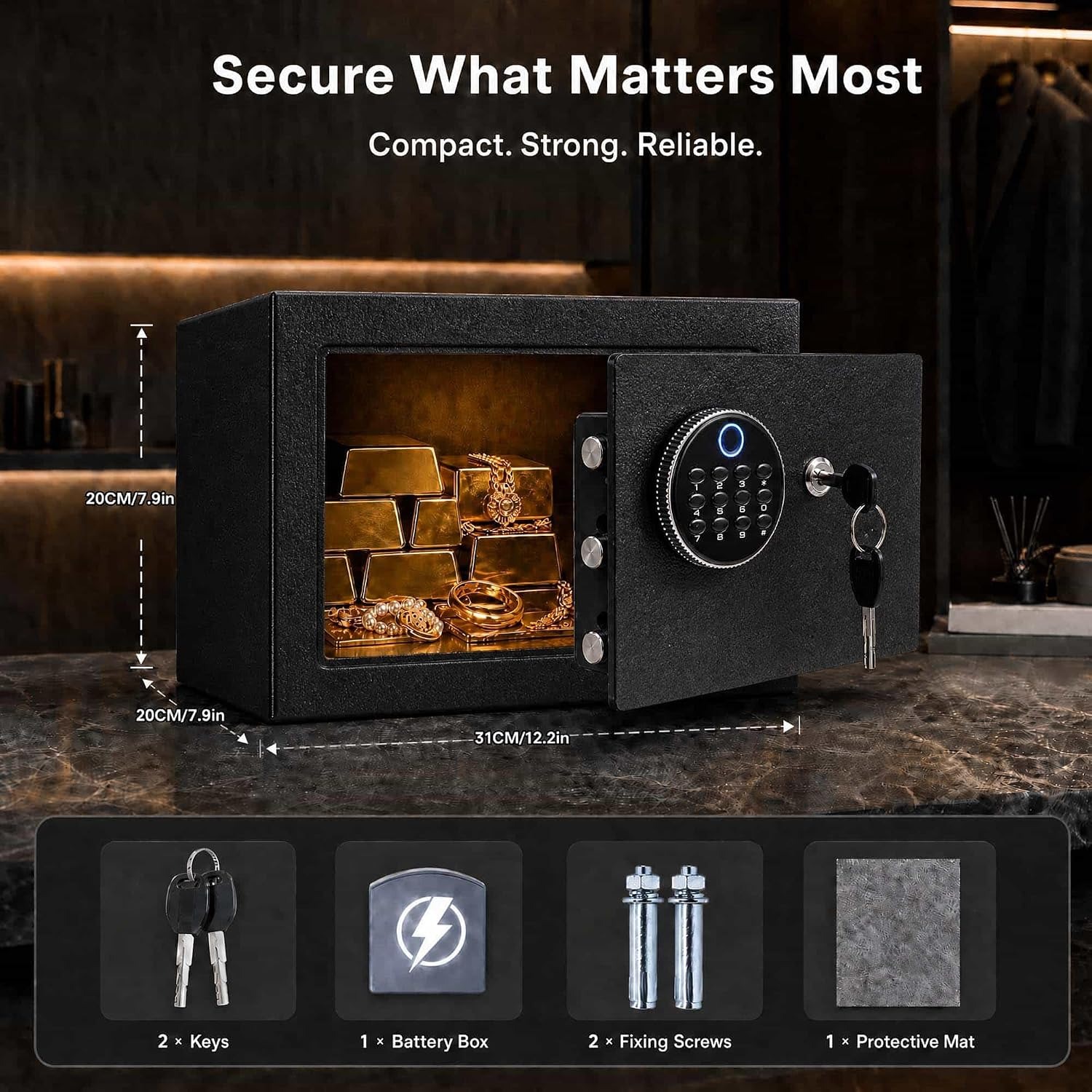
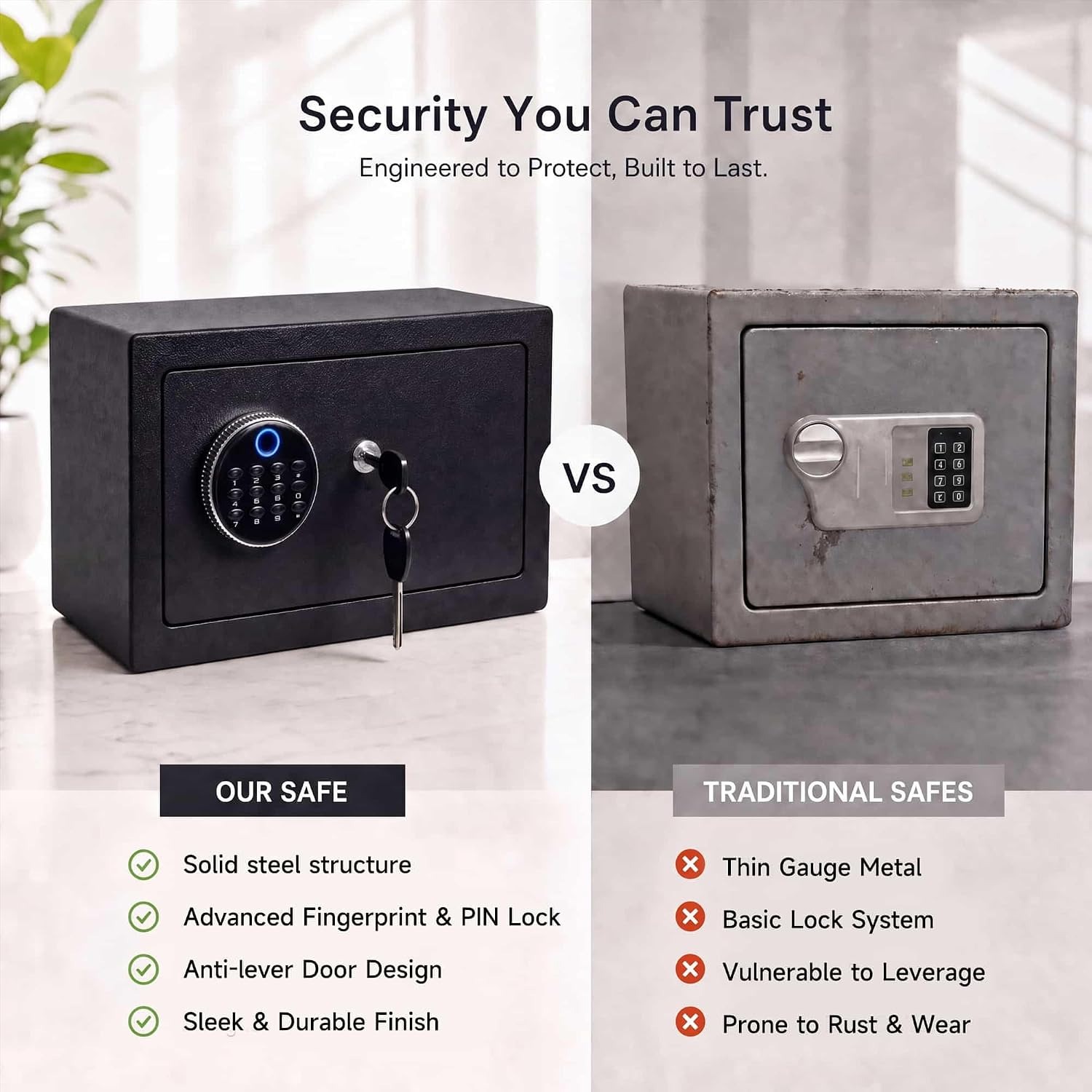
This Biometric Safe Box combines fingerprint entry with an electronic keypad and manual key override. Its listed capacity is 15 litres, with a body measuring 20 cm deep, 31 cm wide and 20 cm high. That makes it worth considering for smaller belongings, provided they fit the usable space inside.
Choosing a safe is about more than finding room for the box. Think about what you will store, who needs access and whether your insurer requires a specific rating. Those questions matter more than the number of features on the door.
How the three access methods fit daily life
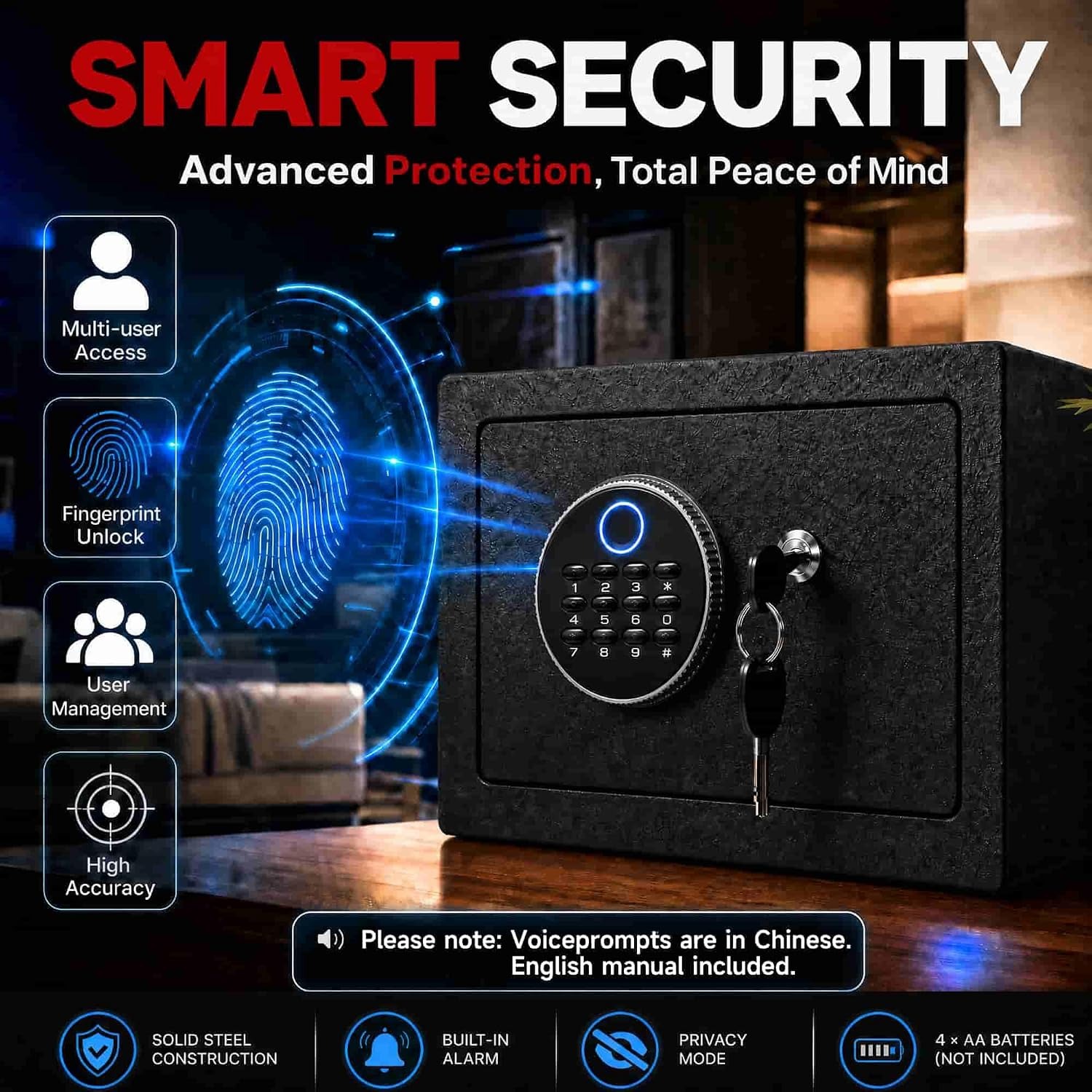
Fingerprint entry lets an authorised user open the safe through a registered fingerprint. The maker states that the scanner can store up to 29 fingerprints. That gives a household room to register several users without everyone relying on the same code.
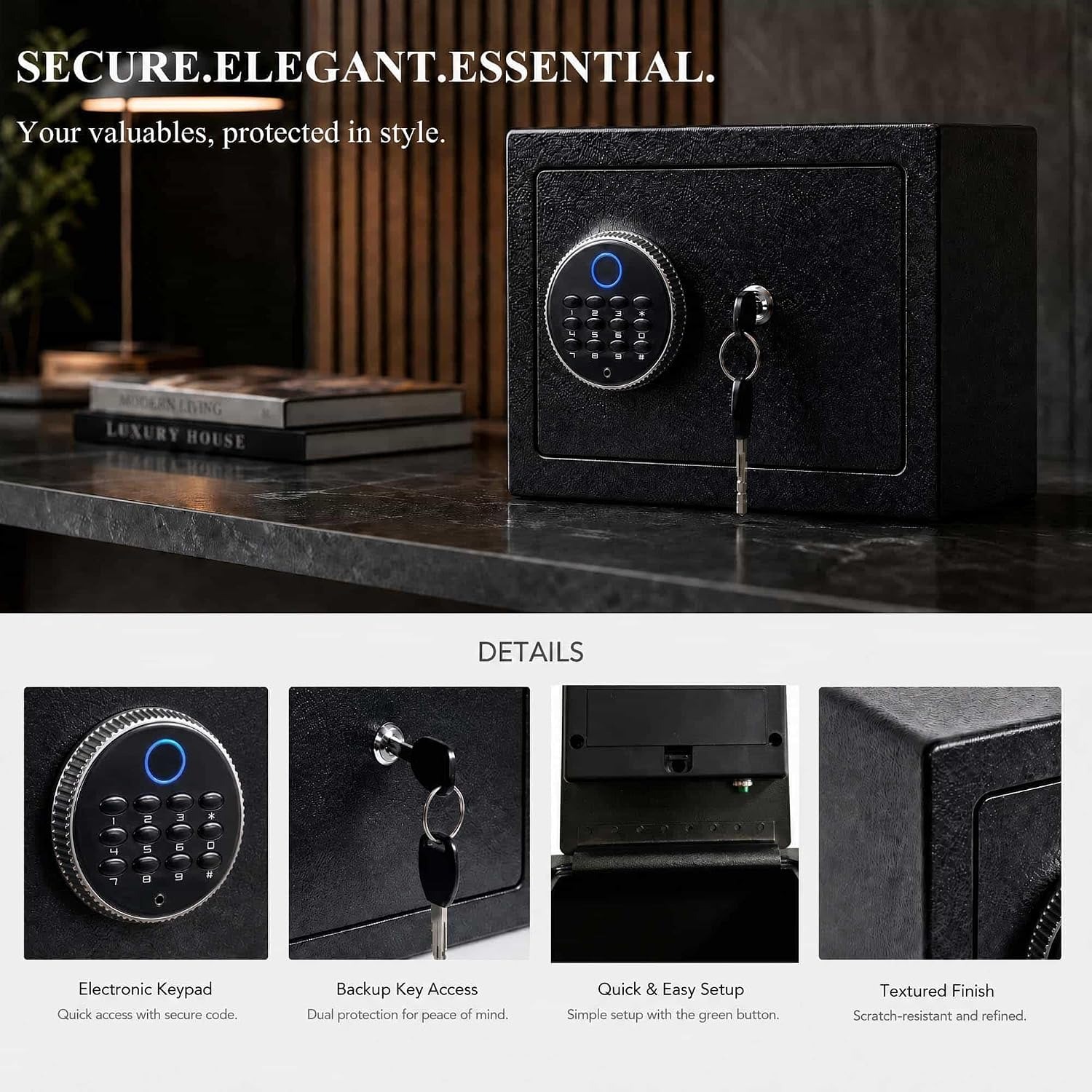
The electronic keypad provides another route. You may prefer code entry for your normal routine or keep it as an alternative to fingerprint access. Setup steps, code rules and fingerprint registration should all be checked in the supplied manual.
Manual key override is the third option. A safe with backup key access is useful only if the key remains available when needed. Store it securely outside the safe, in a place that authorised people can reach without making it easy for others to find.
Before storing valuables, practise opening and closing the safe using the instructions. Confirm that your chosen settings work while the door is open, where the manual allows. A few careful checks at setup are better than discovering an access problem later.
Check what 15 litres means for your belongings
Capacity is a useful starting point, but it does not tell you whether a particular object will fit. A 15 litre safe can have a layout that suits several small items better than one wide folder. The door opening and locking parts can also affect how objects go inside.
The listed body measurements are 20 cm deep, 31 cm wide and 20 cm high. Usable internal dimensions are not provided. Do not treat those body measurements as the available storage space.
Gather the things you want to store before choosing. Measure passport wallets, jewellery cases and cash envelopes rather than estimating their size. If you plan to add more items later, leave some room instead of filling every gap from the start.
For a fingerprint document safe, paper size deserves particular attention. A4 sheets or folders are not confirmed to fit flat in this model. If that is a firm requirement, obtain internal measurements before ordering rather than planning to bend important papers.
Use the removable shelf to plan the interior
A safe with removable shelf offers some choice over how the space is arranged. Keep the shelf in place if it helps separate small objects. Remove it when a taller item needs the available height.
The shelf does not change the overall capacity. It changes how you divide that capacity, so your storage plan should still begin with the size of the contents. Avoid packing items against the door or anywhere they could get in the way of closing it.
Small pouches can help keep jewellery apart and make cash or documents easier to find. They also take up room, so include them when measuring. Do not assume that an item which fits on its own will fit inside a bulky case.
The automatic interior light is another useful feature when checking contents. The maker describes it as switching on when the door opens. It can help in a dim room, though good lighting around the safe still makes access easier.
Choose a location before you choose a fixing
This model supports wall or floor mounting and includes mounting hardware. That gives you options, but it does not mean every surface is suitable. A wall mounted safe needs a sound fixing point, not just a convenient empty patch.
For floor installation, check the construction beneath the safe. Consider hidden pipes, cables and any restrictions on drilling. If you rent your home, get permission before making permanent changes.
The safe weighs 2.9 kg before you add its contents. A shelf or cabinet must support the combined weight and allow the door to move freely. Measure the approach space as well as the space occupied by the body.
Ask a qualified installer if you are unsure about the surface or fixings. Included hardware still needs to match the location. A carefully chosen mounting point is more useful than an installation that looks tidy but works loose.
Understand the limits of the security information
The maker lists alloy steel construction and three 20 mm locking bolts. These are physical details about the safe. They are not the same as independent evidence of burglary resistance.
No tested burglary rating or insurance cash rating is supplied in the maker's description. If you intend to store high-value jewellery or a large amount of cash, speak to your insurer first. It may specify a rated safe and particular installation requirements.
Fire and water protection are separate questions. Neither a fire rating nor a water resistance rating is given by the maker. A steel security safe should not be assumed to protect documents from fire simply because its body is metal.
For everyday storage, focus on the features that are actually listed. For specialist protection, ask for the relevant rating rather than relying on broad security language. That distinction helps you buy for the risks you need to address.
Consider the alarm and mute settings
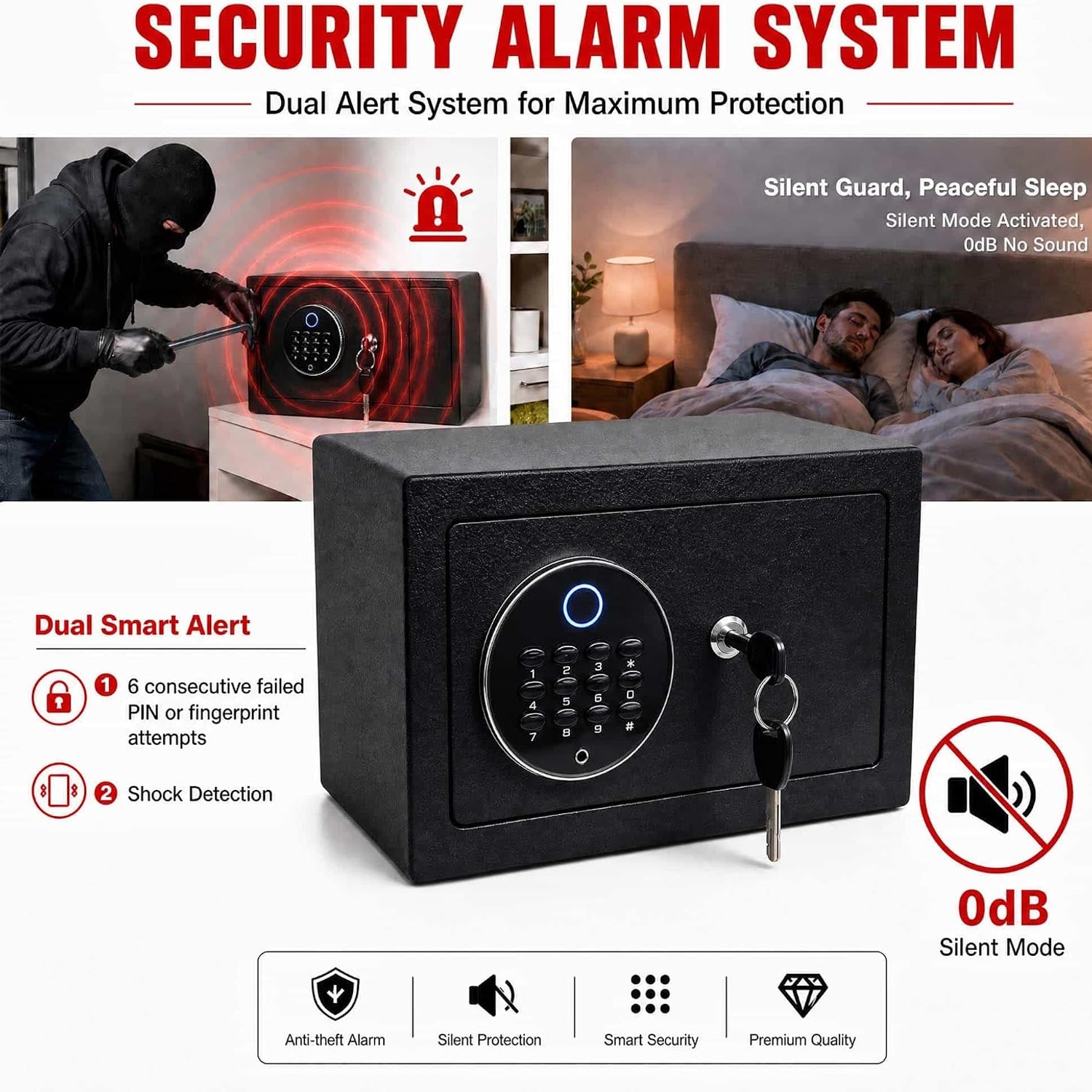
The safe has an audible alarm. According to the maker description, it responds after three incorrect attempts or strong vibration. That may help draw attention to unwanted handling, but no sound level is stated.
A mute mode is also listed. Before using it, read how that setting affects the safe's sounds. The maker does not explain whether it changes entry tones, alarm behaviour or both.
This matters if you plan to use a compact bedroom safe while someone else is sleeping. Quiet entry may be useful, but you should understand which alerts remain active. Test settings according to the manual rather than making assumptions.
An alarm is one part of the setup, not a substitute for choosing a suitable location and controlling access. Keep codes private and review who has registered fingerprints when household access changes.
Resolve the battery detail before relying on electronic entry
There is a clear conflict in the maker information. The specification table lists AAA batteries, while the descriptive copy states four AA batteries. The correct type needs confirmation.
Do not buy batteries based on a guess. Ask for clarification before ordering, or follow the supplied manual and battery compartment markings once the product arrives. The the maker's description says batteries are not included.
A low-battery indicator is listed. Make checking it part of your routine, especially if the safe is not opened often. Follow the manual for replacement and any checks needed afterwards.
Keep the manual somewhere accessible outside the safe. The same applies to backup keys. Instructions and alternative access are most helpful when they are available without first opening the locked door.
Decide who this safe suits
A fingerprint safe for home may suit someone who wants cash, jewellery and travel documents in one controlled place. Shared fingerprint storage can be helpful where several authorised adults need access.
As a home office safe, it may suit small valuables or compact records that fit inside. It is less certain as a solution for full-size paperwork because internal dimensions are missing. Measure first if documents are your main reason for buying.
It may also work as a gift for someone setting up a home. Check their needs before choosing, especially whether they can mount it and want to manage an electronic lock. Storage is personal, and the right size matters.
The maker does not establish suitability for regulated storage or any use requiring certification. If your needs come with legal, insurance or professional requirements, check those requirements separately.
Keep care simple and regular
Use a soft, dry cloth to remove dust from the exterior. Keep liquids away from the fingerprint scanner, keypad and battery area. Avoid abrasive cleaners that could damage contact surfaces.
Check that the door closes without items pressing against it. If access becomes unreliable, follow the manual rather than forcing the lock or adding an unapproved lubricant.
Inspect mounting fixings from time to time. If the safe moves or a fixing becomes loose, get suitable advice before continuing to rely on the installation.
Good care also means keeping access details current. Know where the backup keys are, watch the battery warning and retain the instructions.
The short version
This small digital safe offers three access methods, a removable shelf, an interior light and wall or floor mounting. Its 15 litre capacity is aimed at smaller everyday valuables, not confirmed flat A4 storage.
Before ordering, check your items against the available dimensions and confirm the battery specification. Ask your insurer about any required ratings, then review the current delivery and return terms. Free UK delivery is stated, but no delivery date or return period is supplied in the maker's description.