
The complete guide
A Practical Guide to Choosing a Wall Mounted Key Safe
A visitor arrives early. You are still at work, and the spare key is with someone across town. Small handover problems like this can make shared access harder than it needs to be.
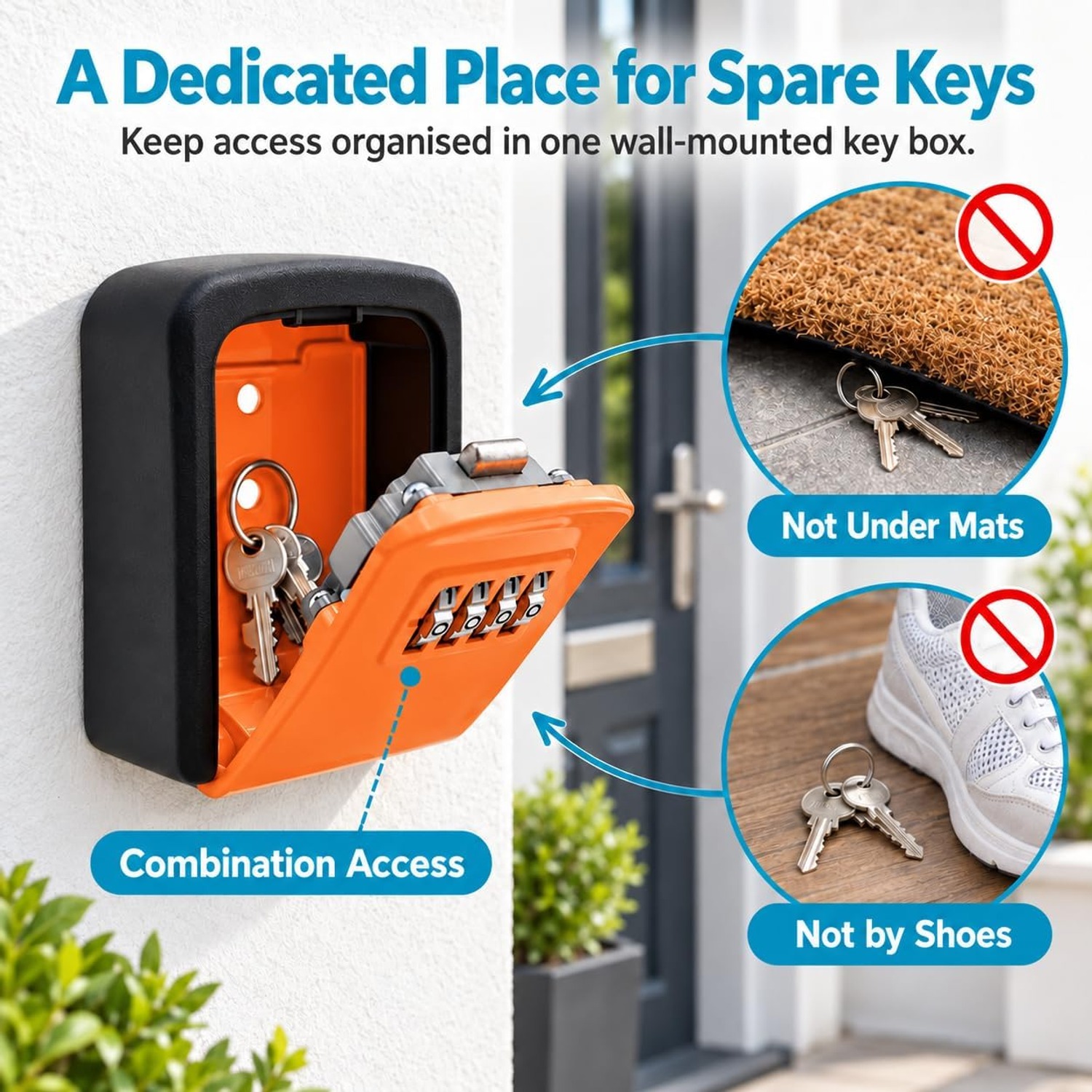
A wall mounted key safe gives authorised people a fixed place to collect a key using a combination. It can help with family visits, holiday rental arrivals or access to a garage. The important part is choosing a box that fits both your keys and your routine.
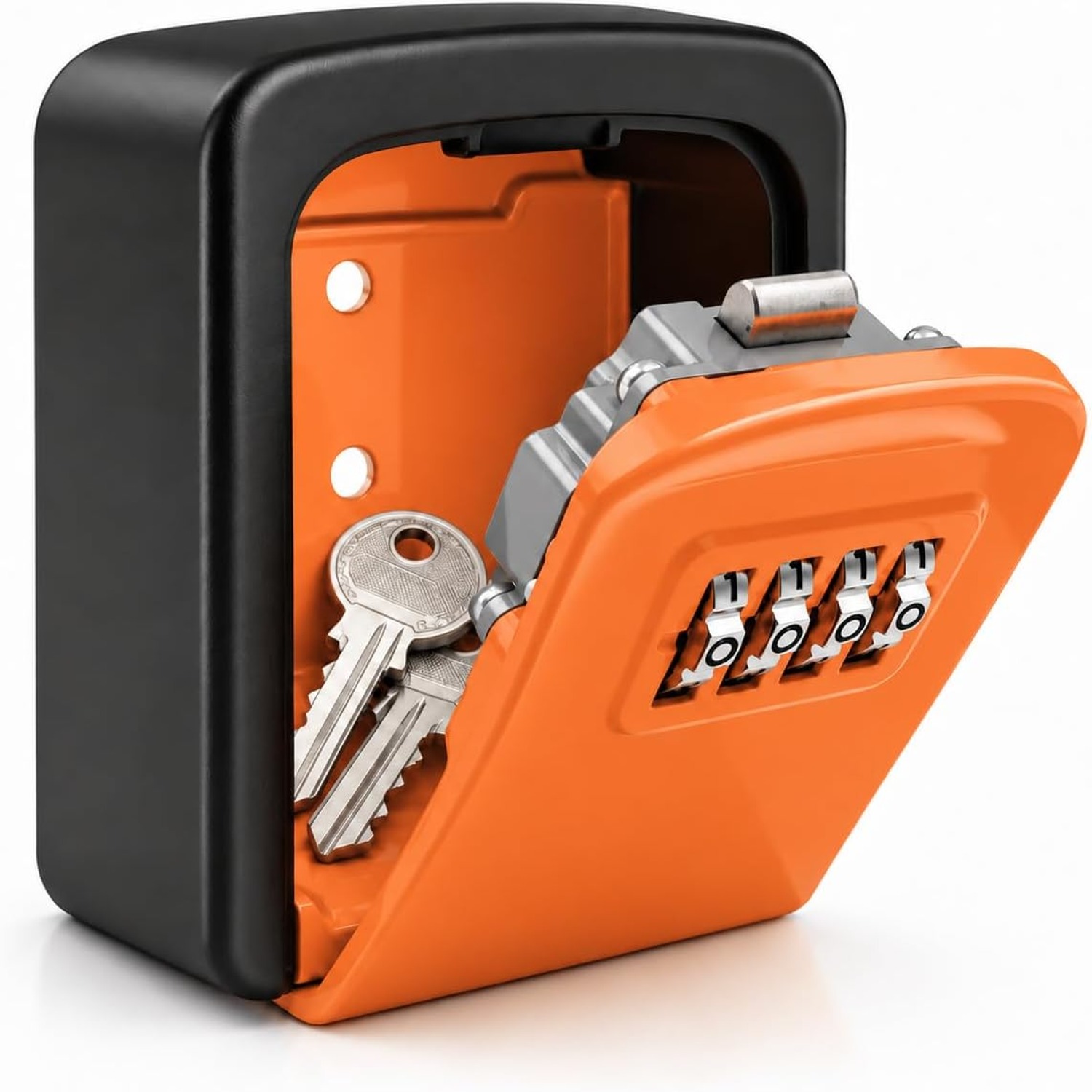
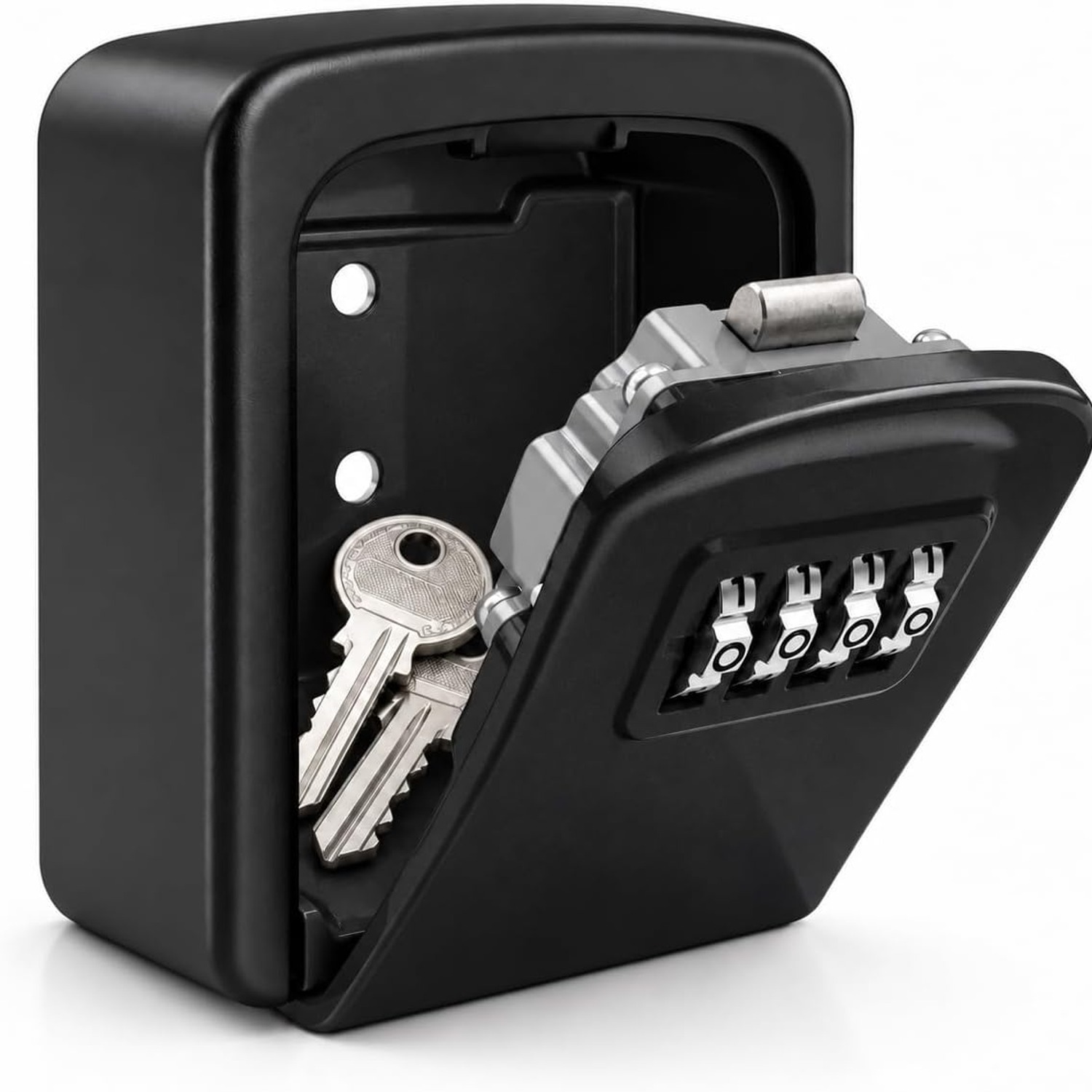
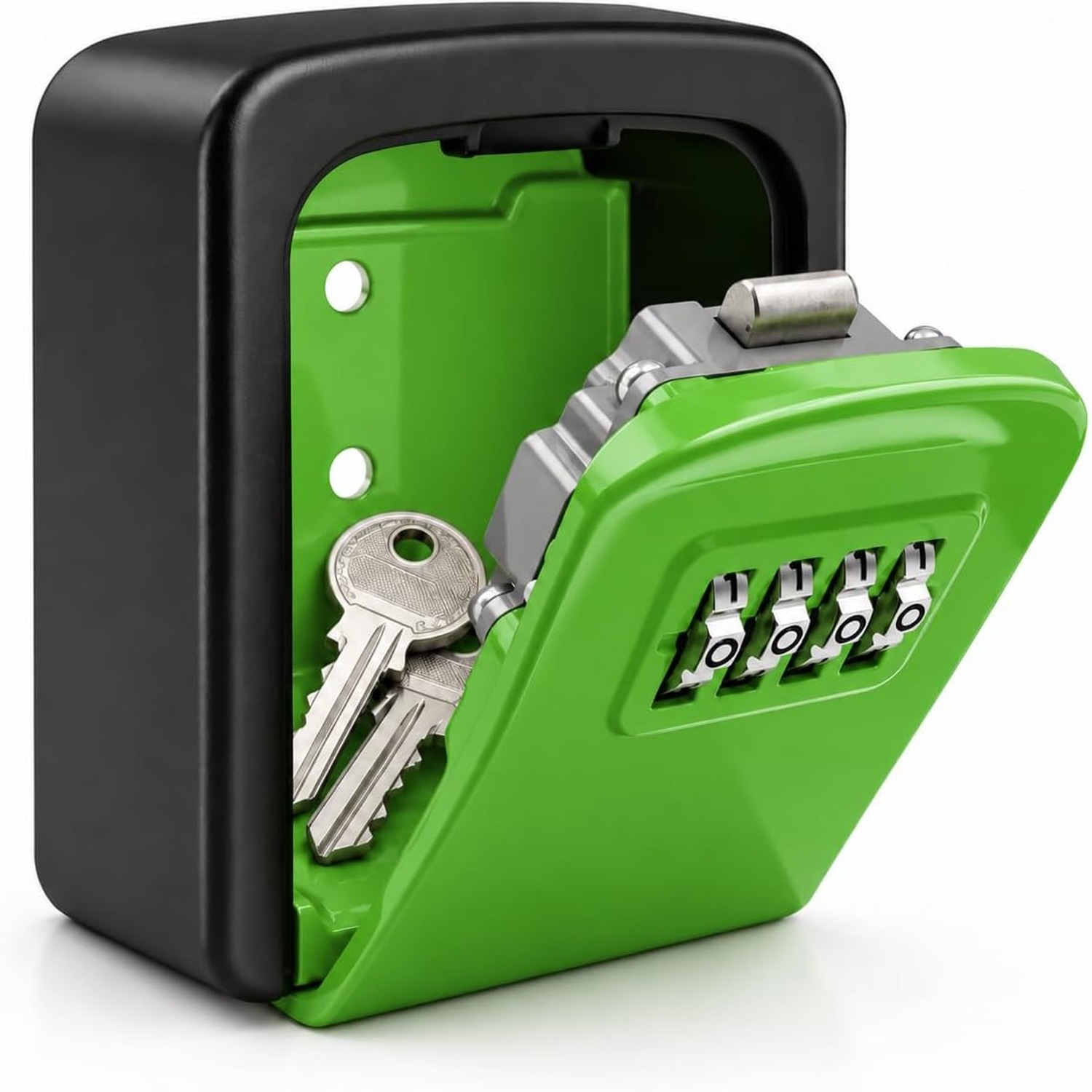
This model has a resettable four-digit lock, a covered dial area and wall mounting accessories. There are also some gaps in the maker's details, especially around size. Here is what to check before deciding whether it suits your property.
What a combination key box does
A combination key box holds keys behind a code-controlled opening. You give the code to someone who needs access, and they collect the stored key when they arrive. That removes the need to pass the key over in person.
It does not remove every part of access planning. Someone still needs to return the key, close the box and leave the dials covered. You also need to keep track of who knows the combination.
Think of it as one part of a shared access routine. A clear set of instructions matters just as much as choosing a mounting spot. Tell users which key to take, where to return it and how to leave the box after use.
How this four-digit key safe works
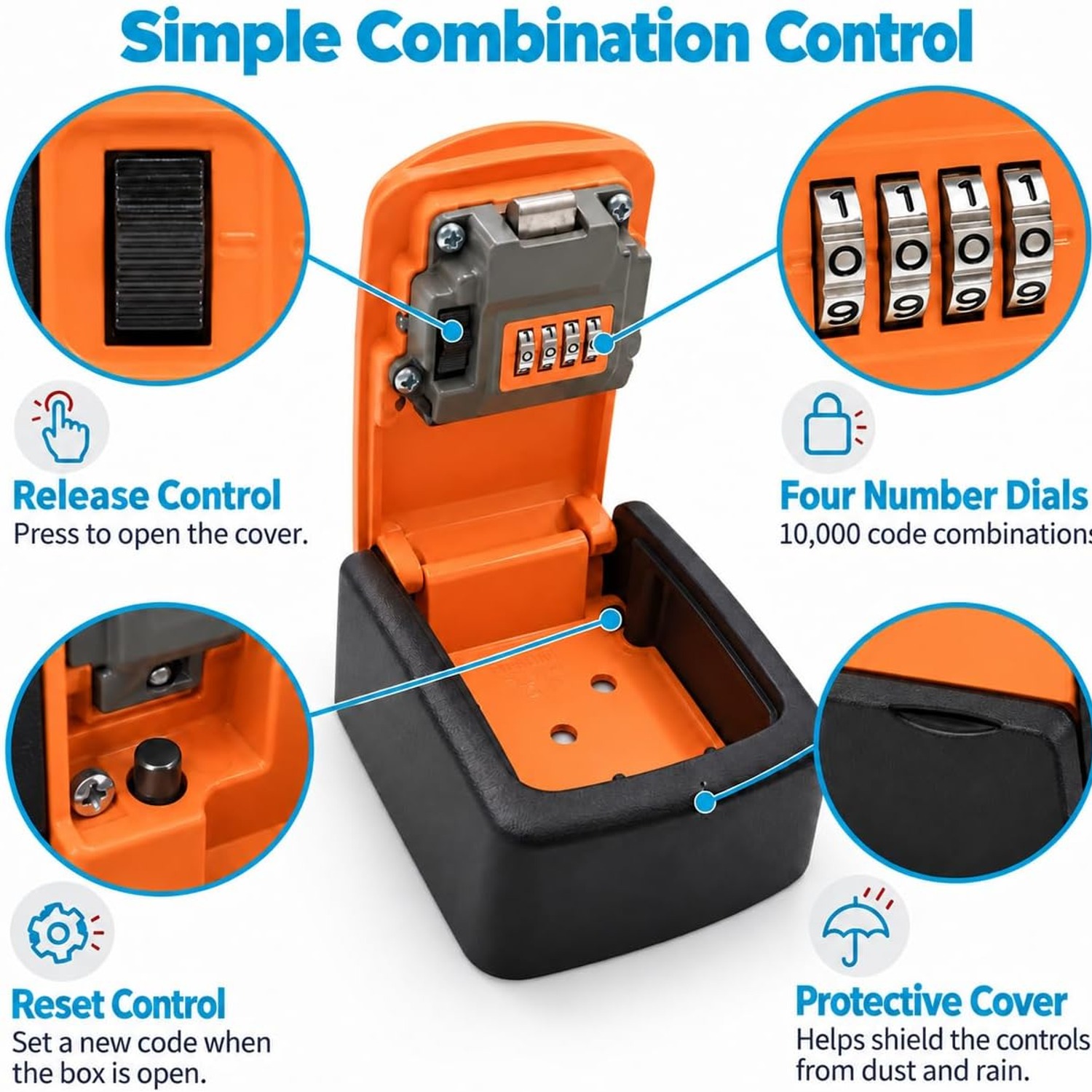
The stated lock is a resettable four-digit combination with up to 10,000 possible codes. You can choose a combination and share it with authorised visitors.
Use the supplied instructions for the exact setting process. Before placing keys inside, practise opening and closing the box. Test a changed code while the compartment is still open so a mistake does not leave your key locked away.
Avoid a code that others could easily guess from public information. Keep your record of it away from the box. If someone no longer needs access, review the code rather than assuming they have forgotten it.
A resettable lock is useful only when code sharing stays under control.
Who it may suit
A key safe for home can help when family members arrive at different times or an authorised visitor needs a spare. It may also suit a garage where users need access without carrying another copy of the key.
For holiday rental owners, guest key collection can be easier when arrival times change. Guests still need clear directions and a private way to receive the code. Plan how the key will be returned at the end of the stay.
Office key storage is another stated use. Before fitting one at work, check whether a shared code meets your organisation's rules. Some properties need an access record or an approved security product, neither of which is stated for this model.
Check key fit before anything else
The maker says the box can hold multiple keys, depending on their size and shape. That is not a fixed capacity. A few flat keys and a large bunch with thick plastic heads need very different amounts of room.
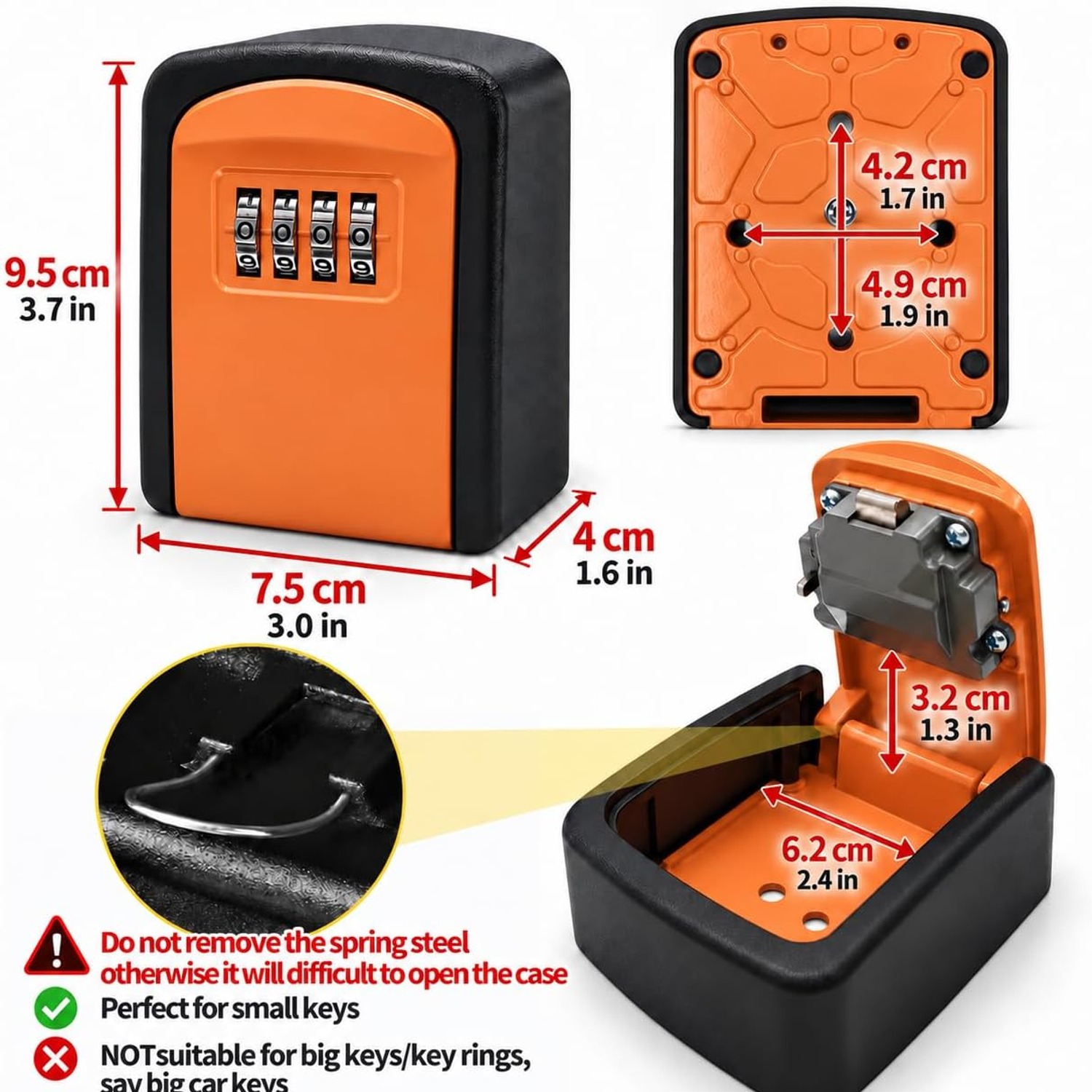
Internal dimensions are not given by the maker. This means there is no reliable measurement here to compare with a long key, a car fob or a bulky key ring.
Gather the exact keys you plan to store before buying. Include any ring or tag that must remain attached. Ask for the usable internal measurements, including room needed for the door and lock to close.
Do not choose based on a guessed key count. For spare key storage, a confirmed fit is more useful than a general promise of space.
Understand the conflicting measurements
The maker gives product dimensions of 10 x 5 x 2 cm. Elsewhere, it states external dimensions of 94 x 72 x 37 mm. These are different measurements, not simply the same figures written in another unit.
Neither set should be treated as a confirmed internal size. If you have a narrow mounting space, need to fit the box between other fixtures or want it to hold a particular key, ask for clarification first.
The listed item weight is 20 g. That figure alone does not establish strength or resistance to attack.
When comparing wall fixed key storage, look for clear dimensions and stated performance details rather than drawing conclusions from appearance or weight.
Materials and the protective cover
The maker describes a zinc alloy body and a black ABS cover over the combination dials. The cover helps keep rain, dust and dirt away from the dial area between uses.
It is worth separating this feature from a weather rating. A cover is useful, but the maker does not give an IP rating or say that the box is waterproof. It also does not state an alloy grade, wall thickness or tested resistance to forced entry.
The colour details need care too. Orange appears in the product details, while the cover is described as black. If the finish is important for your mounting spot, confirm it before ordering.
Choose a sheltered outdoor position
This product is described for indoor or sheltered outdoor use. If you want outdoor key storage, start by looking for a protected location rather than an exposed wall.
A suitable spot should let users read the dials and open the box without awkward reaching. Leave enough clearance around it for the cover and compartment to move. Consider how someone will use it when carrying a bag or arriving after dark.
Keep the location discreet, but not so difficult to reach that people struggle to use it properly. Avoid placing the access code nearby.
A key safe with cover still needs sensible positioning. Do not treat the cover as a reason to install it where direct rain or water spray is likely.
Plan the wall mounting
Mounting accessories and installation instructions are supplied. That does not mean the supplied fixings suit every surface.
Check the wall construction before drilling. Masonry, hollow walls and timber can need different fixings. Follow the instructions, check for hidden cables or pipes and get help if you are unsure.
If the property is rented or managed by someone else, get permission before making holes. Think about the position from the user's point of view as well as the installer's.
After fitting, check that the box is firmly attached and opens without rubbing against anything nearby. Test it with the intended keys before relying on it for a guest's arrival.
Set up a clear handover routine
A shared access key box works best with simple instructions. Tell authorised users where to find it, how to collect the key and what to do after opening the property.
Keep location details and codes out of public messages. For a holiday rental key safe, review who has received the code after each booking and change it when appropriate.
Ask users to return the key to the agreed place. They should close the compartment fully, move the dials away from the opening combination and close the protective cover.
It also helps to plan for mistakes. Decide who a guest should contact if they cannot open the box or find that the key has not been returned.
Know what security claims are missing
No burglary rating, fire rating, certification or insurance approval is given in the maker's description. That matters if your insurer, employer or property manager requires an approved key safe.
Do not assume that a metal body or combination lock meets a particular standard. Ask what standard is needed, then compare it with documented product information.
Likewise, a code-controlled box does not tell you who collected a key. No access log, app or remote management feature is given by the maker.
For a straightforward handover routine, those features may not be necessary. For controlled workplace access or insurance-sensitive use, check the requirements before buying.
Care and regular checks
Keep care simple. Wipe the outside with a soft cloth, clear loose dirt from around the dials and close the cover between uses. Avoid direct water jets.
Check the mounting from time to time. If the box becomes loose or the lock no longer works normally, deal with the issue before depending on it for access.
Follow the supplied instructions when resetting the code. Do not force an overfilled compartment shut, as keys may obstruct normal closing.
Regular checks are especially useful at a holiday property that sits empty between visits. Test the box before the next guest arrives, not after they report a problem.
Delivery, cover and the short version
Check the current estimate if you need the box before a trip or guest arrival. A 12-month warranty and 30-day refund guarantee are also stated, subject to the current terms.
The short version is straightforward. This combination key box offers resettable four-digit access, covered dials and wall mounting for indoor or sheltered outdoor use.
Its key capacity and internal dimensions are not confirmed, and the external measurements conflict. Resolve those points, check your wall and review any security requirements first. If those checks suit your needs, you can plan a clearer routine for sharing spare keys.