
The complete guide
How to Choose a Fire Resistant Chest for Important Papers
Important papers have a way of spreading through the house. A passport ends up in a drawer, an insurance letter sits in a folder, and a certificate is tucked somewhere safe enough to forget. A dedicated chest gives those items one known home.
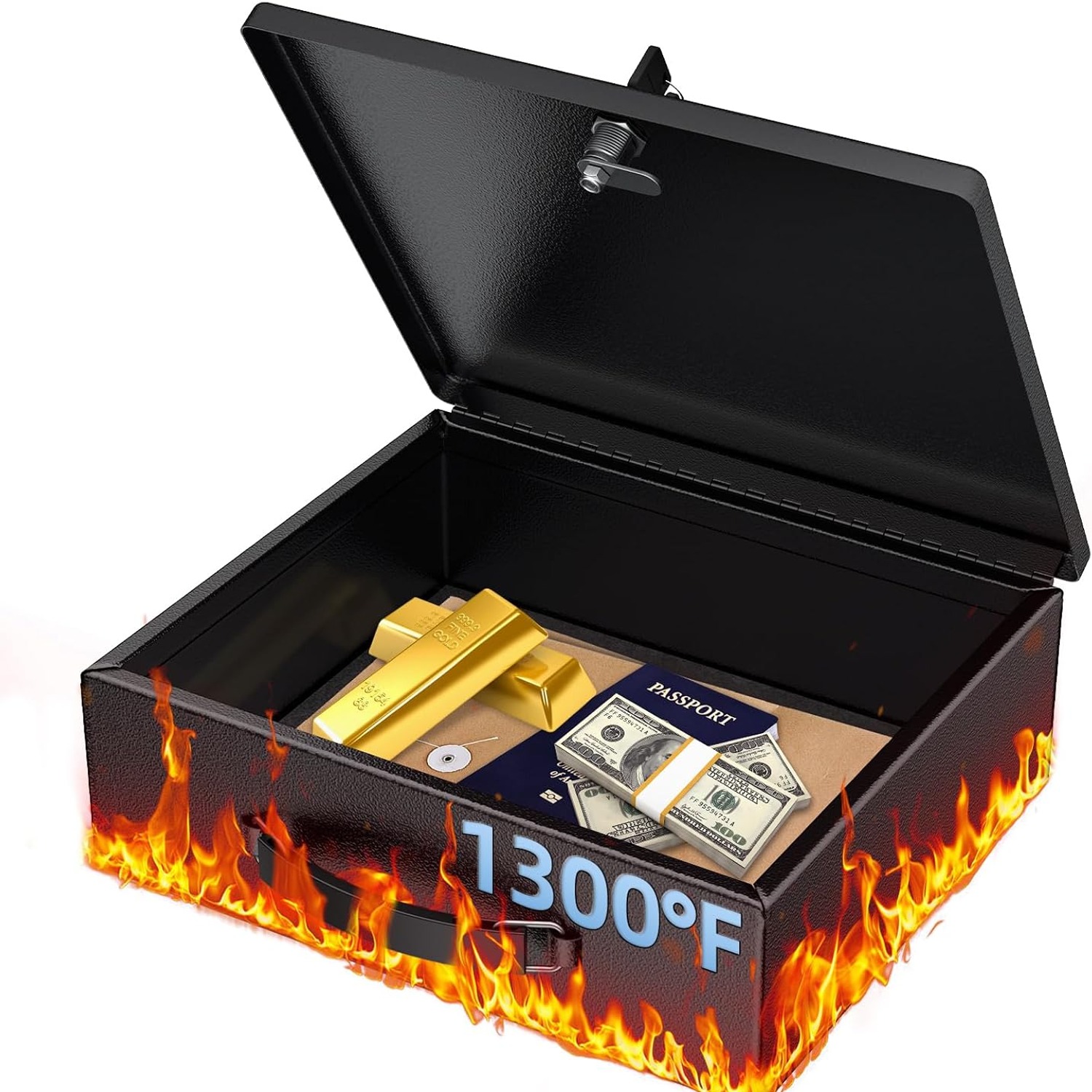
This Fire Resistant Chest combines flat document storage with a key lock and carry handle. It is intended for paperwork and small valuables, not a whole filing cabinet's worth of records. The useful question is whether its space, access method and stated protection match what you need to keep.
Before choosing any fire resistant document box, separate storage convenience from tested protection. Both matter, but they are not the same thing.
Start with the papers you actually need to keep
Pull together the items you would want to find quickly. These might include passports, selected certificates, insurance documents and copies of key household records. Make a small, deliberate collection rather than putting every old letter into the box.
That first sort helps you judge capacity. A few loose documents take up little space. A bundle of envelopes, protective covers and bulky folders can fill a shallow chest much faster.
Think about access as well. Papers used once a year can sit below items you reach for more often. A passport storage chest is easier to live with when you can lift out a passport without unpacking everything else.
Keep a simple contents list somewhere separate. It can help you remember what belongs inside without leaving the chest open while you search.
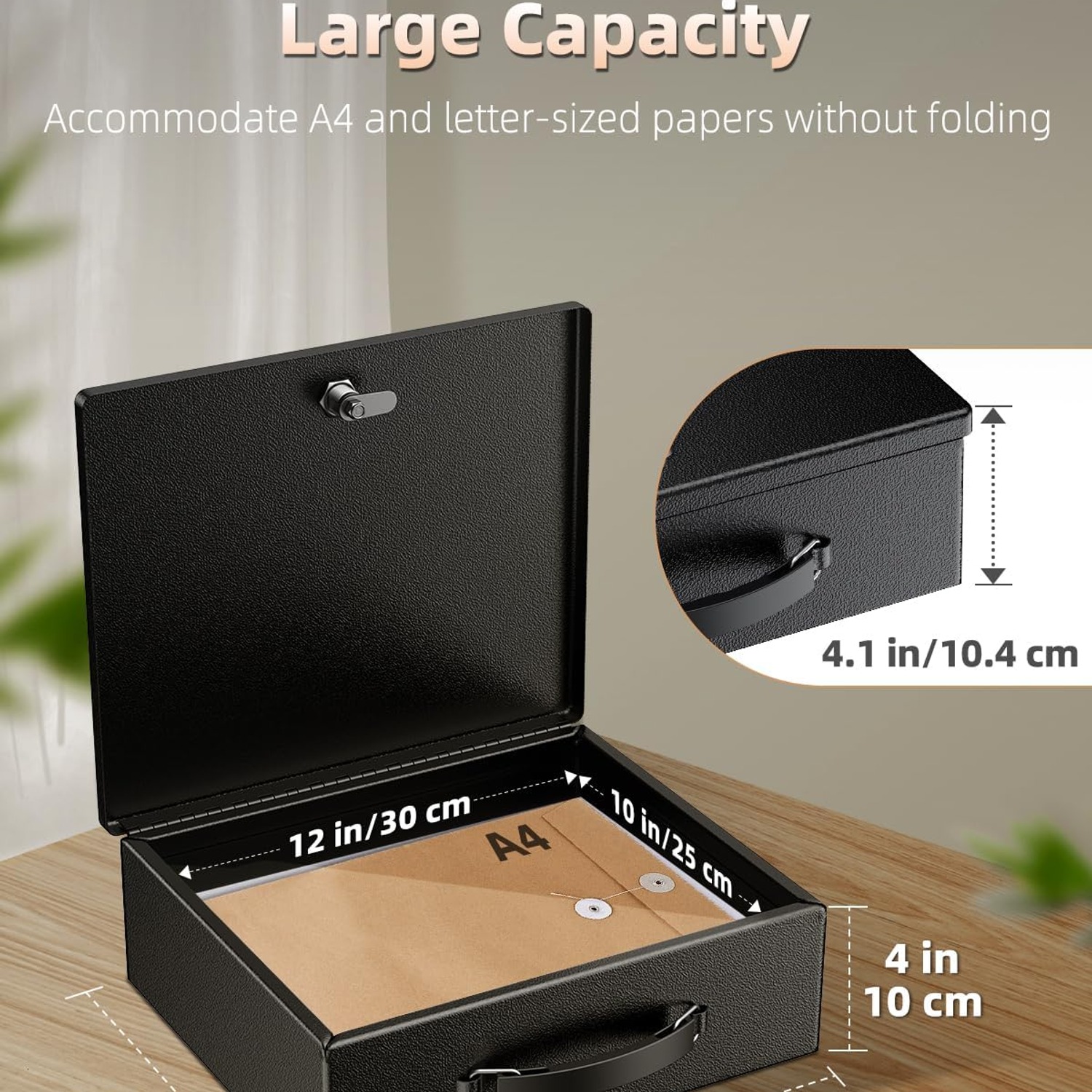
Check the measurements, not just the A4 label
The external dimensions are listed as 32.5 x 27 x 10.4 cm. Those figures help you decide where the chest might sit, but they do not describe the usable storage space.
The listed internal dimensions are 30 x 25 x 8.9 cm. Loose A4 sheets measure 29.7 x 21 cm, so the length clearance is small. That matters if you usually keep papers in folders with tabs or covers extending beyond the page.
A letter size document box also needs room for whatever surrounds the paper. Measure your actual sleeves, envelopes and document wallets rather than relying on the size printed on their packaging.
The capacity is given as 6.68 litres. Use that as a broad guide, then focus on shape. A tall object may not fit even when there seems to be plenty of unused space around it.
Understand what the fire claim does and does not tell you
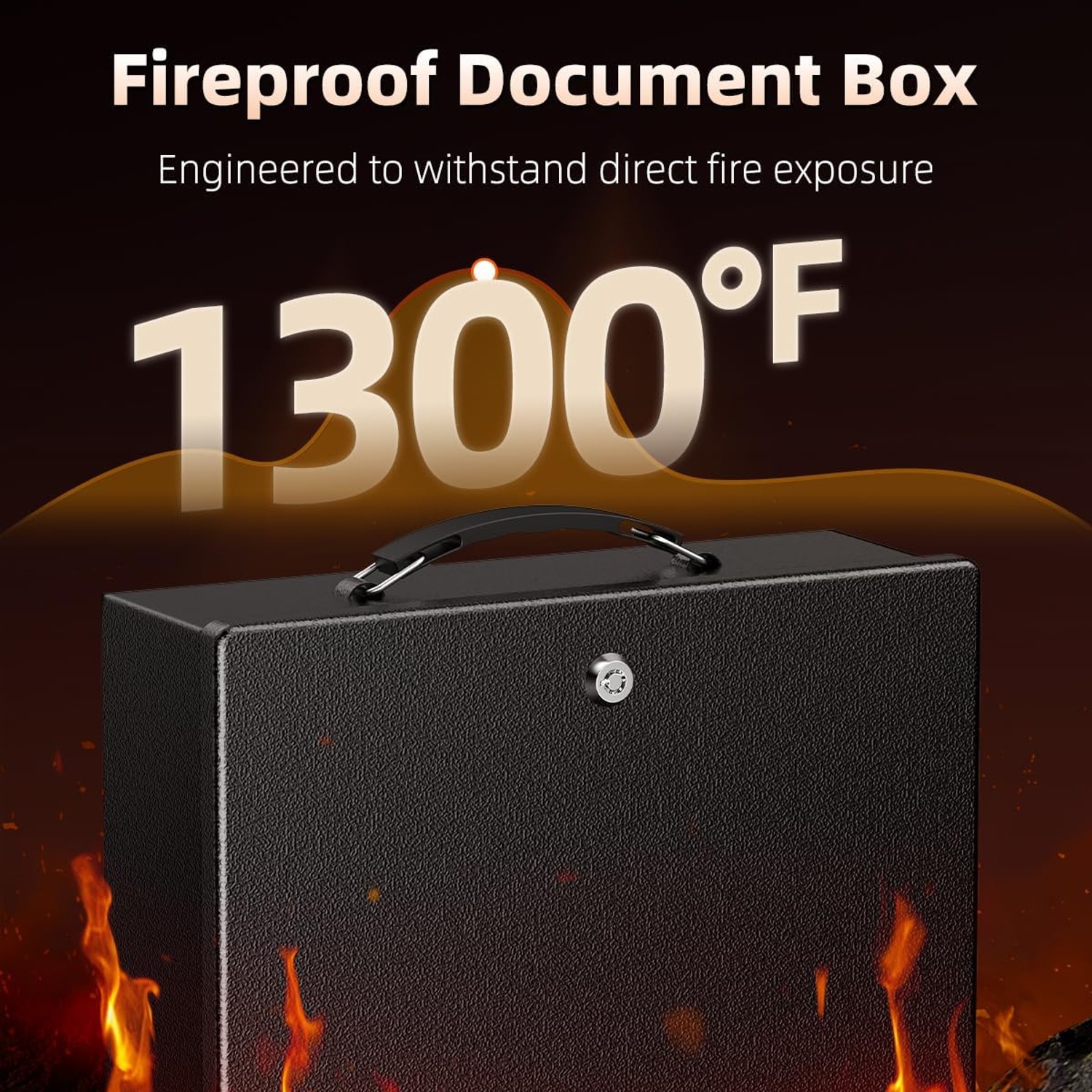
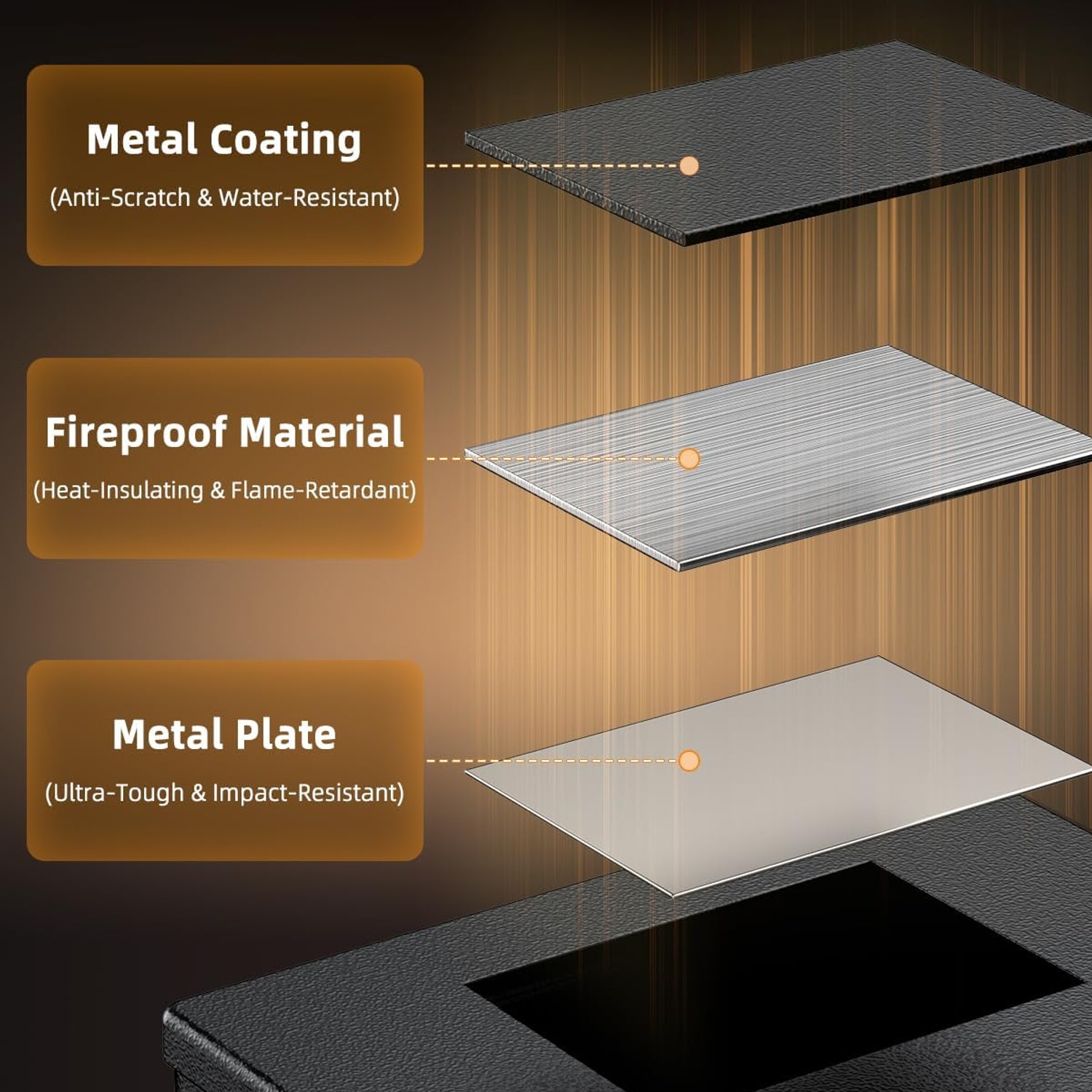
The maker describes the chest as resisting fire exposure up to 704 °C for one hour. However, the maker's description does not include an independent certificate or identify the test standard behind that claim.
Those missing details matter. A temperature and duration alone do not explain the full test conditions, the temperature reached inside, or which contents were assessed. Do not read the product name as a guarantee that every item will survive a fire.
If you require certified protection, ask for the supporting test information before buying. Check that any documentation applies to the exact model and to the type of contents you plan to store.
Paper records and digital media can have different protection needs. The maker does not establish suitability for protecting hard drives, memory cards or USB drives from heat. Keep separate digital backups rather than relying on one chest.
Treat water resistance as a limited claim
The product is listed as water-resistant. It is not given a submersion rating, and the maker does not state a tested depth or exposure time.
That means you should not treat it as a waterproof container. Avoid putting it where standing water is likely, and do not use soaking as a way to check its performance.
For everyday home paperwork storage, choosing a dry location is still important. Water resistance does not remove the need to keep damp documents out or inspect stored papers from time to time.
If flood protection is a main reason for your purchase, look for clear test details that address that risk. A general water-resistant description cannot answer every question about water exposure.
Decide whether key access suits your household
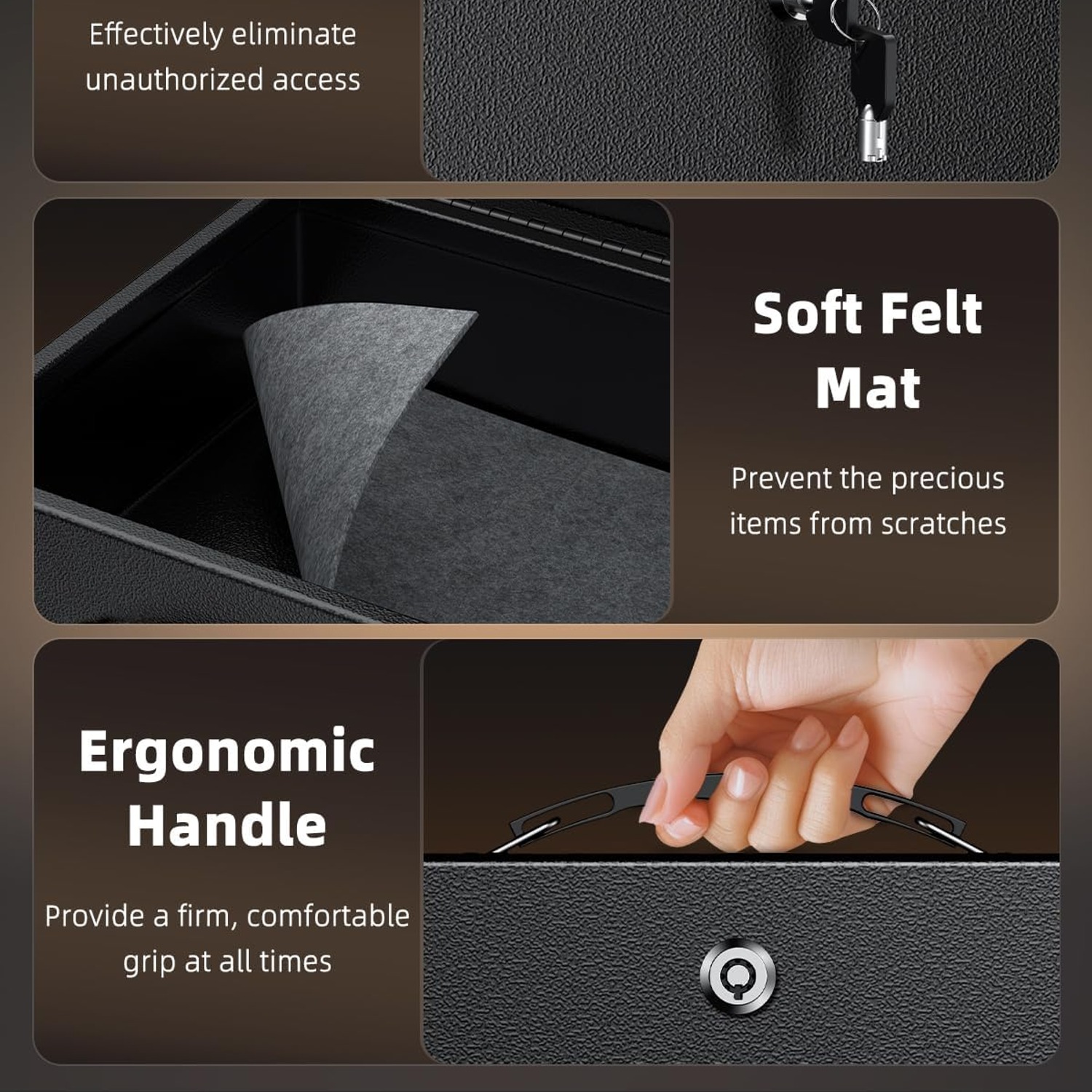
A key locking document box is straightforward. There is no code to remember, and the listed lock does not depend on an electronic keypad. Two keys are included.
The trade-off is key management. Leaving a key beside the chest makes access easy for everyone who finds it. Keeping both keys together also means one misplaced keyring could leave you without either.
Choose a separate place for the spare and make sure an appropriate trusted person knows the plan. If more than one person needs regular access, agree where the working key belongs.
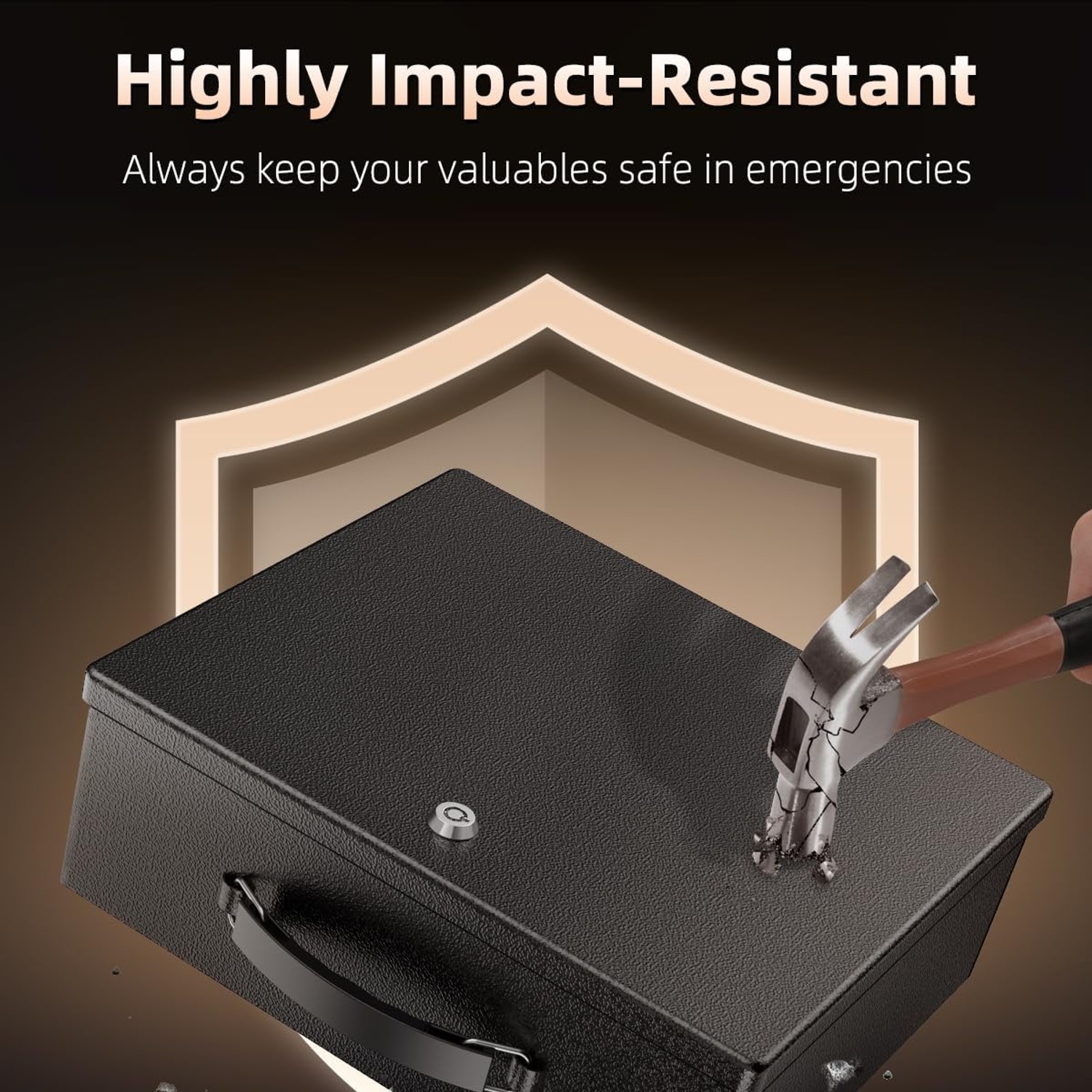
The lock should not be confused with a burglary rating. No tested security grade or insurance approval is stated. For valuable collections or insurer-required cash storage, check the relevant requirements before choosing this chest.
Think about what portable means in practice
A document box with handle can make it easier to move a group of papers together. This chest has a plastic handle attached with dual metal rings.
Its empty weight is 3.14 kg. Add a stack of paper and other belongings, and the total will be higher. Consider who will carry it and how far, especially if stairs are involved.
Choose a storage surface that can support the loaded box. A high shelf may be less useful if lifting the chest down feels awkward or requires both hands while balancing.
The handle is a convenience for ordinary movement. It is not a reason to enter danger to retrieve belongings. In a fire or other emergency, put personal safety ahead of collecting the chest.
Match the chest to the right job
This format may suit a household that wants a single place for selected records. It may also work for small office document storage when the goal is to gather a limited set of important papers.
It is less suited to someone who needs frequent access to a large archive. Shallow storage calls for careful stacking, and each extra folder makes lower papers harder to reach.
A lockable valuables box can also hold smaller belongings alongside documents. Keep jewellery in separate pouches and avoid letting loose hard objects press against certificates or passports.
Do not assume the chest is designed for every kind of valuable. The maker does not specify specialist storage conditions, a cash rating or protection for delicate electronic items. Choose around the needs of the contents, not just the available space.
Choose a sensible place to keep it
Start with a dry spot where the chest can sit level. Check the full external footprint and leave clearance for the lid to open and your hand to reach the lock.
A cupboard may keep paperwork out of sight, but make sure you can remove the chest without shifting a heavy pile of other items. Easy access matters when you need a document for an appointment or a trip.
No clear bolt-down method or fixing kit is specified. Do not plan an installation around mounting points that have not been confirmed.
Avoid altering the box without suitable guidance. Drilling or changing parts could affect how the chest closes or performs, and the maker provides no instructions for those changes.
Keep the contents tidy and dry
A simple filing routine helps more than packing the box tightly. Group related papers in thin sleeves if they fit, and keep the most frequently used items near the top.
Do not force the lid down over an overfilled stack. Leave enough space for it to close normally, with nothing caught around the edges or lock.
Wipe the outside with a soft cloth and dry it before storage. Keep dirt away from the key opening, and follow the instructions supplied with the product rather than experimenting with cleaning chemicals.
Check the contents periodically for moisture and remove records you no longer need. A certificate storage box works best when it holds a useful collection, not an ever-growing pile of unsorted paper.
Check the remaining details before ordering
Free delivery is offered on UK orders, but check the checkout estimate for your address. A delivery promise should come from the current order information, not an assumption based on the product's size.
Read our returns policy before purchase, particularly if folder fit is uncertain. Keep your measurements handy so you can compare them with the listed internal space.
Warranty terms are not specified by the maker. If a warranty or a particular protection standard is important to your decision, ask for the details first.
The short version
Choose this A4 Document Chest if you want key-operated storage for selected papers and small valuables, with a handle for moving them together. Measure folders carefully and allow for its 3.14 kg empty weight.
Treat the fire and water descriptions with care. Independent fire certification, a submersion rating and a burglary grade are not specified. Confirm those points if your storage needs depend on them, then build a simple routine for keeping your documents dry, organised and easy to find.