
The complete guide
Choosing an Electronic Safe for Everyday Valuables
A dedicated place for things you do not want to lose
Cash in a drawer, passports in a folder and jewellery on a bedside table can be hard to keep track of. A home safe gives those belongings a shared place. It also lets you control access rather than leaving important items in open storage.
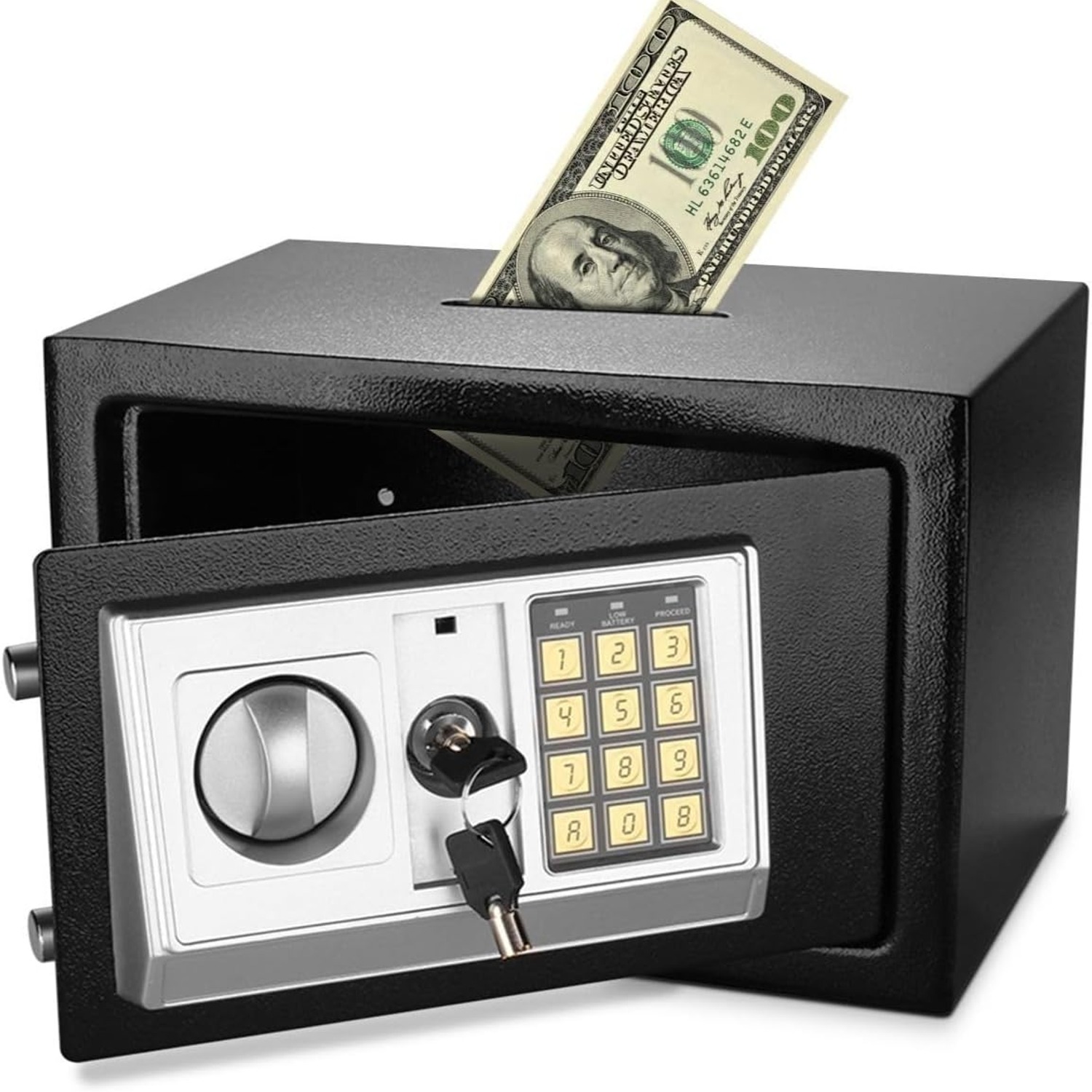
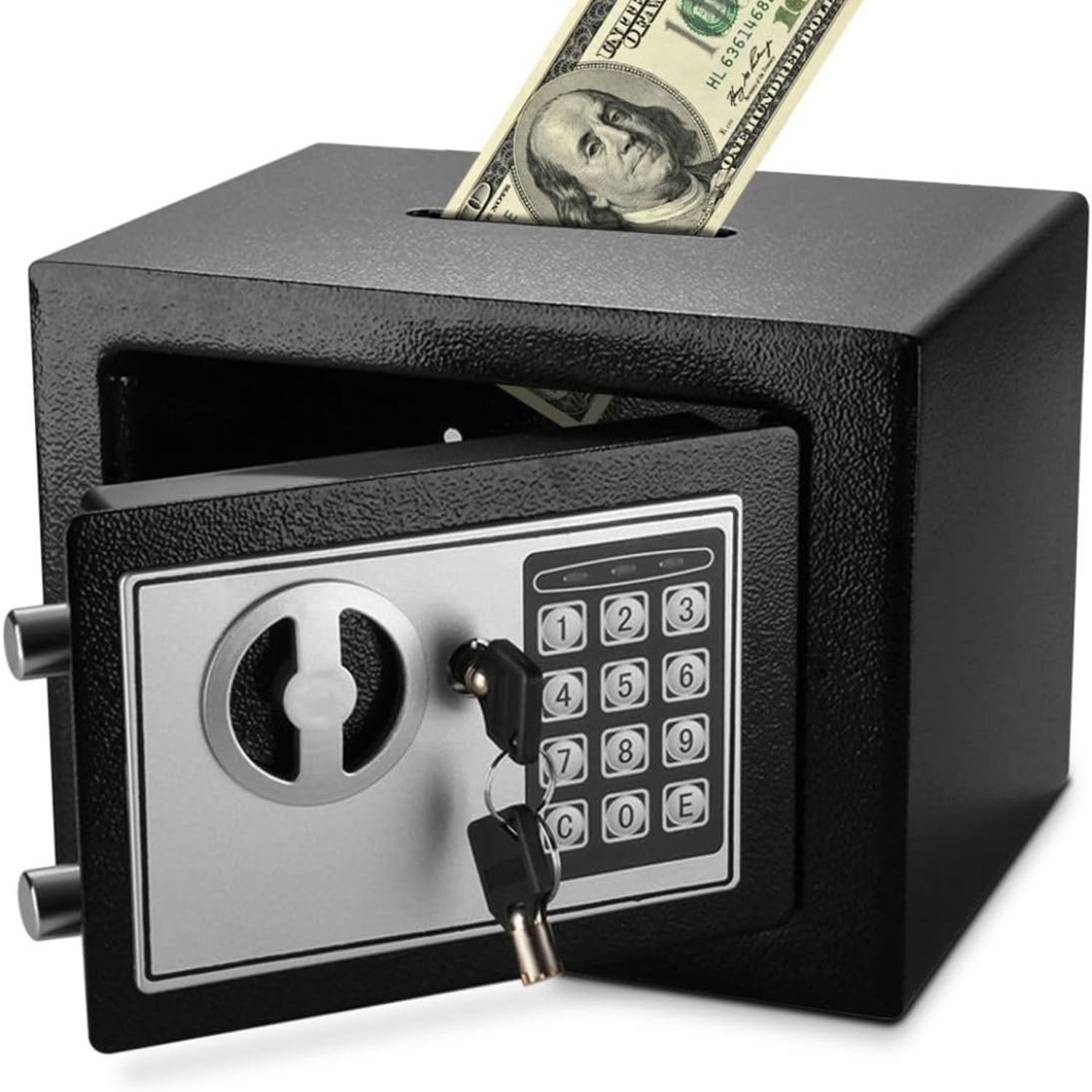
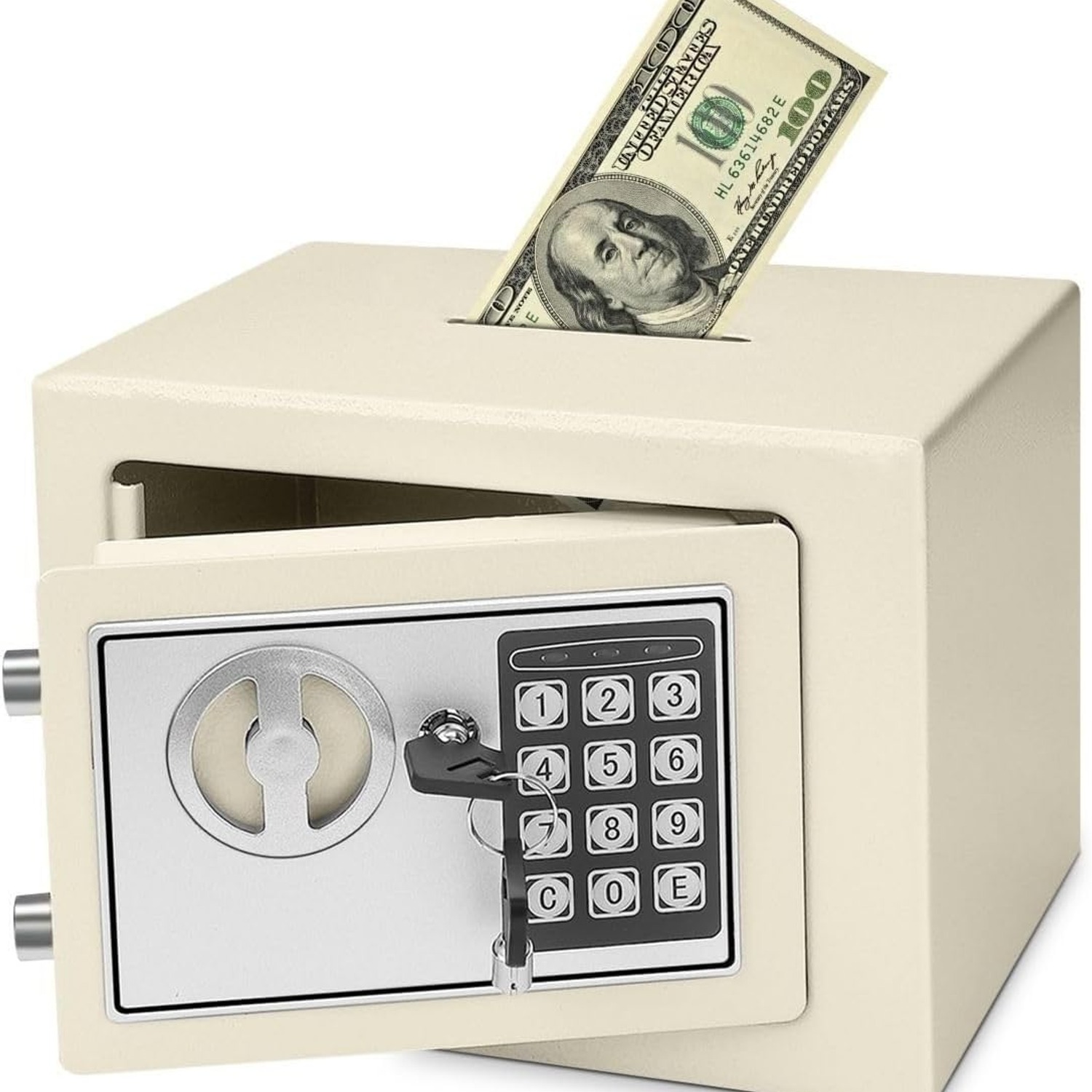
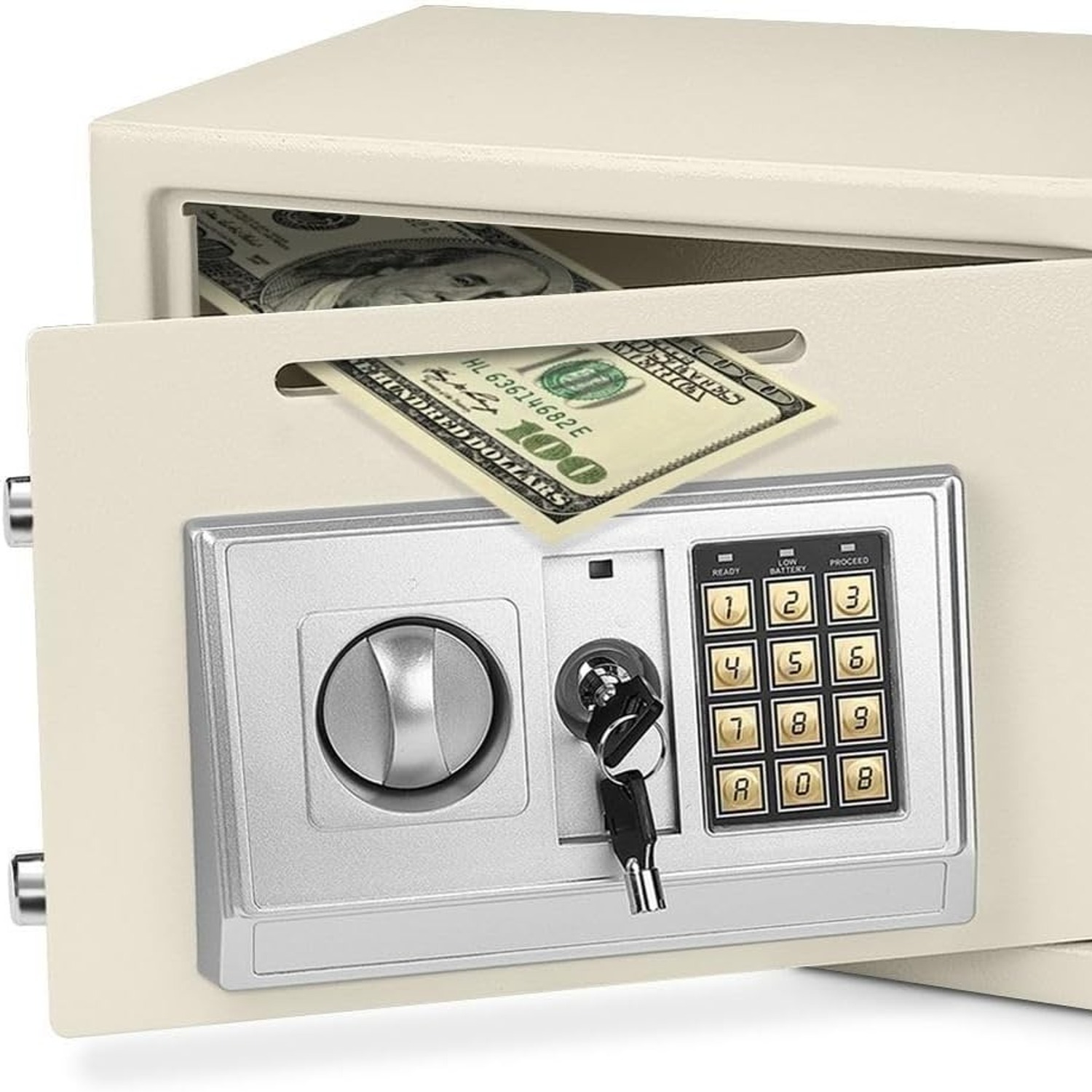
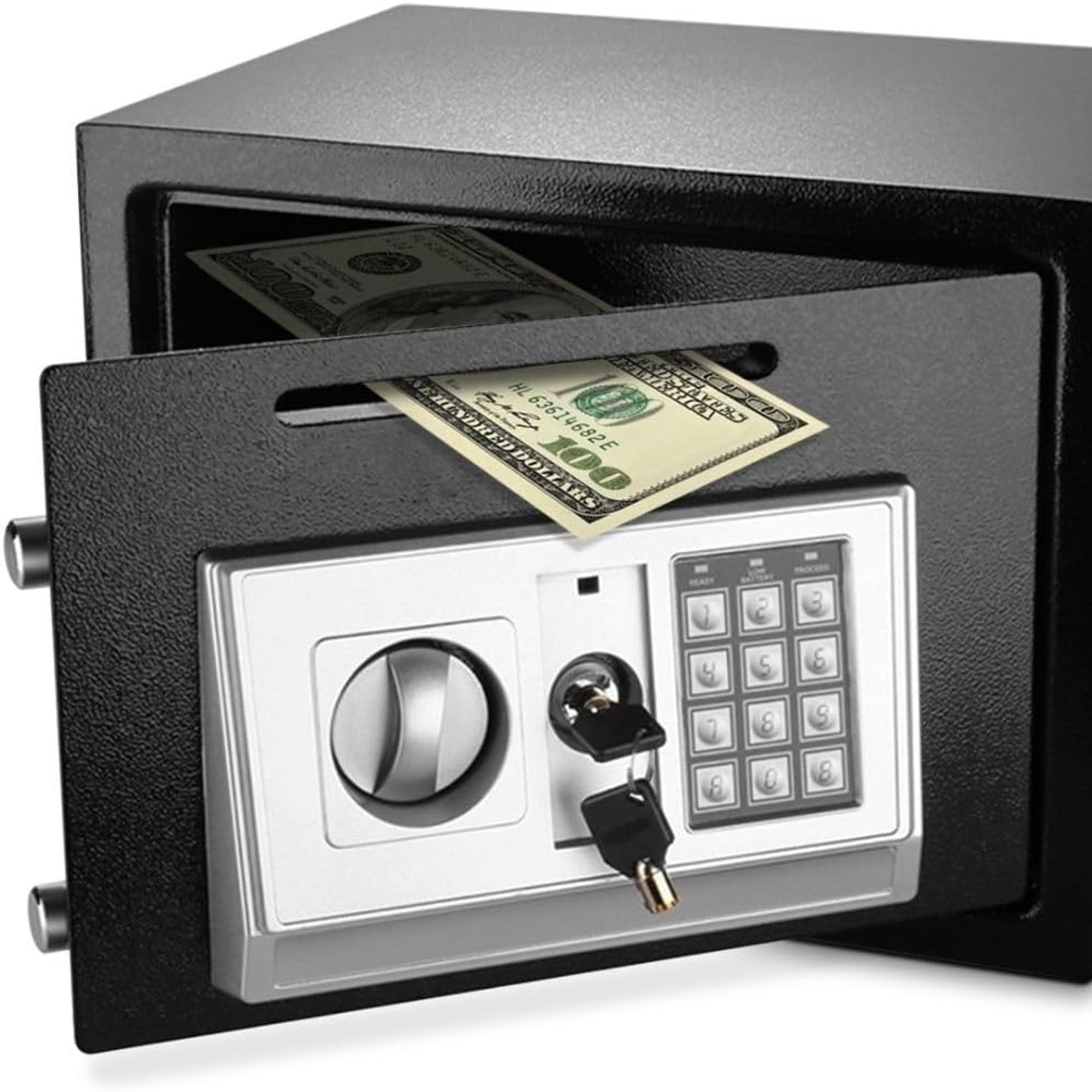
This electronic safe combines touchpad entry with backup key access. It has an adjustable shelf and is described as suitable for mounting. Those features may suit a household that wants an orderly place for small valuables.
The key is choosing it for the job it can actually do. Lockable storage is not the same as certified burglary protection, and a steel case does not establish fire resistance. This guide explains the listed features, the details that need checking and how to decide whether it suits your home.
How the electronic lock works
A keypad safe box lets you enter a code instead of using a key each time. This model is described as having a reprogrammable 8-digit digital code, entered through its touchpad.
The maker's description also states that repeated incorrect PIN entries trigger a lockout. It does not give the number of attempts allowed or the length of the lockout. If these details matter to your household, confirm them before ordering rather than assuming how the system behaves.
Set up the code using the supplied instructions. Choose one that is not an obvious date or a repeated sequence, and avoid leaving a written copy beside the safe. Before putting valuables inside, practise the opening and closing steps with the door open where the instructions permit.
Battery type, quantity and replacement intervals are not specified by the maker. Check those details during setup so that power maintenance does not become guesswork.
Why backup key access matters
A home safe with key override gives you a separate way to gain entry. Two override keys are described for this model, including use when the code is forgotten or the batteries run out.
That backup only helps if you can reach the keys. Keeping both inside the locked safe would defeat their purpose. Choose a separate secure location, and consider how an authorised household member would obtain a key if needed.
Also think about physical access after mounting. A tight cupboard location may leave room to use the keypad but make the key access area awkward to reach. Check both methods before fixing the safe in place.
Treat the keys with the same care as the code. Backup access is part of the locking system, not a reason to leave a spare nearby.
Check the size before you plan the space
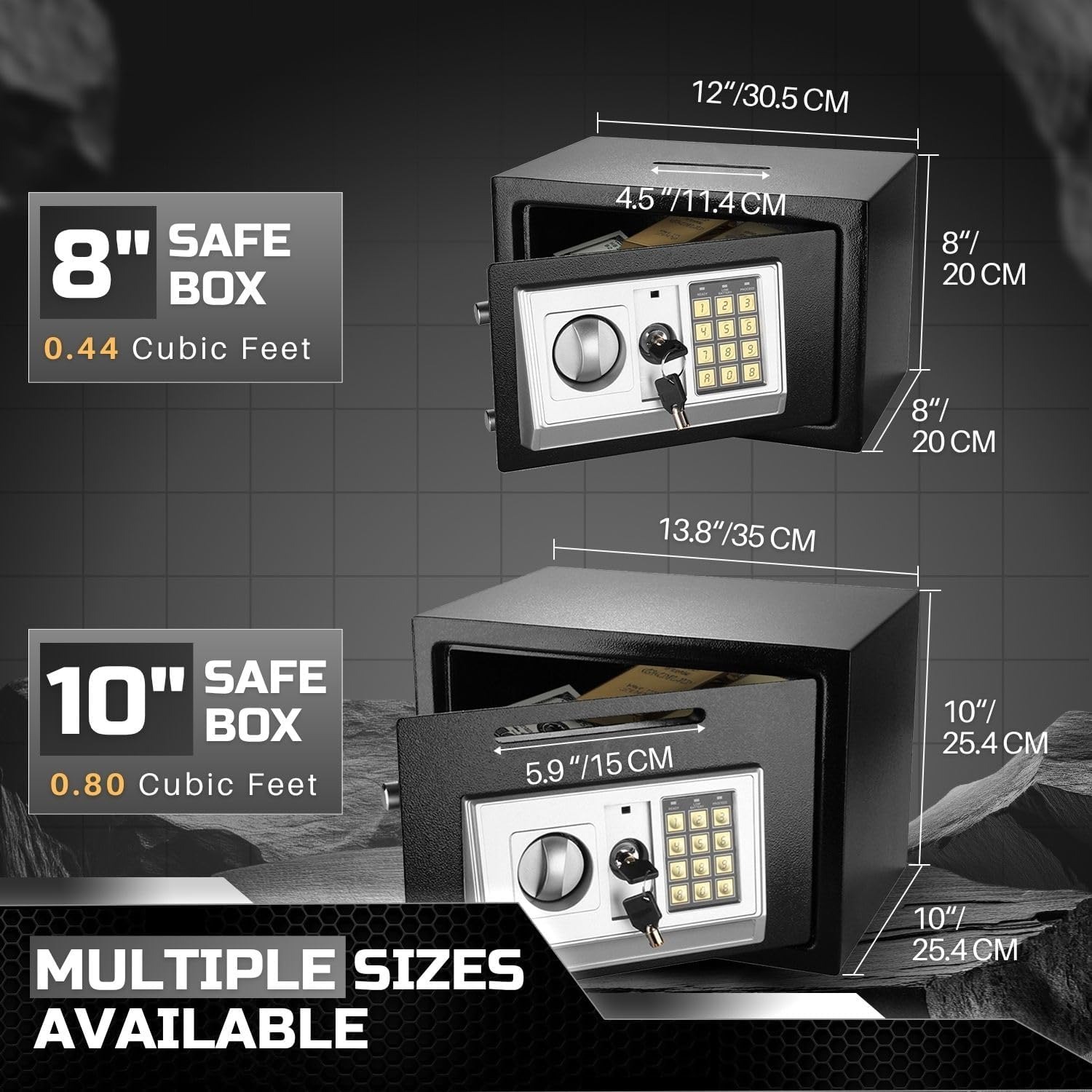
Sizing is the main point to resolve with this listing. The product details give dimensions of 20.3 x 20.3 x 30.5 cm in depth, width and height order. They also list a chamber width of 12 inches, a chamber depth of 8 inches and a capacity of 4608 cubic inches.
These figures do not agree. The capacity cannot be treated as a reliable guide to usable storage, and the chamber width conflicts with the listed overall width.
Ask for confirmed external dimensions, clear internal dimensions and the door opening size before ordering for a particular item or recess. If the adjustable shelf will stay in place, check the space above and below it too.
Leave room for the door to open and your hand to reach inside. A safe that fits a cupboard on paper can still be awkward to use if a hinge, shelf edge or nearby wall gets in the way.
Match the interior to your belongings
Start with the objects you want to store, not an estimated volume. Lay them out and measure the largest item, including any protective case or folder.
For a passport storage safe, think about passport holders as well as the passports themselves. For jewellery, include the box or pouch you plan to use. No interior lining is given by the maker, so do not assume delicate items can rest directly against a protective surface.
A home document safe needs more checking than its name suggests. An envelope may fit where a rigid folder does not. A4 documents may need to lie flat, and the available measurements do not confirm that they can.
The adjustable shelf can help keep smaller items separate. Its load limit and adjustment positions are not stated, so check the instructions before planning heavy or tightly packed storage.
What the steel construction tells you
The product details identify black alloy steel construction. The feature information also describes live-door bolts and concealed hinges.
Those are useful details when comparing the physical design of a steel security safe. They do not tell you its tested resistance to forced entry. Steel thickness, independent burglary certification and an insurance cash rating are not specified.
Avoid treating words such as “security” as a substitute for a rating. If your insurer sets conditions for cash, watches or jewellery, ask what evidence it requires before buying. A product's weight or appearance is not enough to establish compliance.
For everyday household storage, your priorities may be keeping items together and limiting casual access. For high-value contents, the required protection may be quite different. Decide which problem you are solving first.
Choose a mounting location with care
Wall mounting is listed in the product details. The feature text also describes installation on a floor or shelf, with mounting hardware included.
Before choosing a location, confirm the permitted fixing positions in the instructions. Then assess the surface. Plasterboard, masonry and furniture panels need different approaches, and included hardware should not be assumed suitable for every material.
The listed weight is 4.54 kg before adding contents. Both the support and the fixings need to suit the full installation. If you are unsure about the wall or furniture construction, ask a qualified installer.
A wall mount safe should remain easy to operate once fitted. Try the proposed height and check lighting, keypad visibility and door clearance. In a rented home, get permission before drilling or making permanent changes.
Keep water and fire protection separate
This safe is listed as not water resistant. Choose a dry indoor location away from likely leaks, splashes or damp areas.
Think about what sits above the proposed location as well as what is beside it. A spot under plumbing may be convenient, but a leak could expose the contents to water. The steel shell should not be treated as a watertight container.
No fire rating is specified either. If the main reason for buying a safe is to protect documents during a fire, look for a model with stated, suitable test information.
These are separate buying decisions. Code access, mounting options and an adjustable shelf do not establish protection from heat or water. Keeping those limits clear helps avoid choosing the wrong storage for irreplaceable items.
Who this type of safe may suit
An electronic home safe may suit someone who prefers code entry and wants a dedicated place for smaller valuables. The adjustable shelf may appeal if you want to separate cash envelopes from jewellery boxes or passport holders, subject to confirmed fit.
It may also suit a shared household where authorised users prefer a code to passing around a key. Agree who needs access and how code changes will be handled.
Business deposit use needs more checking. Although the reference text mentions a drop slot, the structured details do not establish its dimensions or operation. Do not order it as a deposit safe without confirming that feature.
Likewise, specialist storage needs should be checked separately. The maker does not establish suitability for regulated items or any use that depends on a particular certification.
Build a simple care routine
Keep the exterior clean with a soft, dry cloth. Avoid spraying cleaner onto the touchpad, key opening or door gaps.
Follow the supplied instructions for batteries and lock care. Do not add oil or other products to the mechanism unless the instructions call for them. If operation becomes unreliable, investigate rather than repeatedly forcing the handle or door.
Check mounting fixings from time to time, especially if you notice movement. Stop using a loose installation until the cause has been assessed.
Review the contents occasionally too. Remove unneeded items, keep the closing area clear and make sure everyone with authorised access still understands the routine. A safe with adjustable shelf storage is easier to use when it is not packed so tightly that items catch on the door.
Before you place an order
Confirm the measurements first. The conflicting size and capacity figures make that essential for this product, even if your intended contents seem small.
Next, check the mounting instructions, power requirements and any security standard you need.
If it is a gift, ask about the recipient's available space and permission to mount it. Let them choose their own code after setup rather than setting a shared default.
The short version
This electronic safe offers code entry, two override keys, an adjustable shelf and mounting hardware. It is listed as black alloy steel and weighs 4.54 kg.
Choose it only after confirming the usable dimensions and installation method. It is not water resistant, and no fire or independent burglary rating is specified. For everyday lockable storage, focus on fit, access and correct mounting rather than assumptions about protection.