
The complete guide
A Practical Guide to Choosing a Decorative Book Safe
Small belongings can make a room feel untidy surprisingly quickly. A few notes on a bedside table, spare cards in a drawer and a piece of jewellery beside a lamp all need somewhere to go. Sometimes the aim is simply to keep them together without leaving them on show.
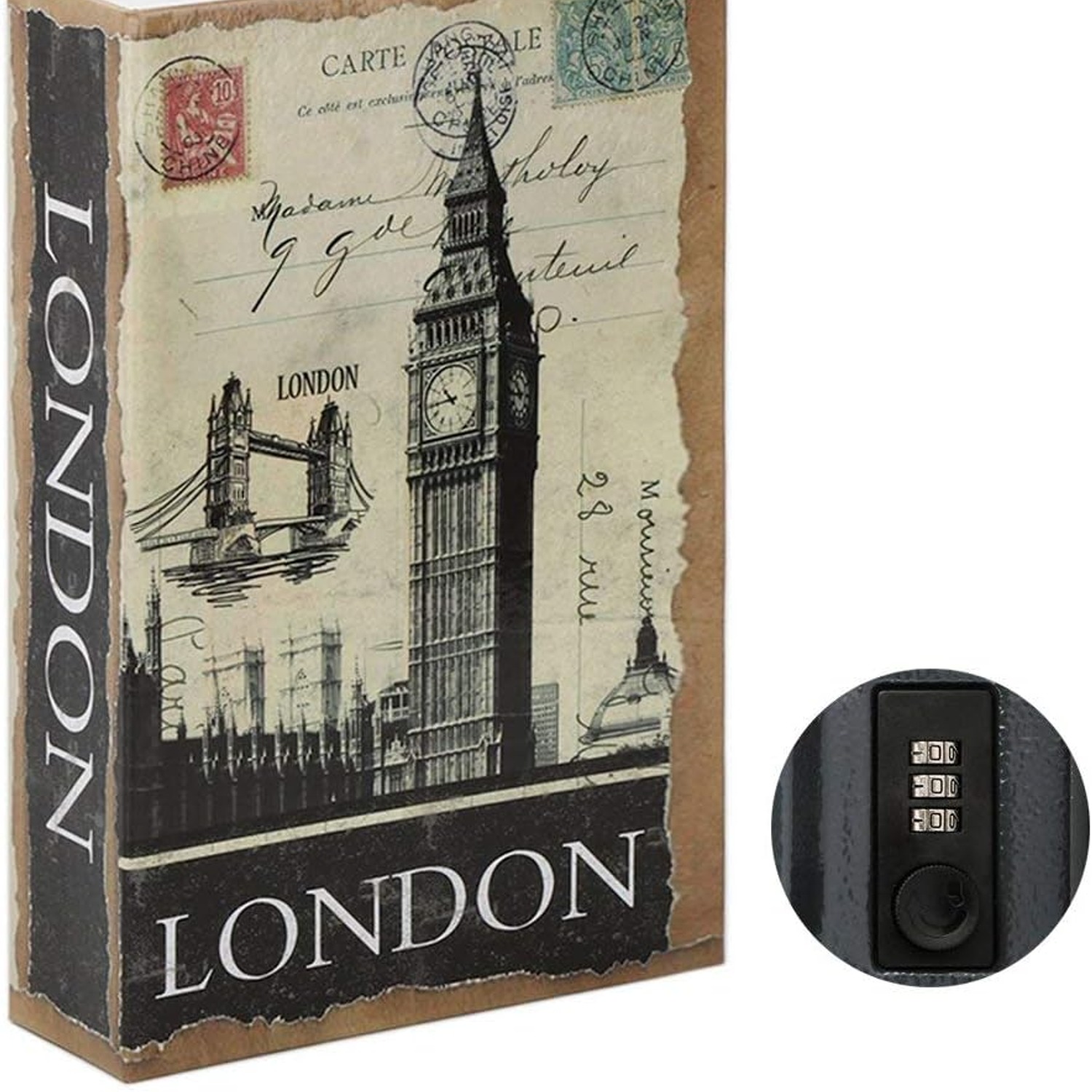
A decorative book safe offers one way to do that. Its book-style exterior gives it a place on a shelf, while the compartment holds small items behind a lock. This London design is described as portable and uses a three-number combination.
The main buying question is not just whether you like its appearance. It is whether discreet storage matches your needs, and whether the items you want to store will fit. Here is what to consider.
What a book safe is for
A diversion book safe uses the appearance of an ordinary object to make storage less obvious. In this case, that object is a book. It can sit alongside reading material or rest on a suitable table without looking like a conventional cash box.
That does not make the contents impossible to find. Someone who picks it up or knows what to look for may recognise its purpose. Think of hidden book storage as a way to reduce casual visibility, not a promise that belongings cannot be discovered.
This distinction matters when deciding what to put inside. Spare cash and everyday keepsakes have different storage needs from valuable jewellery, irreplaceable papers or items subject to insurance conditions.
How the locking arrangement works
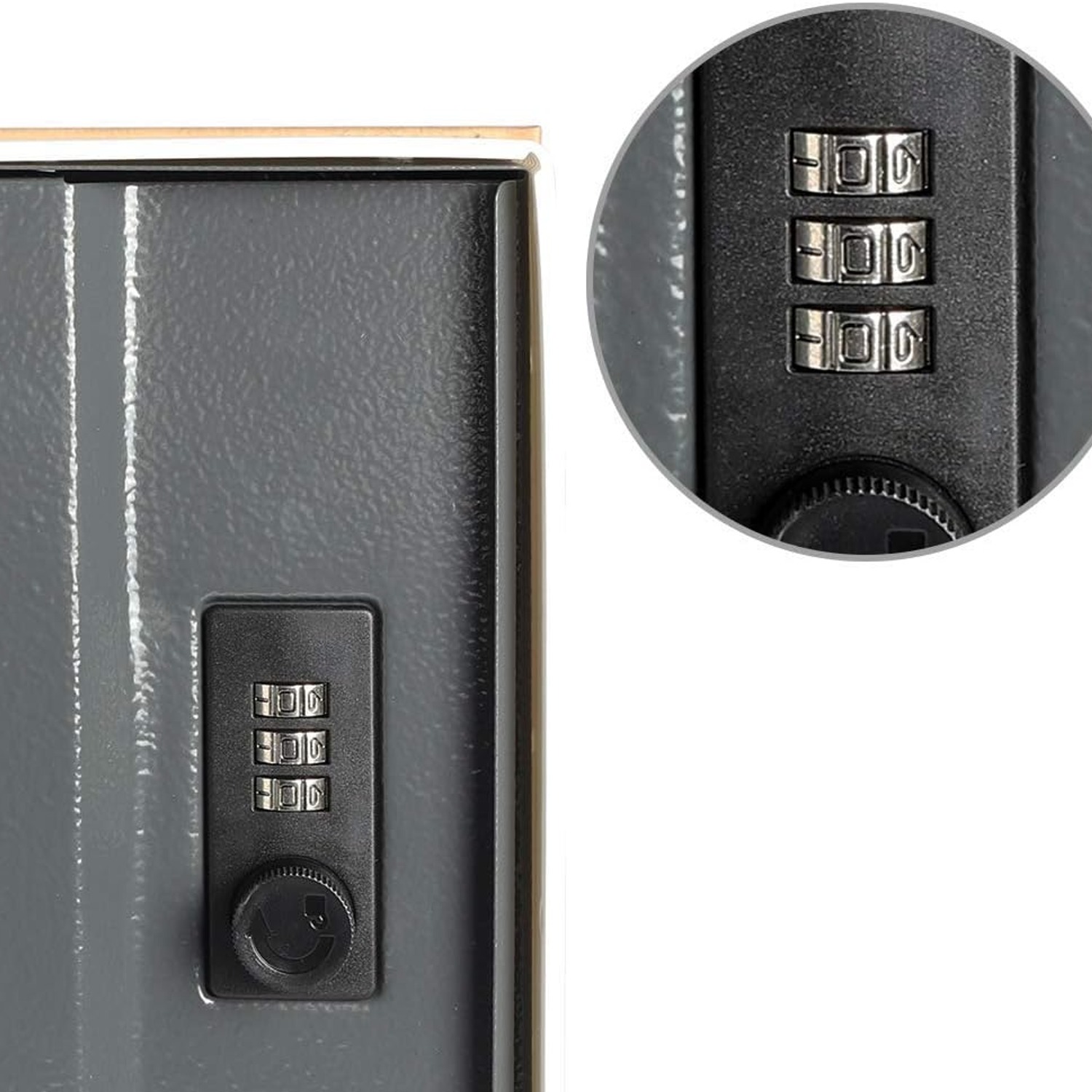
The description specifies a three-number combination lock, and the product details list a mechanical code lock. This points to access controlled by a number sequence.
There is one detail worth checking. A separate field in the maker says key control, which conflicts with the combination description. The maker does not confirm an extra key-operated function or supplied keys. If you need either feature, ask for clarification before buying.
When the safe arrives, read the instructions before storing anything. Try the opening and closing steps with the compartment empty. If code changes are supported, follow the supplied method rather than instructions for a different model.
Keep any code record separate from the safe. Storing it inside the box will not help if you forget the sequence.
Decide what you want to store first
Start with the belongings, not the shelf. Lay out the items you plan to keep together and look at their overall size and thickness. A small stack of cards takes up space differently from jewellery in a pouch.
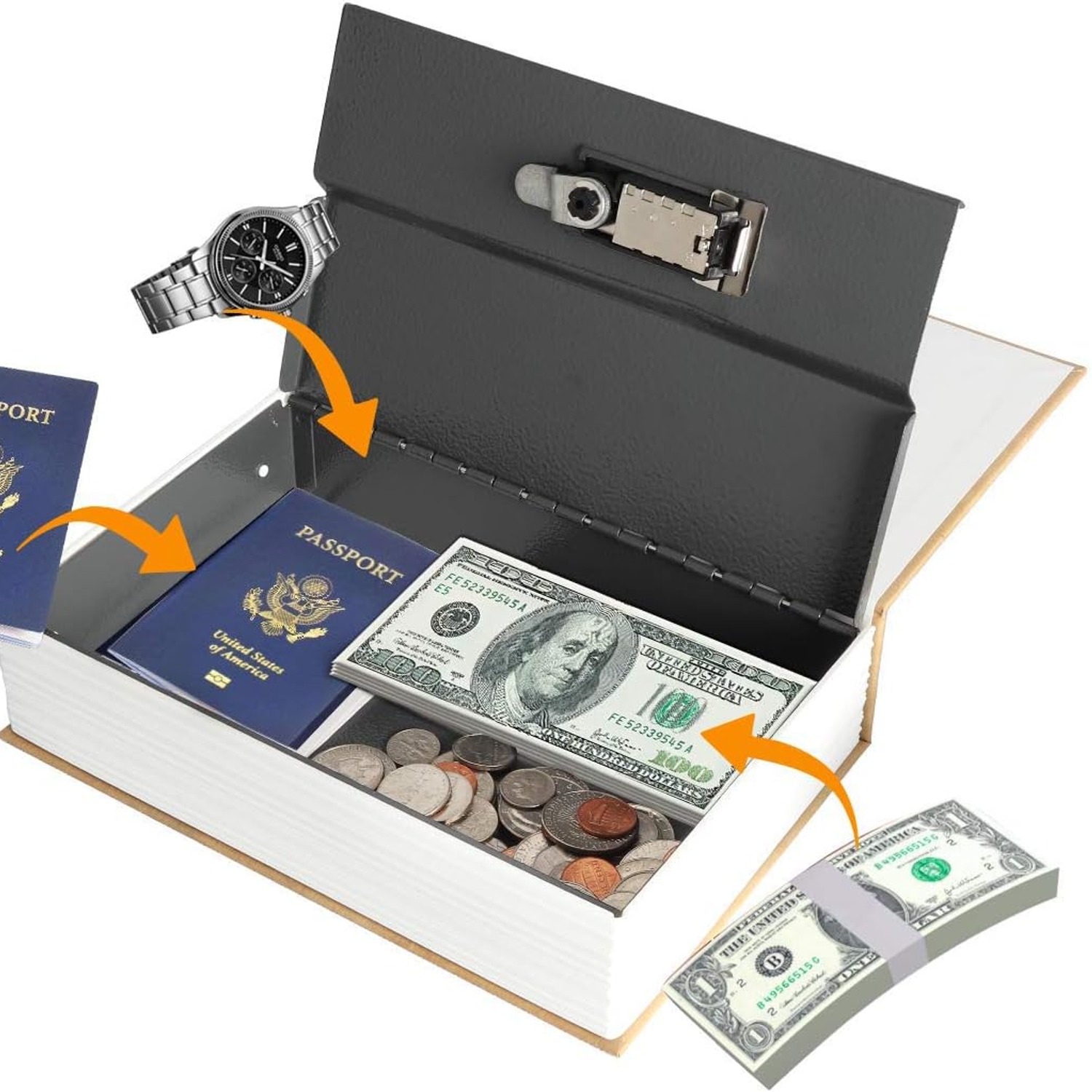
Cash, credit cards and jewellery are suggested uses in the product description. That makes this a reasonable option to consider for everyday organisation. It does not confirm how many items will fit or whether a particular wallet or document can go inside.
For a jewellery book safe, think about contact between pieces as well as capacity. A lining is not specified. A small soft pouch may help separate delicate items, though it will also use some of the available space.
Avoid filling any storage box to the point where closing it puts pressure on the contents or lock.
Read the size information carefully
This listing has conflicting size information, so it deserves more attention than a quick glance.
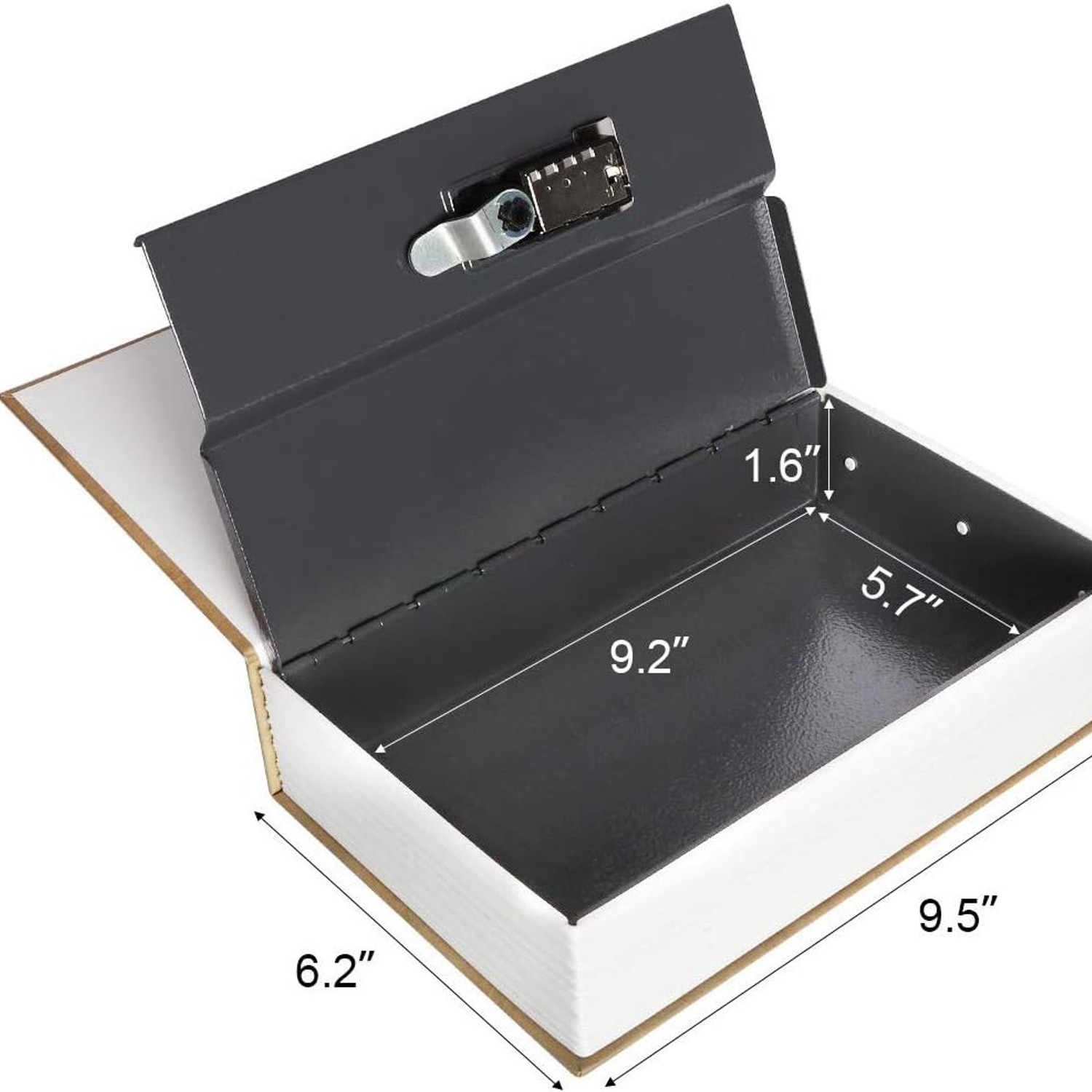
The product-details dimensions are 15.8 × 24.1 × 5.6 cm, given in depth, width and height order. Elsewhere, the description states 9.52 × 6.14 × 1.37 inches. Those figures are not equivalent, and the maker does not clearly explain the measurement basis.
It also lists a chamber depth of 1.37 inches, a chamber height of 3.5 cm and a capacity of 115 cubic inches. These figures do not provide a complete, verified interior measurement set.
For a purchase that depends on exact fit, request confirmed usable internal dimensions. This is especially important for a passport, a boxed keepsake or any rigid item. External dimensions alone would not settle that question, even if all the measurements agreed.
Choose a sensible place for it
A bookshelf safe makes most sense where books already belong. Look for a stable shelf with enough room to place and remove it without knocking other items over.
The description also suggests coffee-table and bedside placement. A bedside book safe may be convenient for items you put away at the end of the day. On a shared table, though, a book-shaped object may attract attention from someone who wants to look at it.
Keep access in mind. If you need to move several objects every time you open the box, you may stop using it. A useful storage habit should be easy enough to maintain.
The listed mounting type is tabletop. Do not plan a fixed installation around this product, since no mounting method or hardware is specified.
Understand what the construction tells you
The product details list metal as the material. They do not identify the material of every exterior part, describe a lining or state the thickness of the metal.
That means it is better to avoid drawing conclusions from the material name alone. Metal construction does not establish a fire rating, a burglary rating or resistance to a particular tool.
The stated weight is 740 g. This is useful for planning shelf placement and carrying weight, but it is not a security test. If you are comparing products, look for evidence that directly answers your needs rather than treating weight as a substitute.
For this item, the clearest stated role is a portable, book-style compartment for small belongings.
Using a portable book safe away from home
A portable book safe may be useful when you want to keep a few items together during a trip. The description includes travel among its suggested uses.
Allow for its 740 g weight before adding contents. If luggage space is tight, compare the listed dimensions with the space you have available, while remembering the measurement conflict.
Portability has a trade-off. An item that you can carry can also be moved by someone else. A travel book safe should not be treated as a fixed security installation or left unattended on the assumption that its appearance is enough protection.
It may help with organisation in temporary accommodation, but the right storage choice still depends on the value of the contents and the risks around them.
Keep water and moisture in mind
The water-resistance detail is clear. This product is not water resistant.
Choose a dry location away from drinks, sinks, open windows and damp storage areas. A coffee table may be a suggested setting, but placing the box beside a glass of water adds a risk that is easy to avoid.
Travel use does not change that limit. Keep it away from rain and wet bags. The reference to use away from home should not be read as a weatherproofing claim.
If water protection is one of your main requirements, choose a product with a stated level of protection suited to the situation. A book-like cover is not evidence of a sealed compartment.
Know when a different safe is needed
A discreet storage box and a rated safe solve different problems. This item may suit someone who wants small essentials less visible and more organised. The maker does not establish protection against fire or forced entry.
For high-value belongings, check the requirements of your insurer before choosing storage. You may need a rated safe, a particular installation method or another arrangement altogether.
Do not use this box as child-resistant storage for medicines, dangerous items or anything requiring controlled access. No child-resistance claim is provided.
Being clear about these limits does not make a book box less useful. It helps you choose it for a job it can reasonably serve, rather than expecting unlisted protection.
Care and everyday use
Basic care is straightforward. Wipe the surface with a soft, dry cloth and keep cleaning liquids away from the lock. Avoid soaking the box.
Open and close it without force. If the compartment will not shut easily, check whether an item is blocking it rather than pressing harder. Keep loose pieces clear of the closing edges.
Follow the supplied lock instructions for operation and any permitted adjustments. A recovery method for a forgotten code is not specified by the maker, so take code storage seriously from the start.
Before ordering, also check the current delivery estimate and returns policy.
The short version
This London book safe is worth considering if you want discreet storage for small everyday belongings in a book-style format. It is listed as portable, weighs 740 g and is described with a three-number combination lock.
Confirm the locking details if key access matters, and get verified internal measurements if fit is critical. Keep it dry and do not assume fire, burglary or child-resistant protection.
The best choice is the one that matches the job. For keeping a few essentials together and out of casual view, a lockable book box may be enough. For higher security needs, look for specific, documented protection.