
The complete guide
A Practical Guide to Choosing a Small Document Pouch Set
A place for the things that are easy to misplace
Passports, spare keys and USB drives have a habit of ending up in different places. Cash goes into one drawer, travel receipts into another, and a document you need quickly gets buried beneath everyday paperwork. A small pouch gives those items a regular home.
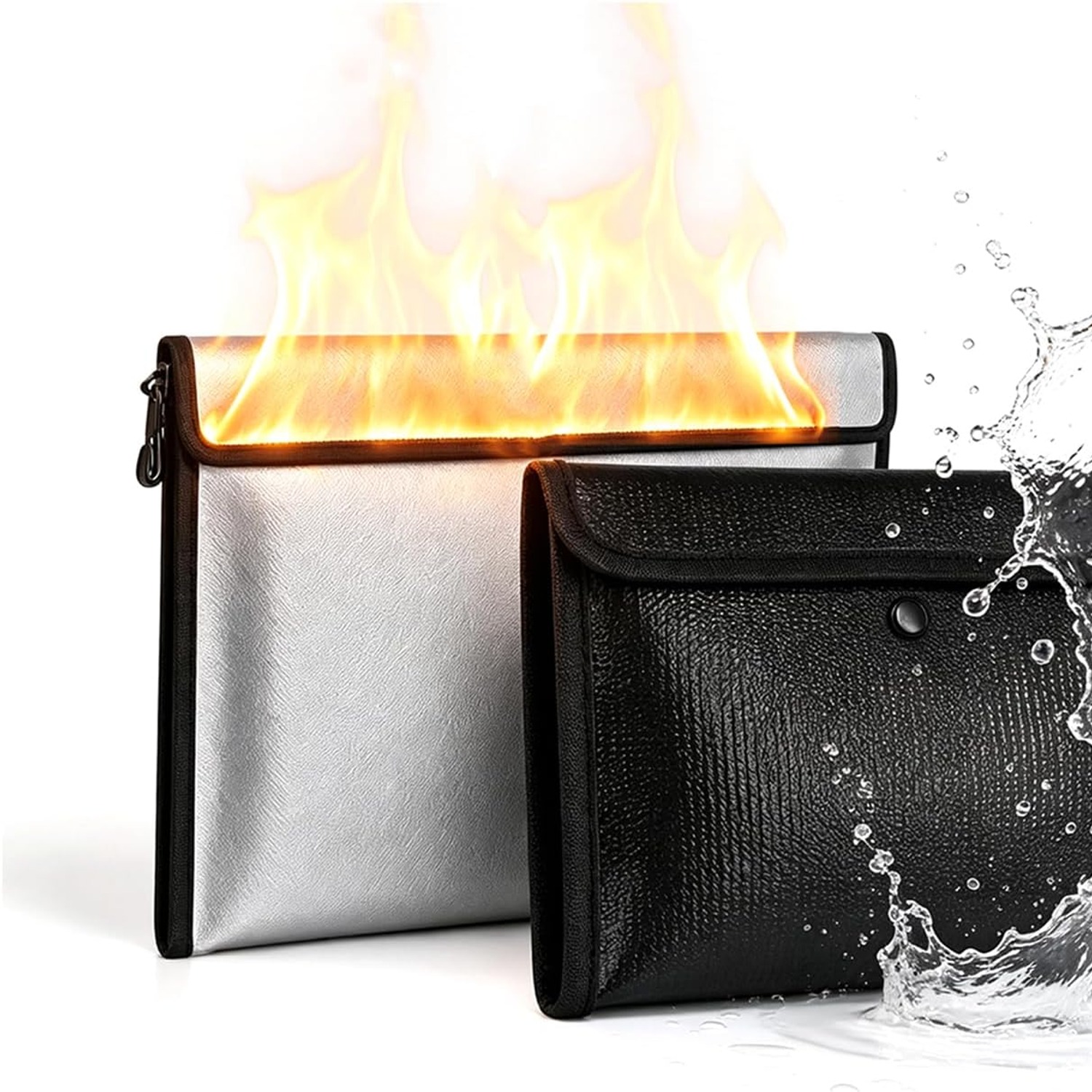
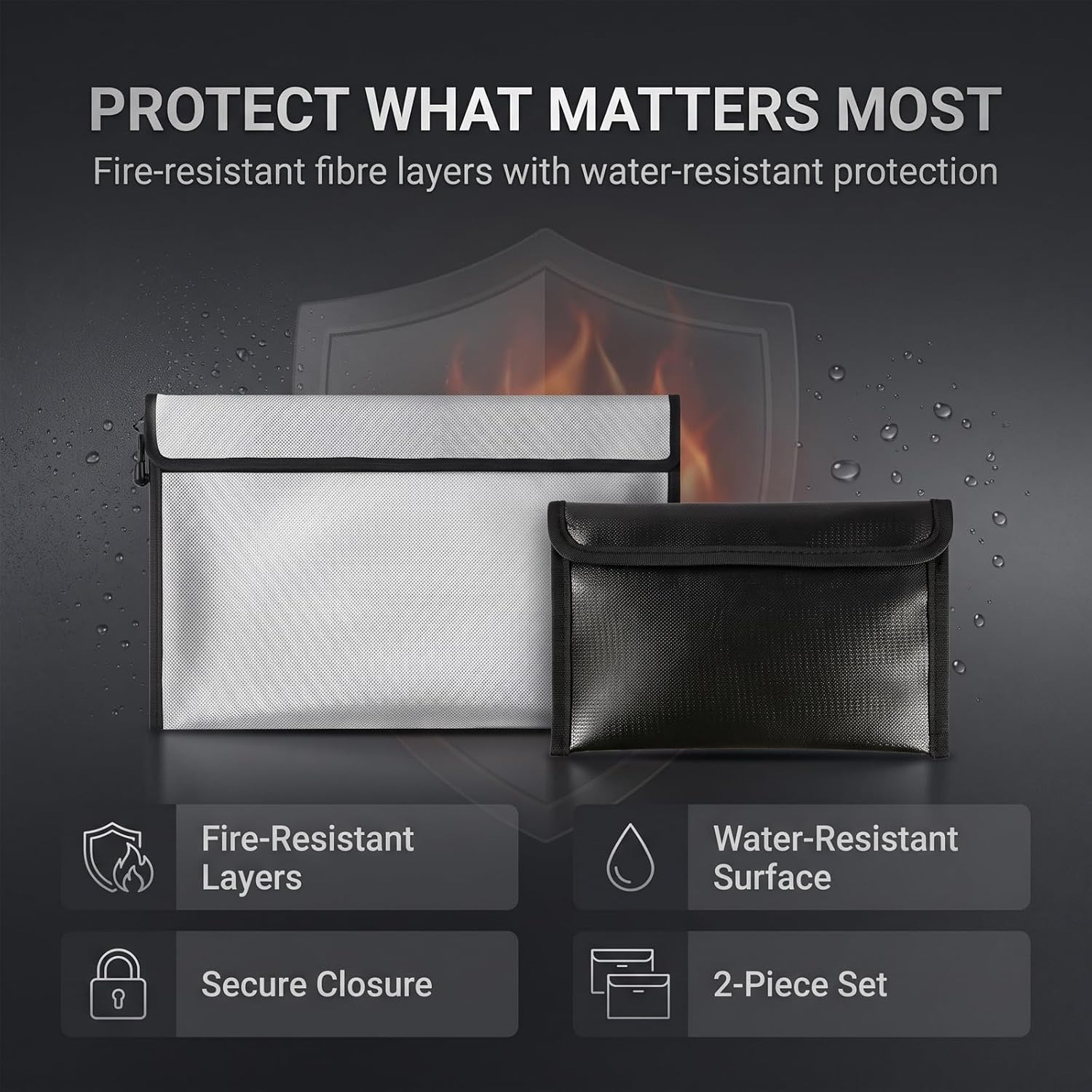
This Fireproof Pouch Set is described as a pair of compact bags in black and silver. It is aimed at small documents and accessories rather than full-size files. The different colours offer a simple way to separate contents without opening both bags every time.
The main buying decision is about fit and purpose. Do you need an organiser that is easy to carry, or do you need storage with a documented fire rating? Those are different needs. This guide explains what the maker's details support and which points need checking before you buy.
What the set contains
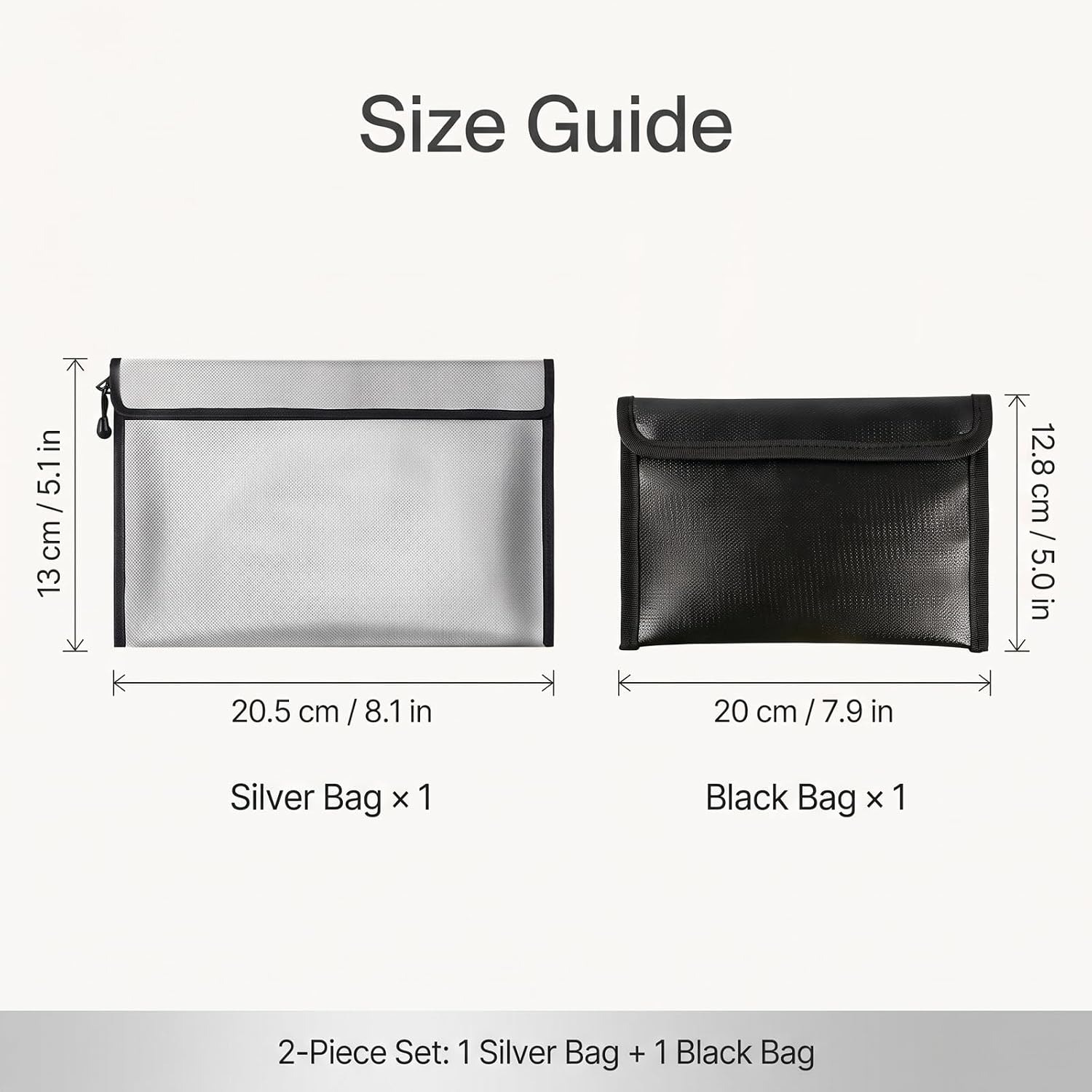
The maker description identifies two pouches. The black one measures 20 x 12.8 x 0.4 cm, and the silver one measures 20.5 x 13 cm. No depth is given for the silver pouch.
There are inconsistencies in the maker's description. A separate overall measurement reads 20 x 12.8 x 12.8 cm, while an item-count field says one and the unit-count field says two. The written set description consistently refers to a black and a silver pouch.
Use the individual measurements as a starting point, but ask for confirmation if exact size or quantity is central to your purchase. None of these figures establishes the usable internal space. Seams and closures can reduce the room available, especially for rigid objects.
How the closures and sorting work
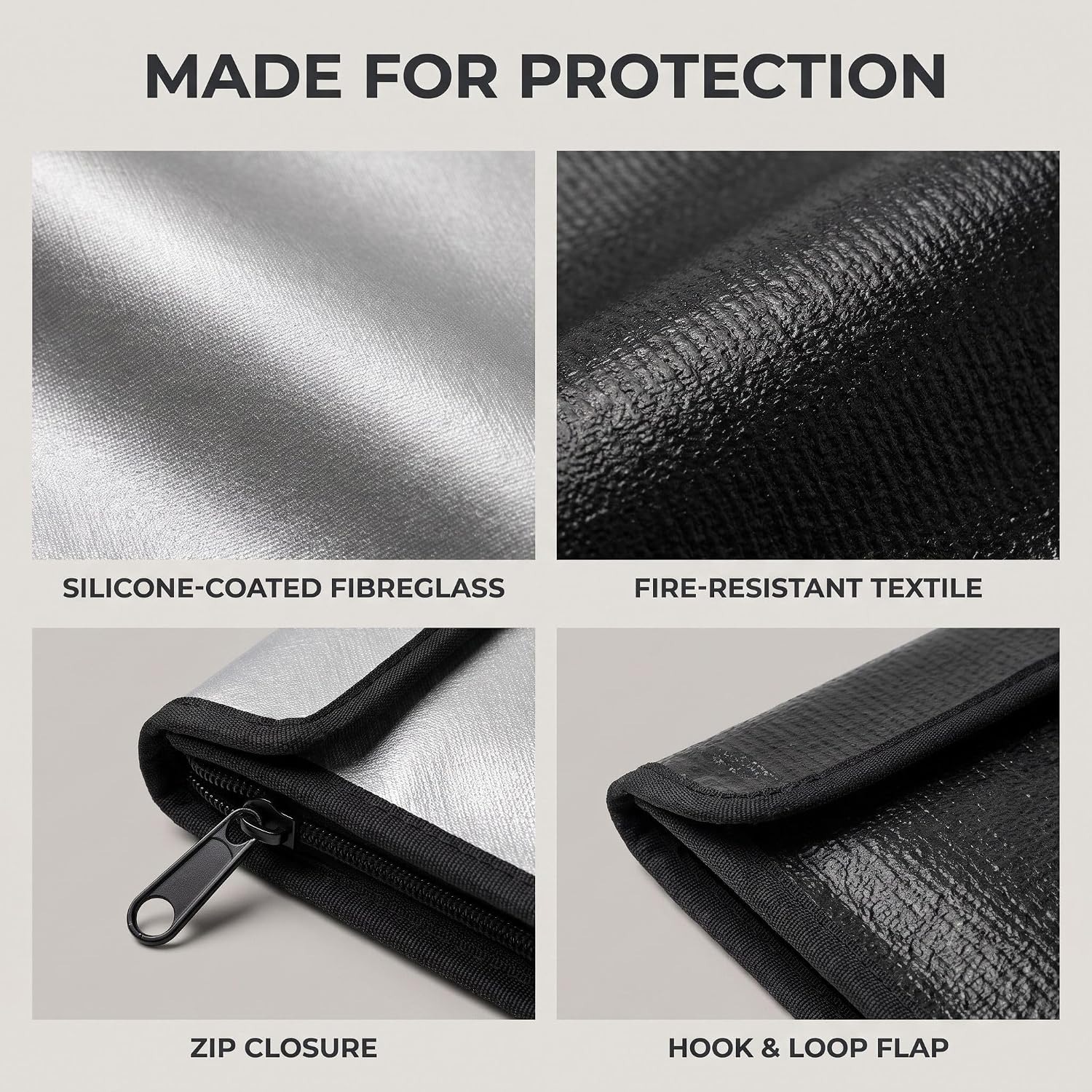
The maker describes a zipper with fastening straps. Their everyday role is to help hold the contents inside while the pouch is being carried or moved. They do not establish a lock rating or make the bag theft-resistant.
Pack the pouch so it closes without strain. If you have to pull hard on the zipper or press down on the contents to fasten it, reduce the load. A compact document bag is easier to use when you can remove one item without emptying everything.
The colour difference is useful here. You might keep identification in black and receipts in silver. Another option is to separate household papers from travel items. Choose a system that makes sense to you, then keep using it.
Read fire protection claims with care
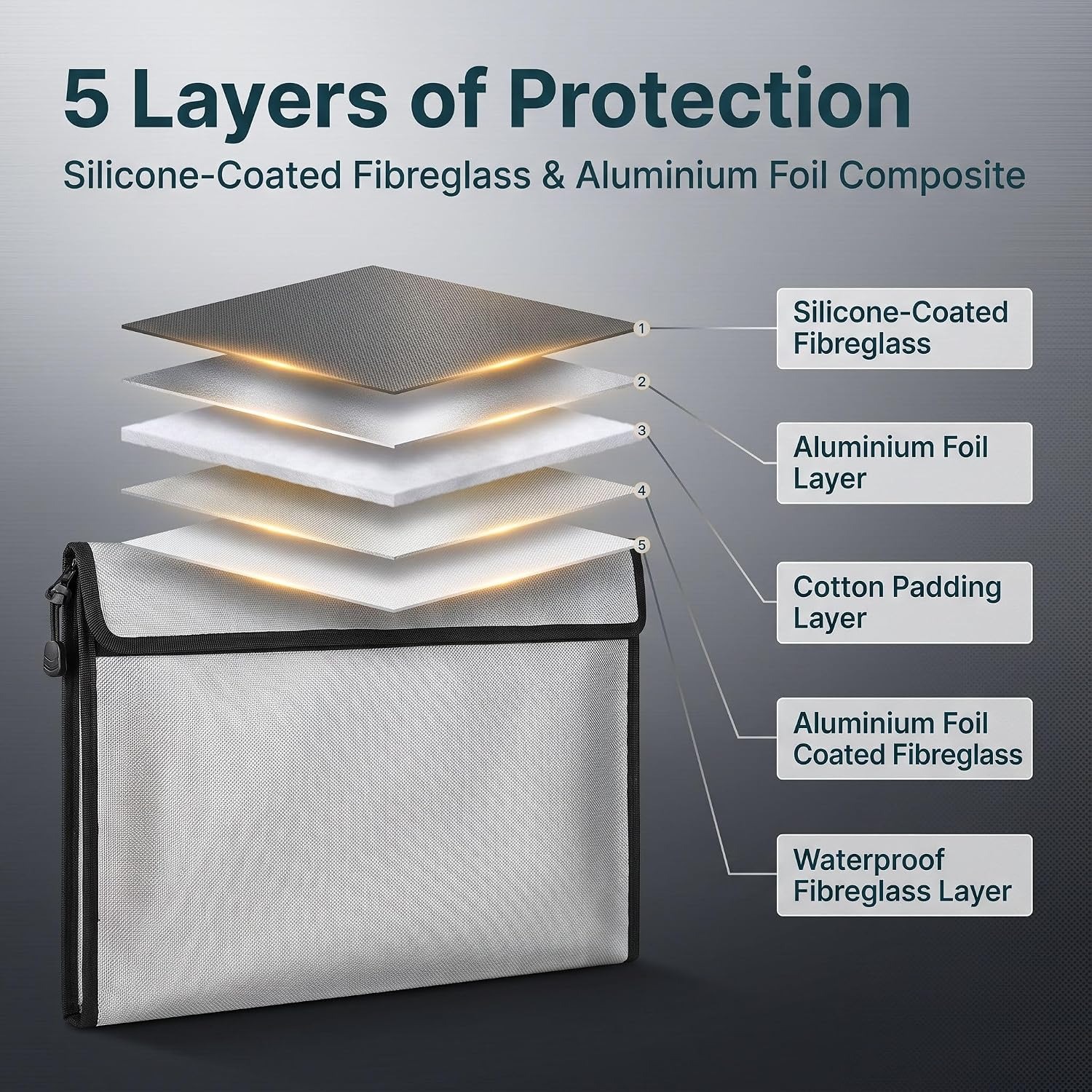
The product name includes “fireproof,” and the maker describes fire-resistant construction. Its text also mentions a temperature of up to 1000°C. However, the maker's description supplies no independent test report, exposure duration or certified fire rating.
That missing detail matters. A temperature claim alone does not tell you how long a pouch was exposed, how it was tested or what happened to the contents. It also does not tell you the temperature reached inside the bag.
Treat this as a storage pouch with maker-described protective features, not as a guarantee against fire loss. If your main concern is protecting irreplaceable originals, look for documented testing that matches the protection you need.
Never test the pouch with a flame at home. Keep escape routes clear and put personal safety ahead of retrieving belongings during an emergency.
Understand the water claim too
Waterproof is listed as a feature, and the maker describes a coated outer surface. No immersion rating, water-pressure limit or test standard is provided.
For that reason, do not treat the waterproof document holder description as permission to leave it underwater. The available information does not establish how the complete pouch, including its closures, performs under those conditions.
Keep papers dry before packing them. After wiping the exterior, allow it to dry before returning the pouch to a drawer or enclosed space. If flood protection or outdoor water exposure is your main concern, seek a product with clear test details for that use.
Check your documents before choosing
A passport storage pouch needs to fit more than the passport alone if you use a thick cover or carry several documents together. Measure the complete bundle you intend to store, not just one bare booklet.
The listed lengths of about 20 cm are not suitable for unfolded A4 sheets. Folding a copy may be acceptable for some purposes, but avoid assuming that certificates or other important originals can be folded without consequence.
Make a paper outline of the listed dimensions if you find measurements hard to picture. Lay your items on it and allow extra space around the edges. This is only a rough fit check because the maker gives external sizes rather than internal measurements.
For larger papers, a full-size document bag is the more sensible starting point.
Decide what belongs inside
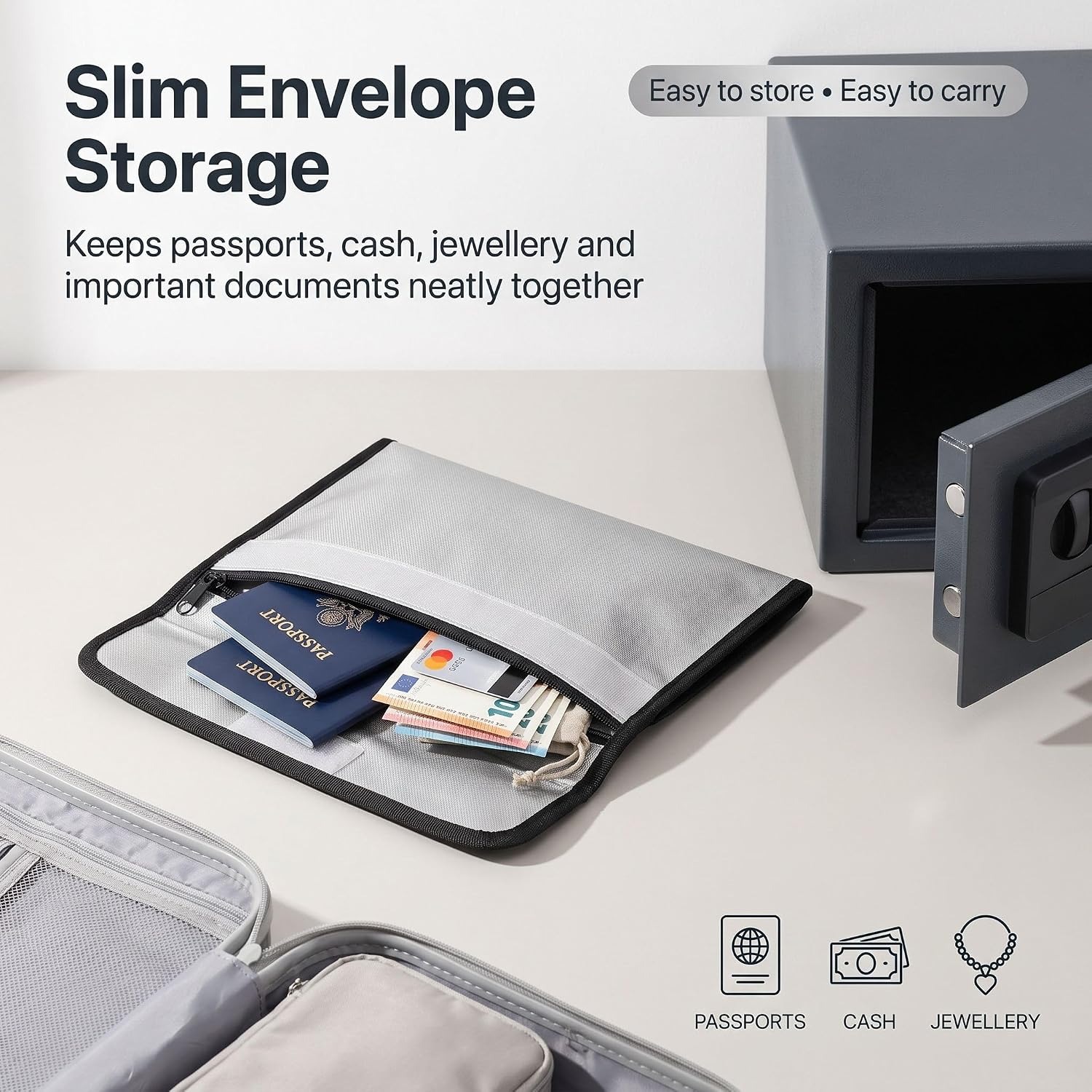
Suggested contents include cash, coins, identification, photos, keys and USB flash drives. That makes this a possible small valuables pouch for the bits and pieces that tend to get lost among larger belongings.
Think about how items sit together. Keys and loose coins can press against papers or screens. Separate delicate items from hard objects rather than filling every available gap.
A USB storage pouch can help you keep drives in one place, but it cannot replace a backup plan. The maker gives no guarantee that stored data would survive heat or water exposure. Keep another copy of important files in a separate location.
The same idea applies to documents. Where appropriate, retain copies separately rather than relying on one container for everything.
Who this compact format suits
This set may suit someone organising a desk drawer, preparing a small travel kit or separating receipts from personal IDs. Its two-colour layout is useful when a single pouch would mix unrelated items together.
For travel, consider what you need to reach during the journey. A travel document pouch should sit somewhere accessible without being left exposed. Grouping your papers is helpful, but it does not remove the need to keep your luggage secure.
It is less suitable if you need storage for large files, bulky electronics or many thick document bundles. No capacity in litres or maximum load is supplied. Choose around the items you actually own rather than trying to make a small bag serve as a filing cabinet.
Using a pouch inside a safe
The maker suggests using the bags inside a larger safe or storage box. In that arrangement, a document pouch for safe storage can keep small contents grouped instead of scattered across a shelf.
Check the safe's internal space first. Allow room for the filled pouch and for taking it out without catching the closure. A pouch that fits flat when empty may take up more room once packed.
Keep the functions separate in your mind. The pouch organises the contents; any documented fire or security performance must come from the relevant tested product. Adding this set does not establish a higher rating for your safe.
If insurance conditions apply to your valuables, check those conditions directly rather than assuming any bag or safe will satisfy them.
Build a simple storage routine
Good organisation depends on returning things to the same place. Give each pouch a purpose and avoid gradually filling it with unrelated items.
A receipt storage pouch works better if you empty old receipts regularly. Travel papers need a similar check, especially after a trip when expired tickets and spare slips can hide the documents you still need.
For emergency document storage, review the contents whenever key details change. Make sure another trusted household member knows where relevant papers are kept, if that suits your circumstances.
Do not place every essential item in one portable bag without considering the risk of losing that bag. A little separation can be sensible, particularly for copies, backups and spare keys.
Care and checks before use
Wipe the exterior with a soft dry cloth or one that is slightly damp. Avoid soaking, harsh cleaners and abrasive scrubbing. Let the pouch dry fully before storing paper inside.
Look at the zipper, straps and surfaces from time to time. If the closure catches, check for trapped material rather than forcing it. Do not keep using a damaged pouch on the assumption that its original protective claims still apply.
The maker describes the bags as foldable, but avoid making tight creases around the closure. Store them without heavy objects pressing against awkwardly shaped contents.
There is no stated service life or replacement interval. Use visible condition as a reason to inspect more closely, not as proof of tested protective performance.
The short version
Choose this two piece fireproof bag set if your priority is compact, colour-separated storage for small papers and accessories. Check the individual sizes, allow for the closures and confirm conflicting details if they affect your decision.
Keep expectations clear. No independent fire rating or water-test standard is supplied, and the pouches are not locked security containers. For everyday organisation they offer a straightforward format. For defined protection against fire, flooding or theft, look for evidence that directly supports that need.