
The complete guide
How to Choose a Hanging Key Safe for Shared Access
A spare key should make life easier. Yet handing out copies can leave you unsure who has one, while hiding a key outside creates another problem. A hanging key box offers a different way to manage planned access. The key stays in one place, and you share the combination with the people who need it.
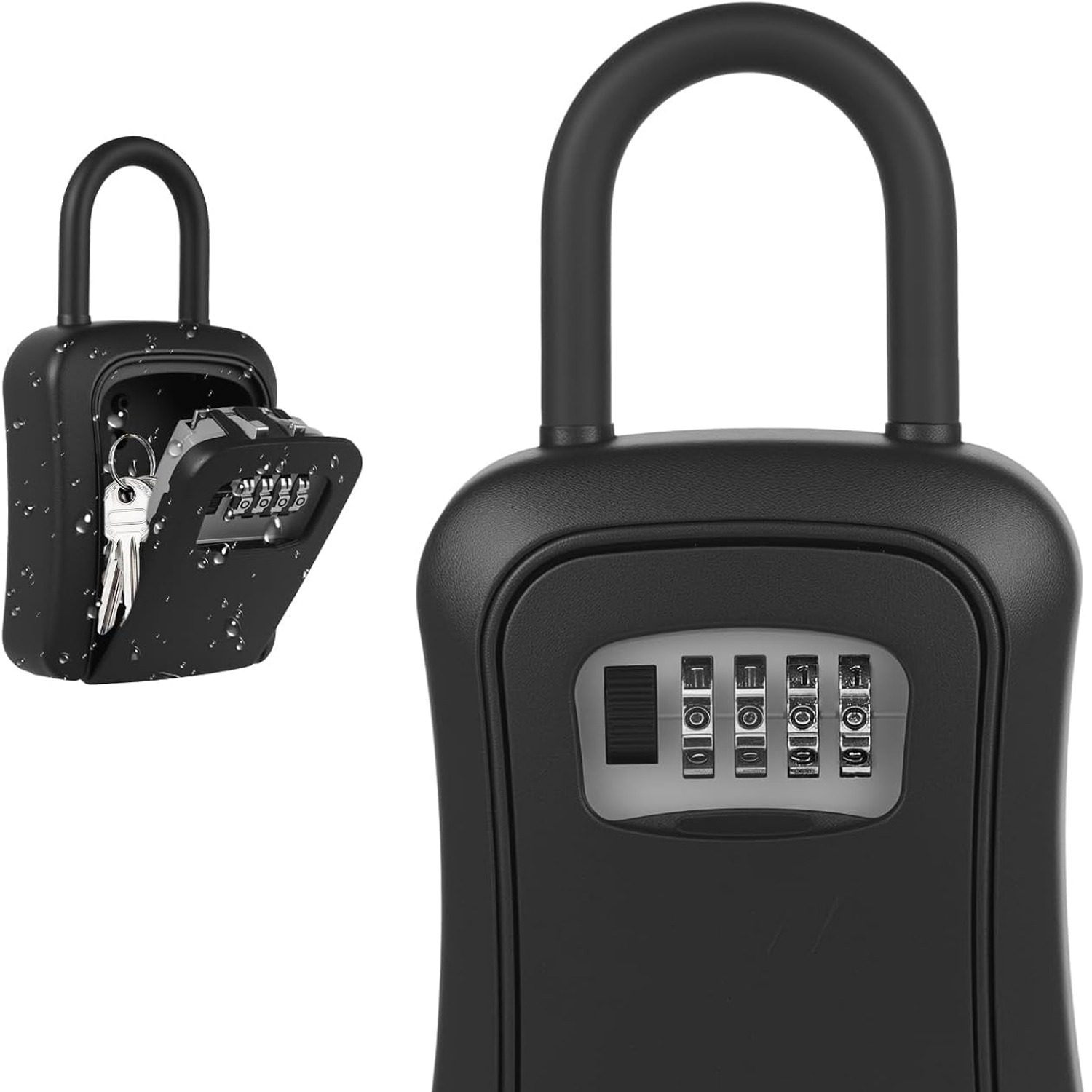
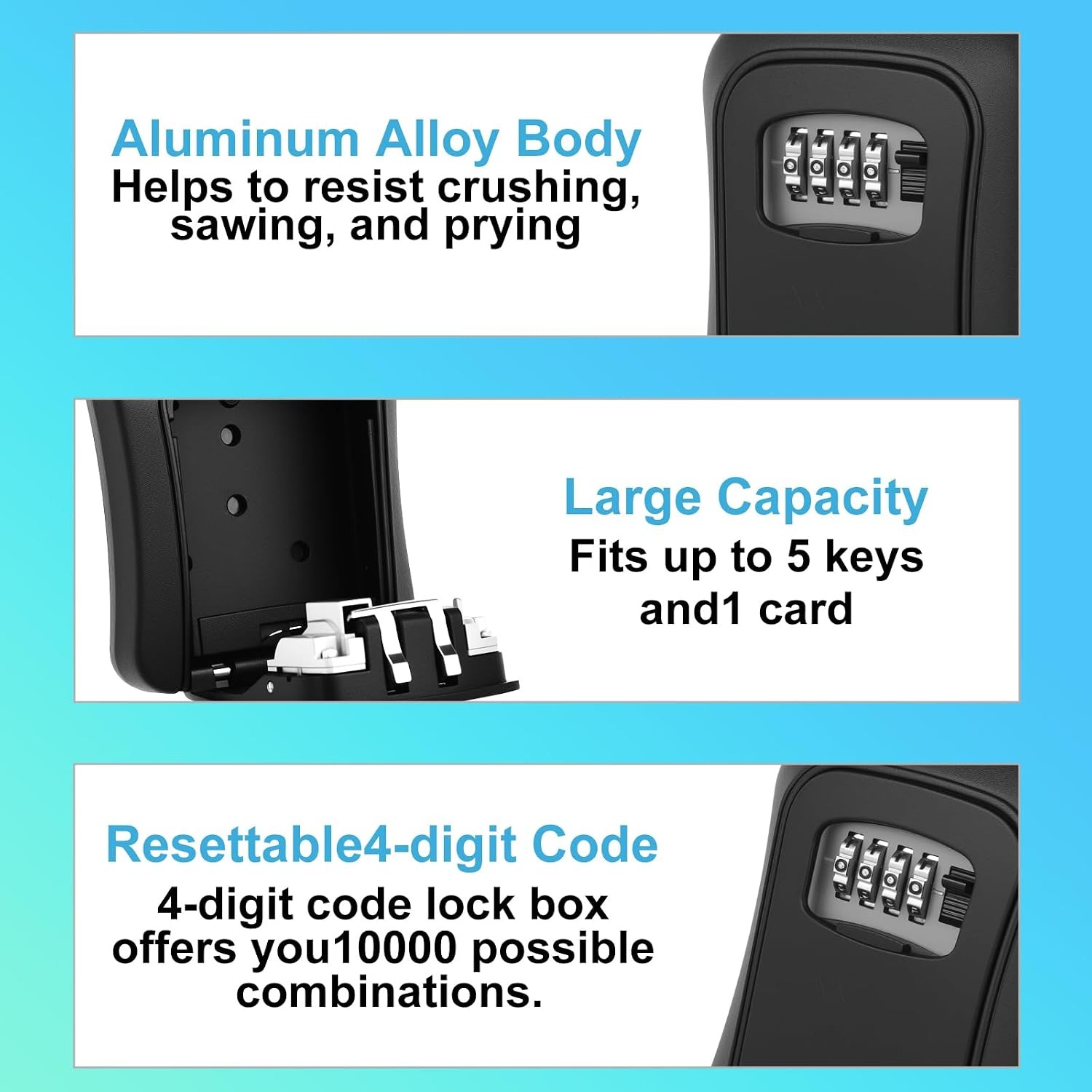
This key lock box with shackle is designed around that simple routine. It has a removable hanging shackle, a resettable four-digit lock and a compartment listed for up to five standard house keys. Before choosing it, though, check the fitting, the size of your keys and the level of protection your situation requires.
Start with the access problem
Think about who needs the key and how often. A family member collecting a spare once a month has different needs from guests arriving every weekend. Both may find a shared access key box useful, but the routine around it matters as much as the box itself.
For occasional use, you might keep one spare inside and change the combination whenever access changes. For regular visits, agree on where the key goes after use and who checks that it has been returned.
A combination box does not tell you who has opened it. No access-history feature is given by the maker. If you need named users, timed permissions or a record of visits, those are separate requirements to consider before buying.
How the hanging design works
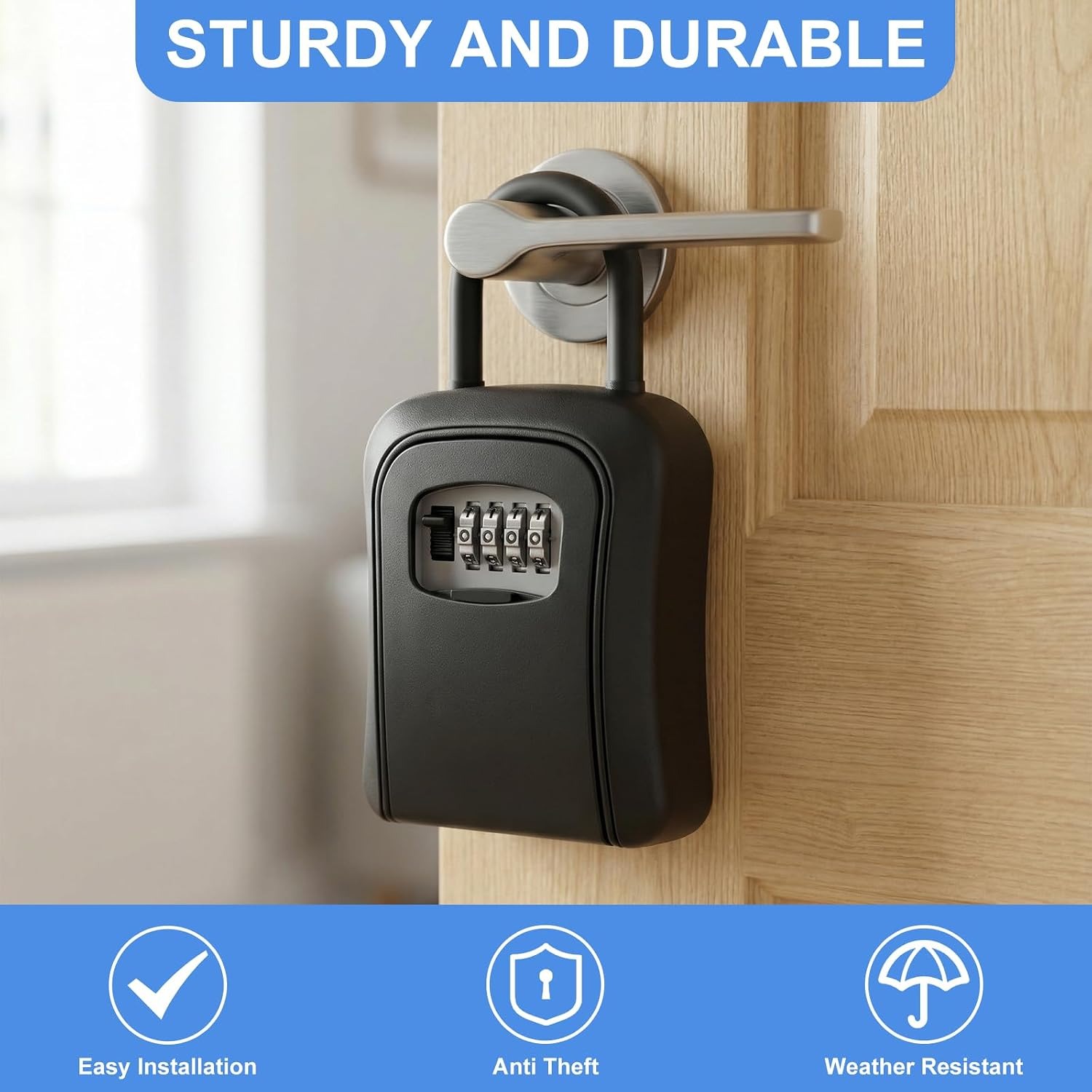
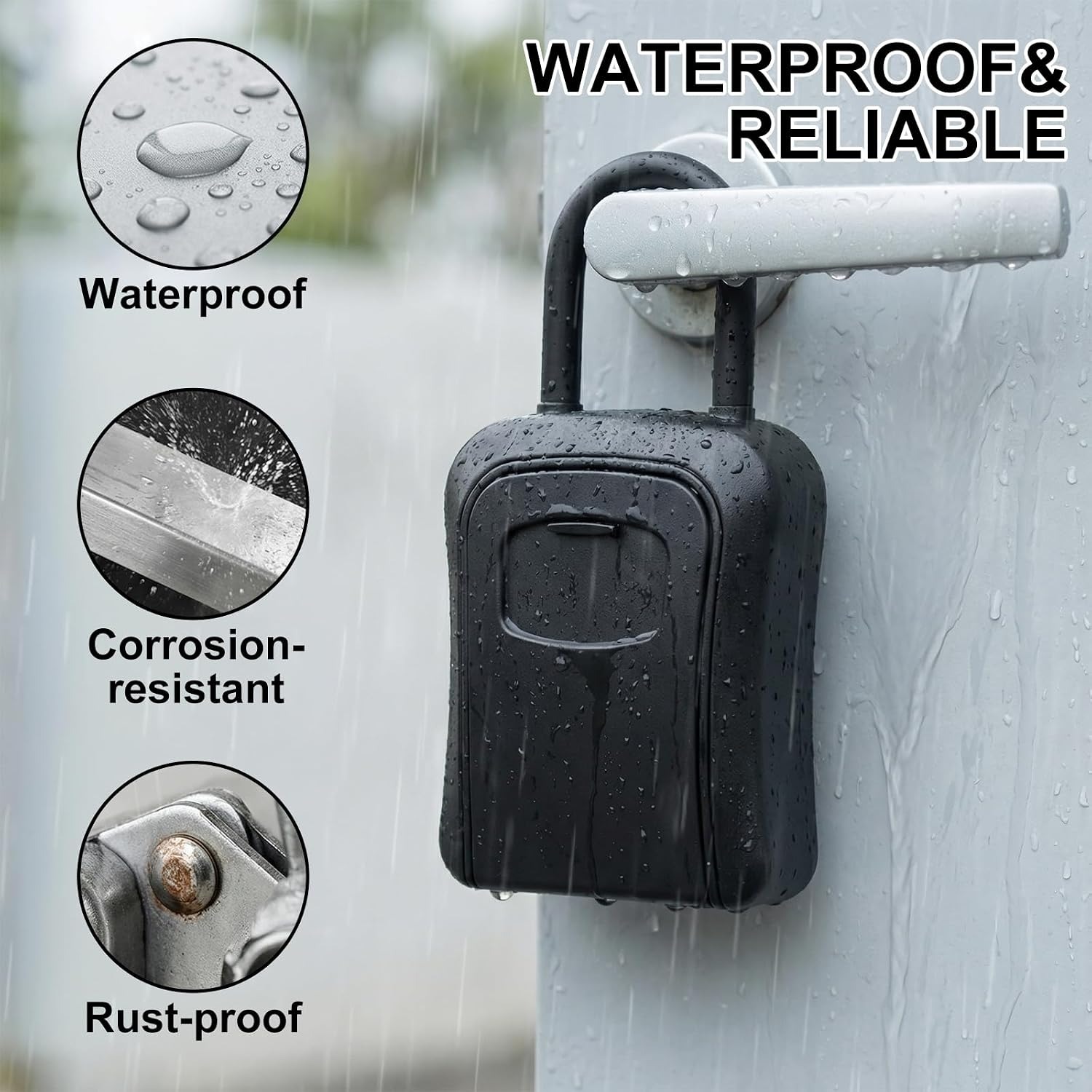
Unlike a wall-mounted box, this model attaches through a removable shackle. That makes it a no drill key safe option when a suitable fixed support is available. There is no need to make holes in a wall simply to use the stated hanging method.
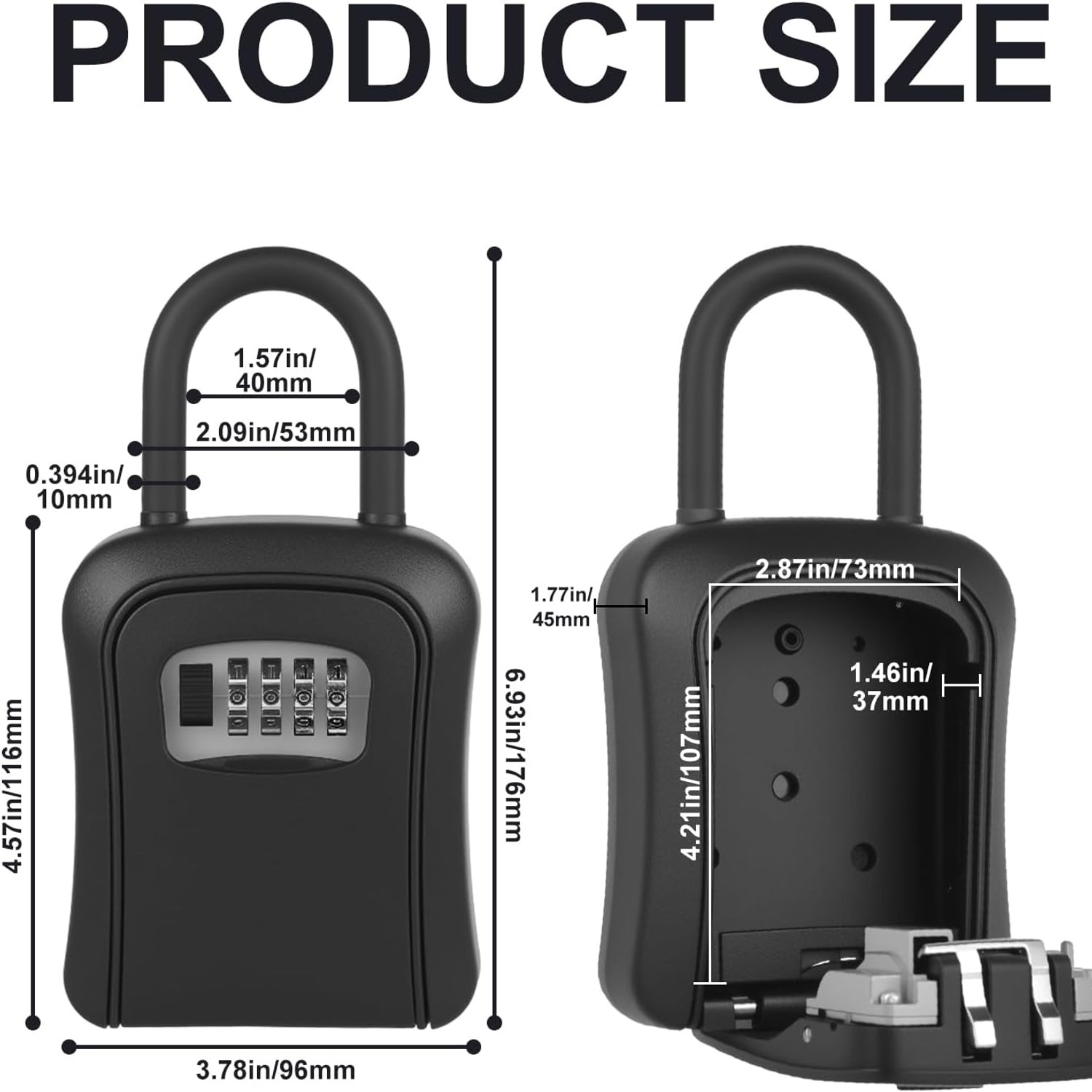
The important word is suitable. A fitting must hold the closed shackle without allowing the whole box to slip off. It should also support the listed 560 g weight, plus the keys, without bending or becoming loose.
The shackle has a listed internal length of 53 mm, internal width of 40 mm and diameter of 10 mm. Measure the actual route it needs to pass around, not just the front of a handle. Nearby trim or a tight gap can affect whether it fits.
Check door operation as well as fit
A door handle key safe needs more than enough room around the handle. Once attached, it should not stop the handle moving, catch against the frame or prevent the door from closing.
Think about what happens when someone opens the door quickly. Could the box swing into glass, paintwork or a person's hand? The shackle is described as vinyl-coated, but that is not a reason to ignore movement or contact.
For rented or shared buildings, check permission before attaching anything. A removable fitting may avoid drilling, yet building rules can still apply to items left on entrance doors, railings or communal areas.
Match the compartment to your keys
The listed capacity is up to five standard house keys. That is a useful starting point, not a promise that every five-key set will fit. Thick plastic heads, long keys and bulky split rings take up more space than plain flat keys.
Lay out the exact items you intend to store. Consider whether they can sit without pressing against the lid or lock parts. The internal hook can keep keys together, but the arrangement still needs room to close properly.
There is a size issue to resolve before purchase. The maker lists item dimensions of 8.9 x 6.1 x 3 cm, internal dimensions of 3.5 x 2.4 x 1.2 inches and a chamber depth of 1.46 inches. These figures conflict. Ask for confirmed usable dimensions if fit is important.
Be careful with cards and fobs
The maker mentions access cards and small key fobs, but their fit is not verified. A card may need more flat space than a group of keys. A fob may be short but much thicker.
If you need portable key storage for a particular card or electronic fob, measure that item with its ring or holder attached. Do not rely on the stated five-key capacity as evidence that another object will fit.
Also consider the cost and difficulty of replacing the contents. This is a key storage product, not a documented high-security valuables safe. No burglary rating or insurance approval is supplied.
Use the four-digit code thoughtfully
The resettable lock gives 10,000 possible four-digit combinations. That allows you to change the code when visitors, tenants or service arrangements change. It does not establish resistance to tools or forced entry.
Choose a code that is not an obvious date, repeated digit or simple sequence. Store it privately rather than writing it on or near the box. Share it directly with the people who need access.
When changing the combination, follow the supplied instructions. Test the new code several times while the compartment is open. That small check is easier than discovering an error after the only spare key has been locked inside.
Build a clear handover routine
A holiday home key box works better when guests know exactly what to do. Give clear directions to the location, explain how to collect the key and state where it must be returned. Keep the message short enough to read on arrival.
For cleaners or other regular visitors, agree on the same return routine every time. A key box for cleaners is less helpful if the key is left indoors after a visit and the next person cannot enter.
Change the code when permission ends. Avoid keeping one combination in circulation through several unrelated groups. The resettable feature is most useful when it is part of an active access routine.
Understand the weather claims
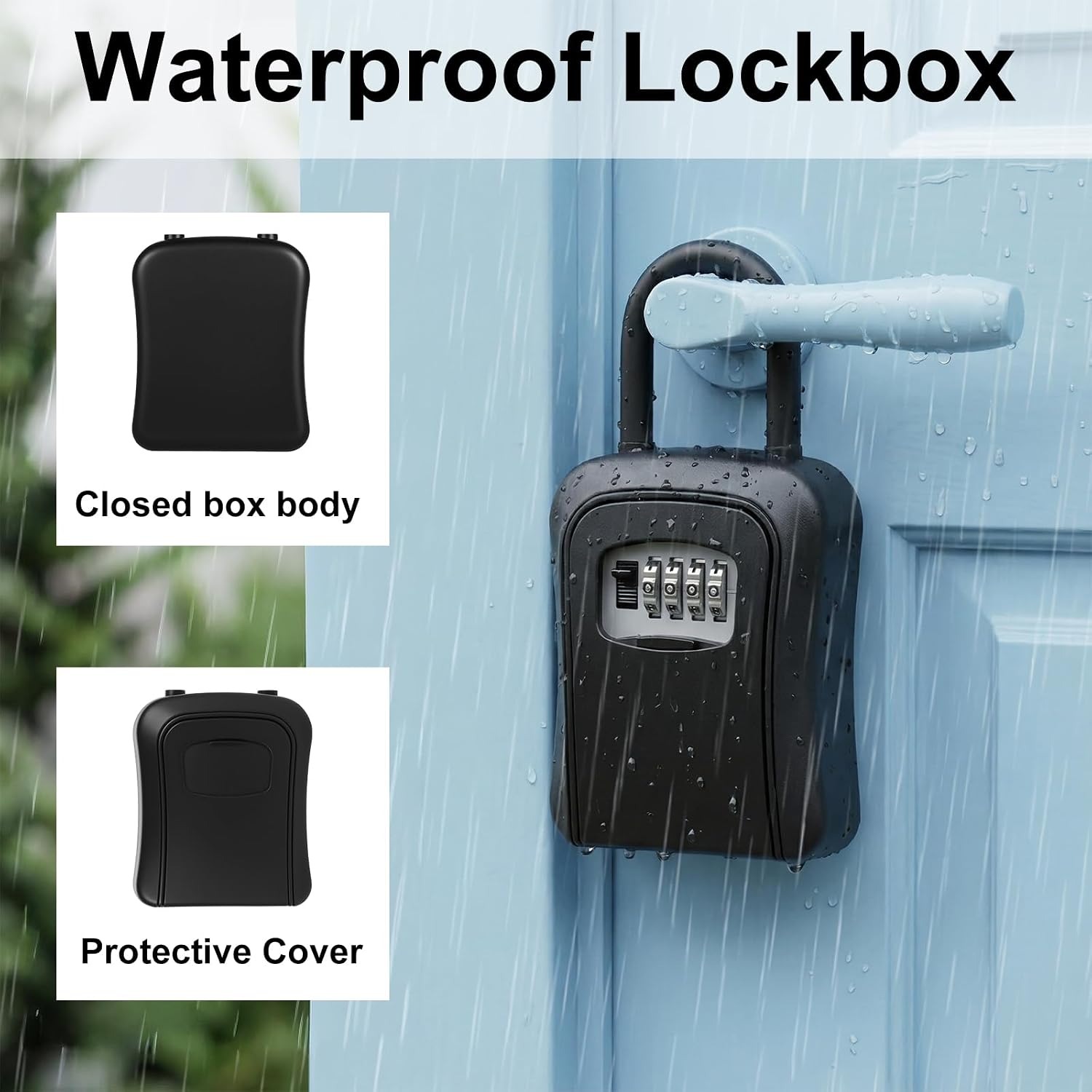
This model is described as waterproof and has a closed-body design with a protective shutter over the dials. However, the maker gives no IP rating or weather-test standard. It does not establish a safe immersion depth or exposure limit.
Choose a sheltered position where possible. A location under cover can reduce direct rain and dirt reaching the box. Keep the shutter closed when nobody is entering the code.
An outdoor key safe still needs checks. After harsh weather, look for trapped moisture, dirt or anything that makes the controls harder to move. Do not assume that a weather claim means the lock can be ignored once fitted.
Keep security expectations realistic
Convenient access and certified protection are different things. This metal key safe is listed with alloy steel and metal materials, but material names alone do not show how it performs under attack.
No burglary certification, fire rating or insurance approval is specified. If an insurer, employer or property manager requires a named standard, confirm that requirement before buying. Do not treat a four-digit code as a substitute for that evidence.
Location also deserves thought. Choose an authorised fitting that is practical for intended users without making the stored key needlessly obvious. Avoid putting an address label on the key inside.
Check the closure every time
The supplied notes say the shackle needs a firm press to engage fully. A click may be heard, but sound alone is not the check to rely on. Make sure the shackle is fully seated and flush with the body.
After returning the keys, check that none are caught in the closing area. Close the compartment, move the dials away from the opening code and close the shutter. Then check that the box is secured.
This takes only a moment, but it matters. A good routine should work for every authorised user, including someone collecting a key for the first time in poor light or bad weather.
Care and occasional checks
Wipe the box with a soft cloth when it gets dirty. Avoid abrasive cleaners that could damage the finish, and follow the supplied instructions before applying any maintenance product to the lock.
Look at the attachment point as well as the box. Check for looseness, wear or damage, especially if it hangs from a fitting that moves often. Stop using it if the shackle or closure no longer engages properly.
Keep a backup access plan outside this box. No code-recovery process is specified in the maker's description, so forgetting the combination could leave its contents unavailable when they are needed.
The short version
This hanging combination box may suit people who want shared spare key storage without wall drilling. Its removable shackle and resettable code support simple, planned handovers for households, visitors or property access.
Before ordering, measure the attachment point, resolve the conflicting compartment dimensions and check any security requirements. Then set a clear code-sharing and key-return routine. The right choice is the one that fits both your keys and the way people will actually use them.