
The complete guide
How to Choose a Locking Cash Box for Everyday Takings
Give loose cash a proper place
Loose coins, folded notes and receipts can make even a small sale harder to manage. You spend time finding change, then face another sorting job when the day ends. A set place for cash helps make that routine more orderly.
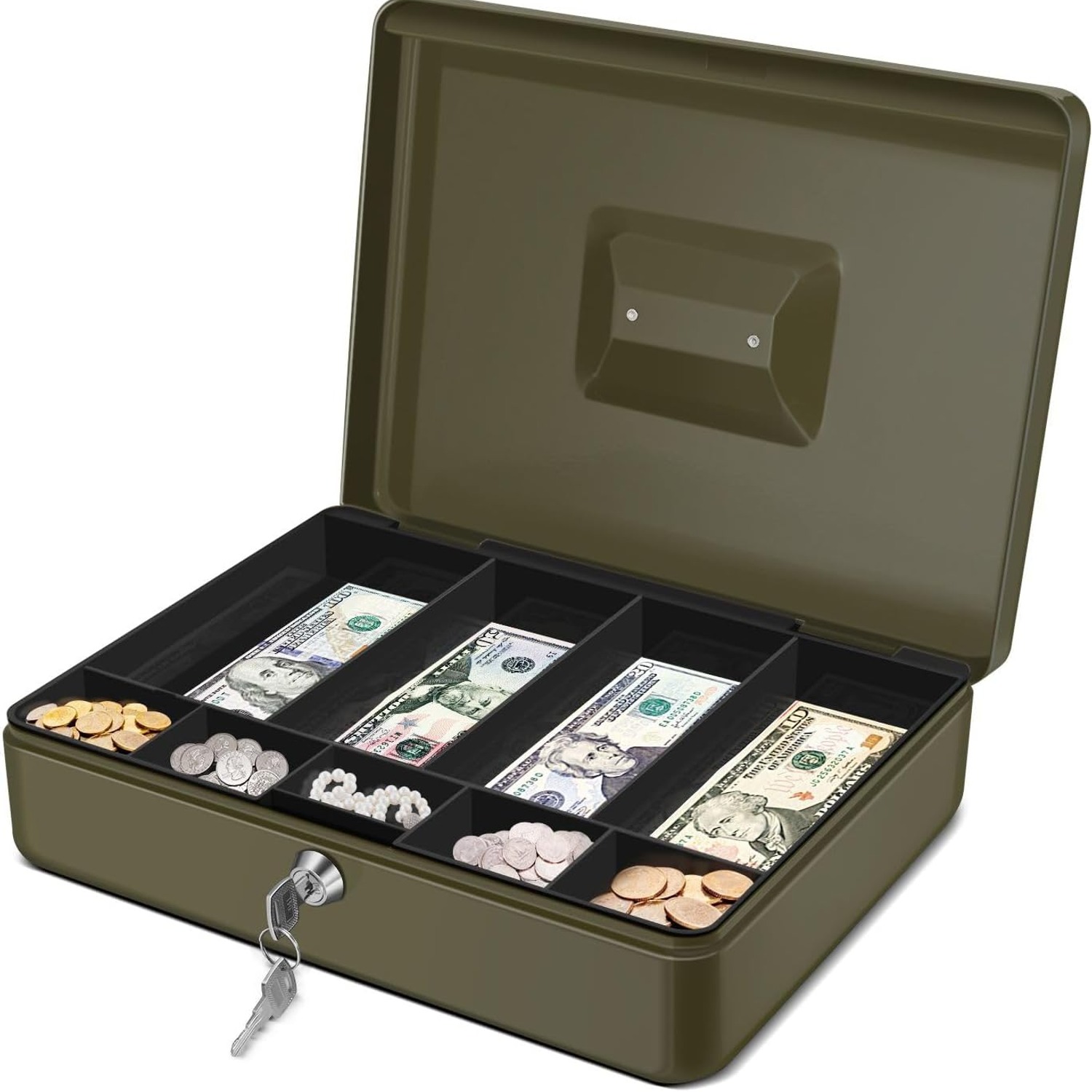
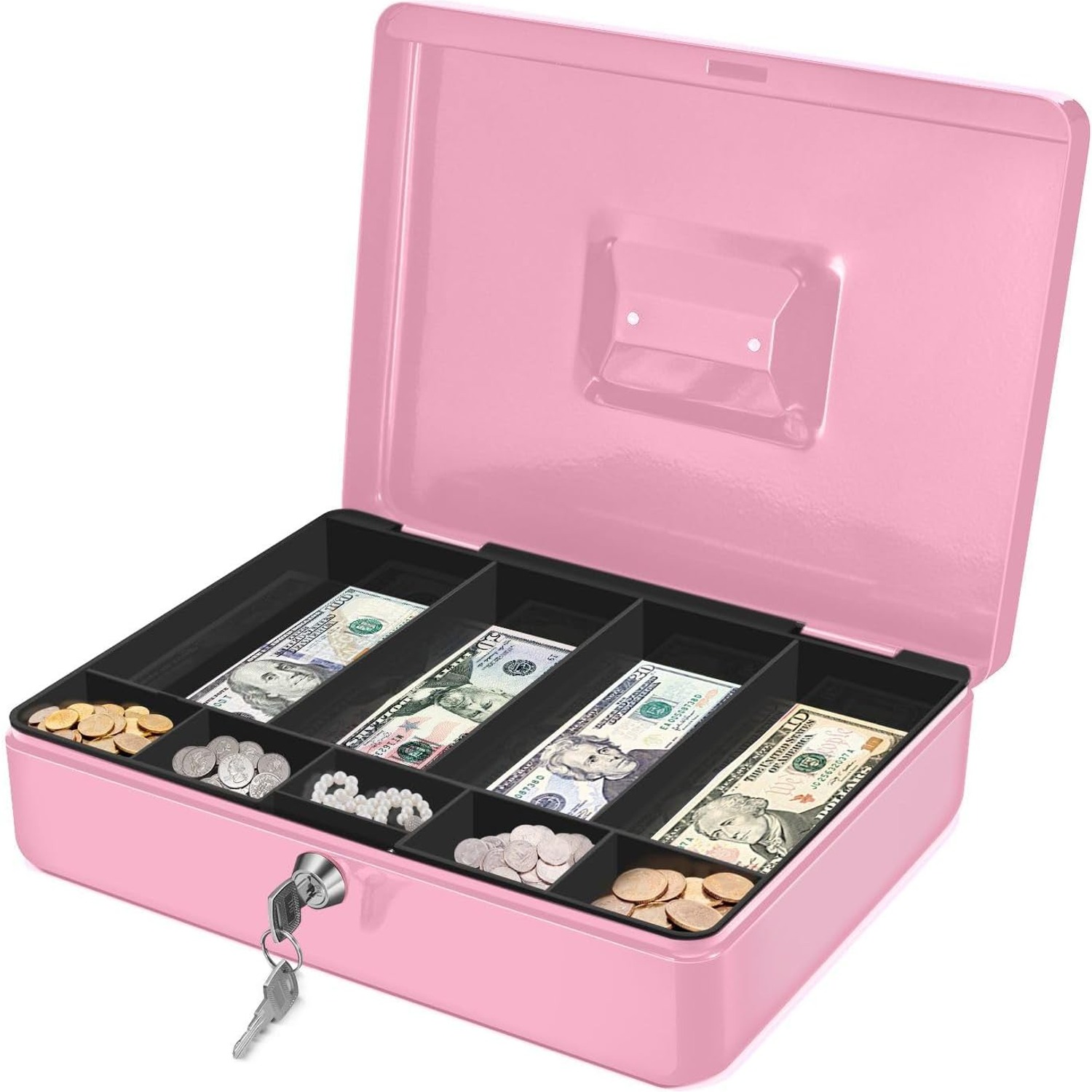
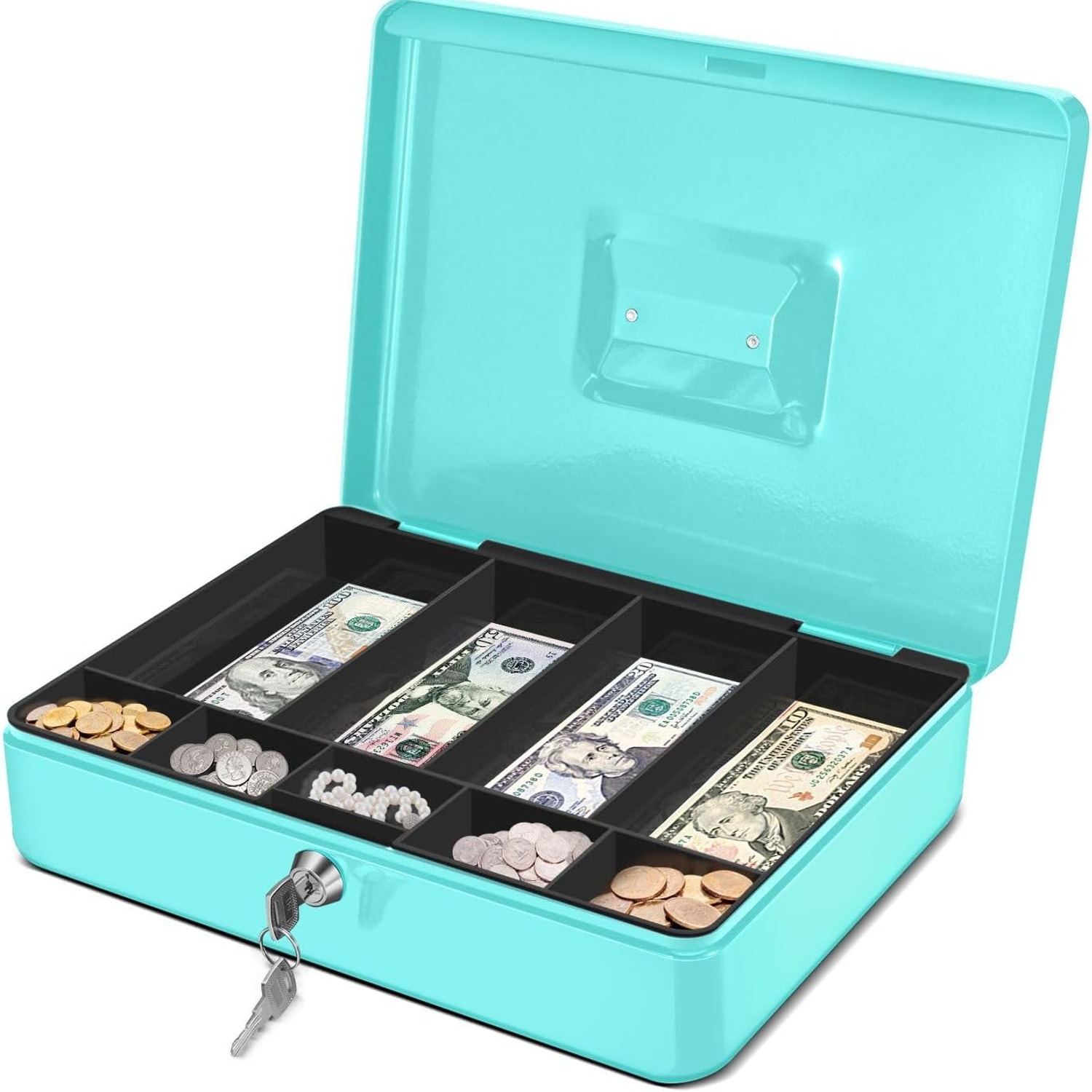
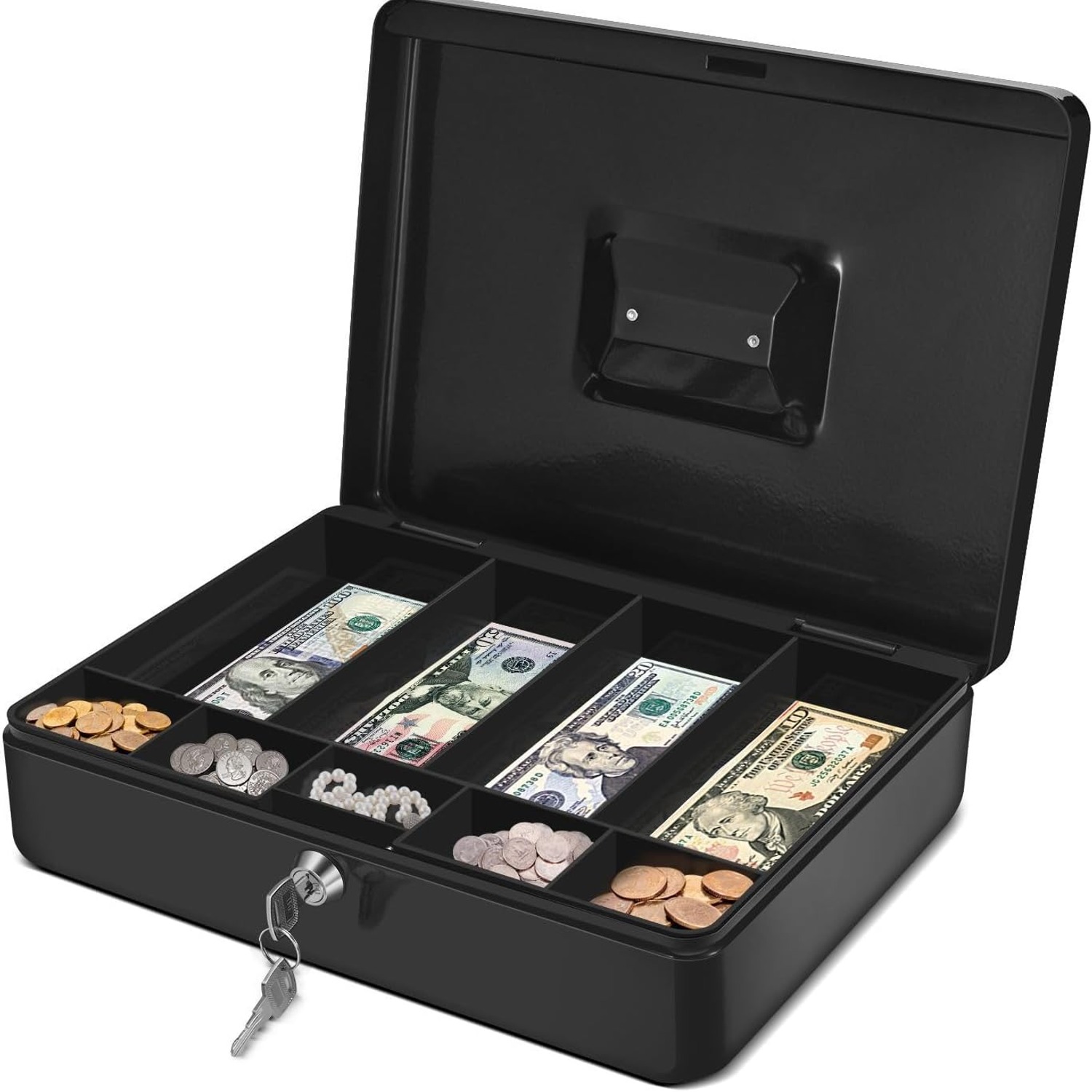
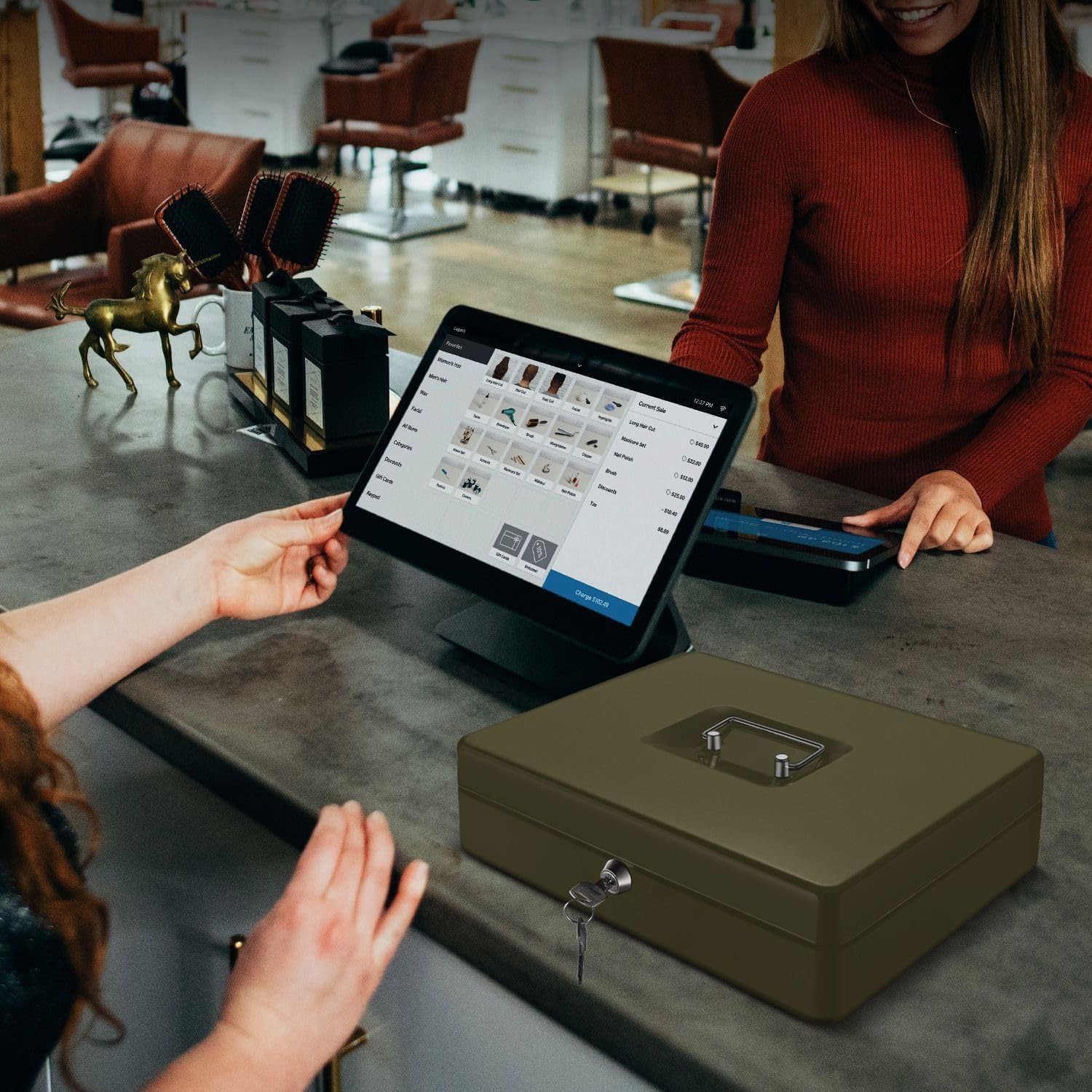
This locking cash box brings a removable tray, key-operated lock and folding handle into one portable unit. It is designed to sit on a table or counter rather than needing a fixed installation. That makes it worth considering for a staffed sales point, a club event or a home cash system.
The main buying question is whether its layout and size suit the way you work. Security matters too, but a portable money box should be judged for what it is. No fire rating, burglary rating or insurance approval is specified for this model.
How the box works
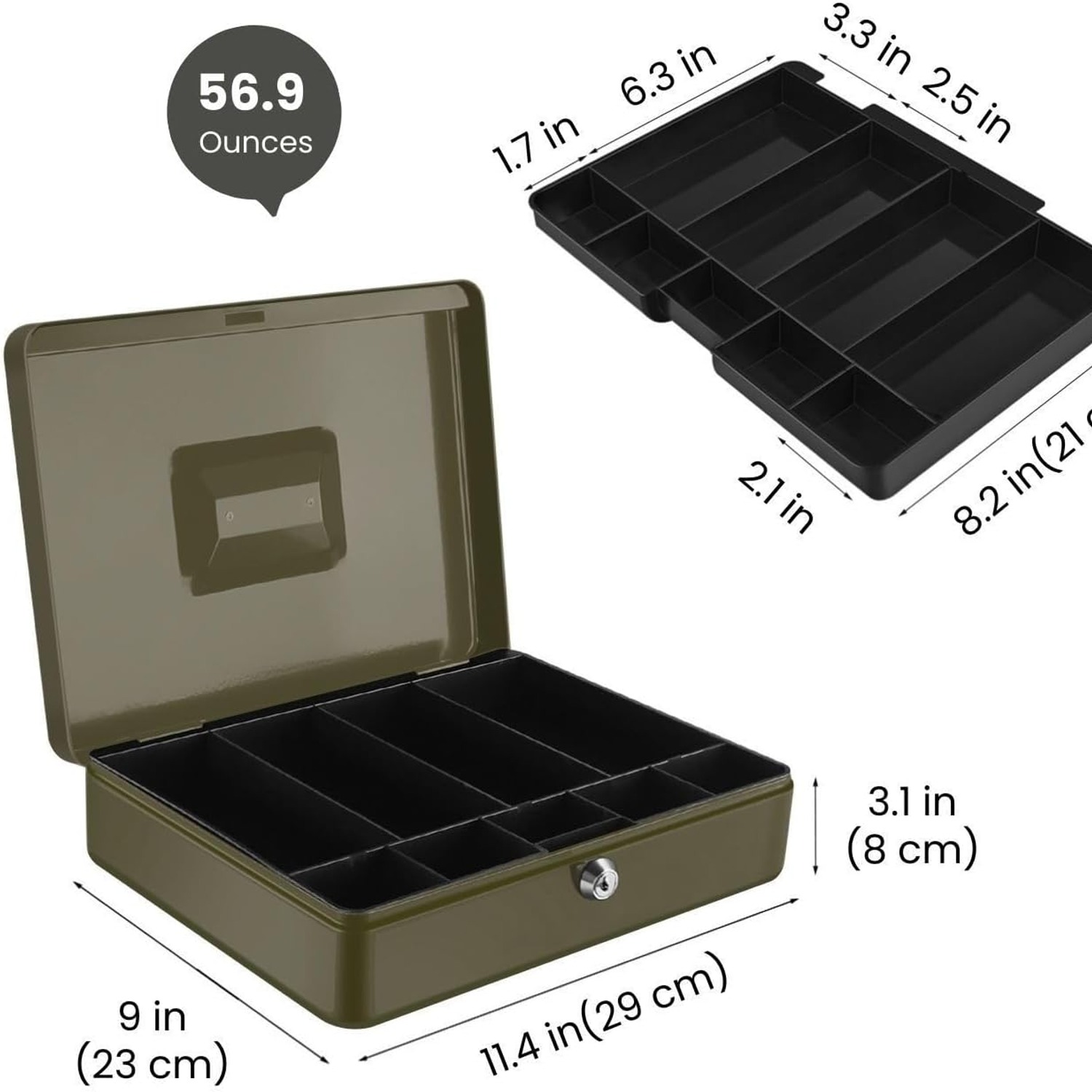
The basic setup is straightforward. Place the box on a stable surface, open it with the key and arrange your cash in the tray. The nine compartments give you separate areas for sorting contents instead of keeping everything in one pile.
The tray is removable, so you can lift it out to reach beneath it. Exact compartment measurements and usable internal capacity are not provided. If you need to store a particular receipt book, envelope or bundle of notes, confirm those measurements rather than relying on the outside size.
When you finish using the box, close and lock it. The folding handle provides a way to carry it to a suitable storage location. Keep the key apart from the box when it is put away, and make sure anyone responsible for the cash knows the agreed key routine.
Check the footprint before choosing
The listed dimensions are 30.5 x 22.9 x 7.6 cm, given in depth, width and height order. Measure the part of your desk, shelf or counter where the box will sit. A clear footprint matters more than whether a product is described as small or portable.
Leave room around it for your hands and for opening the lid. If it will live inside a drawer, check the drawer opening as well as the space inside. A box may fit once placed in a drawer but still be awkward to lift out during a busy period.
These are listed item dimensions, not a promise of internal storage space. The walls, lid and tray all take up room. Buyers with a precise storage need should ask for usable internal measurements before ordering.
Think about the cash you actually handle
The right cash box with tray depends on your usual mix of payments. A seller handling many low-value transactions may need easy access to coins. A club collecting fixed fees may care more about keeping notes and payment slips in a clear order.
Nine compartments give you options, but the maker does not state the size of each section. It also does not confirm a layout made for any particular currency. Avoid assuming that every note can lie flat or that each coin type will have its own section.
A useful starting point is to lay out a typical float on your table. Look at how much space it takes and which denominations you reach for most. This simple check helps you judge whether a coin organiser box matches your routine better than an open pouch or a larger cash system.
Where a portable design can help
A market stall cash box needs to move between storage and the sales table. A fundraising team may use the same box in different rooms or venues. For these jobs, a folding handle can be more useful than a box that is awkward to pick up.
The listed empty weight is 1.61 kg. That is worth factoring into your choice, especially if you already carry stock or event supplies. Coins add weight quickly, so judge portability with a realistic load in mind rather than the empty figure alone.
The box is freestanding and intended for tabletop placement. Choose a level surface within reach of the person handling payments. Keep it away from table edges, drinks and places where a customer or passer-by could knock it.
Match the lock to your expectations
A key operated cash box gives you a clear way to close off access between uses. It also avoids the need to share a combination. The practical question is who holds the key, where it goes during a shift and how you manage handovers.
A key is included, but the exact key quantity is not specified. Do not plan around receiving a spare unless that has been confirmed. Replacement-key arrangements are also not stated, so it is sensible to ask about them if uninterrupted access is important.
Remember that a portable box can be moved as a whole. Locking the lid does not turn it into a fixed safe. Keep it supervised while trading and choose separate, appropriate storage for larger sums or valuable items.
Understand the protection limits
The product details say the box is not water resistant. That rules out treating it as weatherproof storage for an outdoor stall. Even under cover, choose a spot where rain cannot blow onto it and drinks are unlikely to spill.
No fire-resistance figure is provided. There is also no stated burglary rating, insurance approval or tested protection level. If any of those are part of your buying requirements, the maker's description does not establish that the box meets them.
The maker has an alarm field that reads “Lock”. That wording does not confirm an electronic or audible alarm. Base your decision on the stated key lock, not on an assumed warning system or other unlisted security feature.
Check the material and colour details
The product details name alloy steel and metal as the materials. They do not give the steel thickness, coating type or corrosion test results. It is reasonable to compare the listed construction, but not to infer a specific impact resistance or service life.
Colour needs an extra check. The detailed specification lists green, while the reference description mentions black. Because those descriptions conflict, confirm the supplied colour before ordering if it needs to match a workspace or gift preference.
This is also a useful reminder when comparing cash boxes online. Treat clear measurements and named features as decision points. Where the maker's description disagrees with itself, ask a direct question instead of choosing whichever description you prefer.
Set up a simple counting routine
A petty cash box is most useful when everyone follows the same method. Start with a counted float and write down the amount. Arrange denominations in a consistent order so another authorised person can understand the layout without rearranging everything.
Keep receipts for cash removed and record cash added. At the end of a shift or event, count the contents against that record. The box organises physical money, but it does not replace a cash log or explain a difference in totals.
For a cash box for events, agree on handover points before the day begins. Decide who counts, who witnesses the total and who takes responsibility for storage. A clear process helps even when only a few people are involved.
Care for the box between uses
Keep cleaning simple. Wipe the surface with a soft cloth and dry it afterwards. Do not soak the box, rinse it under a tap or let moisture collect around the lock. Its stated lack of water resistance makes dry storage important.
Keep loose dirt out of the keyway and avoid forcing the key if it does not turn freely. Check that the contents are not stopping the lid from closing. If something feels wrong, stop and inspect it rather than pressing harder.
Before carrying, close and lock the lid and keep the box upright. Avoid filling it so heavily that handling becomes difficult. Store the key separately, somewhere the authorised user can find it without leaving it available beside the box.
Make the final checks before ordering
Compare this metal cash box with your actual needs, not just a product photo. Check the footprint, the 1.61 kg listed weight and the nine-compartment tray. Ask about internal measurements if you have items that must fit.
Confirm the colour and key quantity if either affects your choice. Delivery timing, warranty terms and return conditions are not specified by the maker, so review our current information before checkout. That is especially useful when buying for a dated event or as a gift.
The short version
This money box with key offers a removable nine-compartment tray, folding handle and tabletop format for everyday cash organisation. It may suit supervised sales, club collections or a home cash routine where a clear layout is the main need.
Choose it with its limits in mind. Keep it dry, confirm any uncertain details and do not treat it as a rated safe. A well-sized box and a consistent counting routine can make daily cash handling easier to manage.